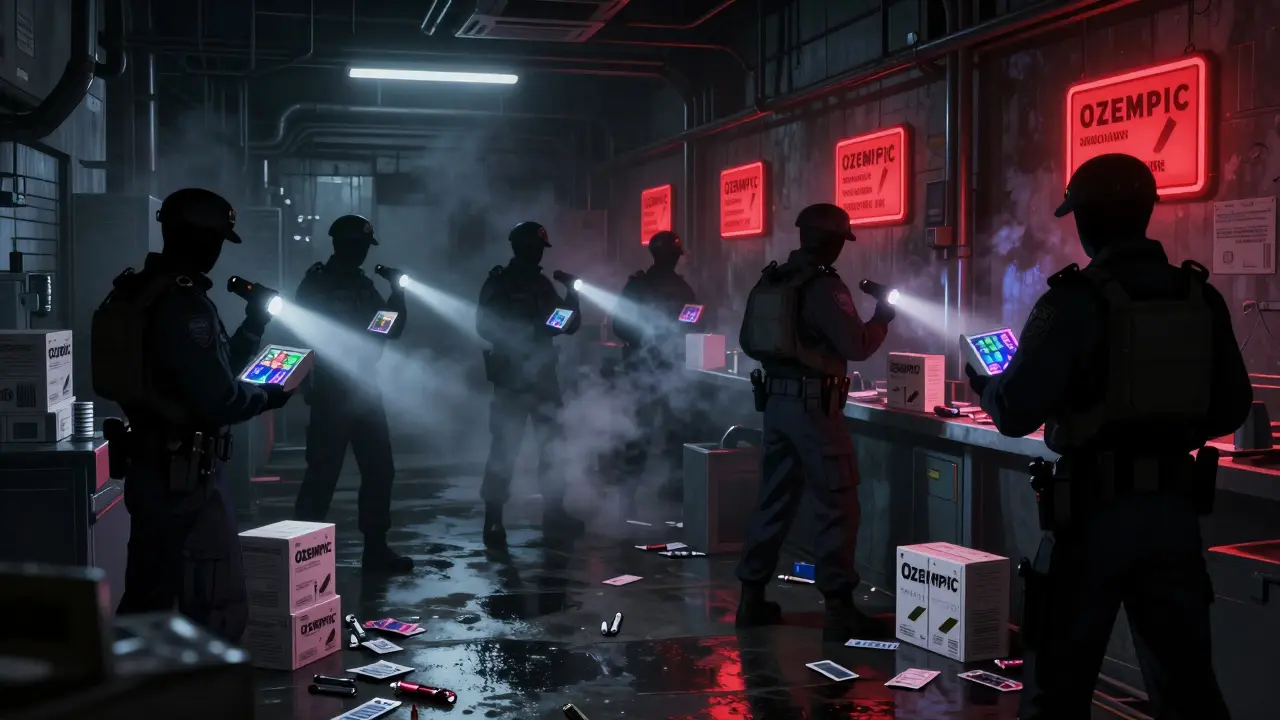
Every year, millions of fake pills, injections, and vials enter the global drug supply - not as mistakes, but as carefully manufactured frauds. These aren’t cheap knockoffs. They’re dangerous imitations designed to look exactly like the real thing, often with packaging so precise that even pharmacists struggle to tell the difference. And they’re killing people.
What’s Being Seized - And Where
In 2025, Interpol’s Pangea XVI operation shut down over 13,000 websites and social media accounts selling fake medicine. Officers from 90 countries seized 50.4 million doses of counterfeit drugs in a single sweep. That’s not a typo. Fifty million. Among the most common targets: weight-loss injectables like Ozempic and Wegovy, erectile dysfunction pills, Botox, dermal fillers, and HIV medications.
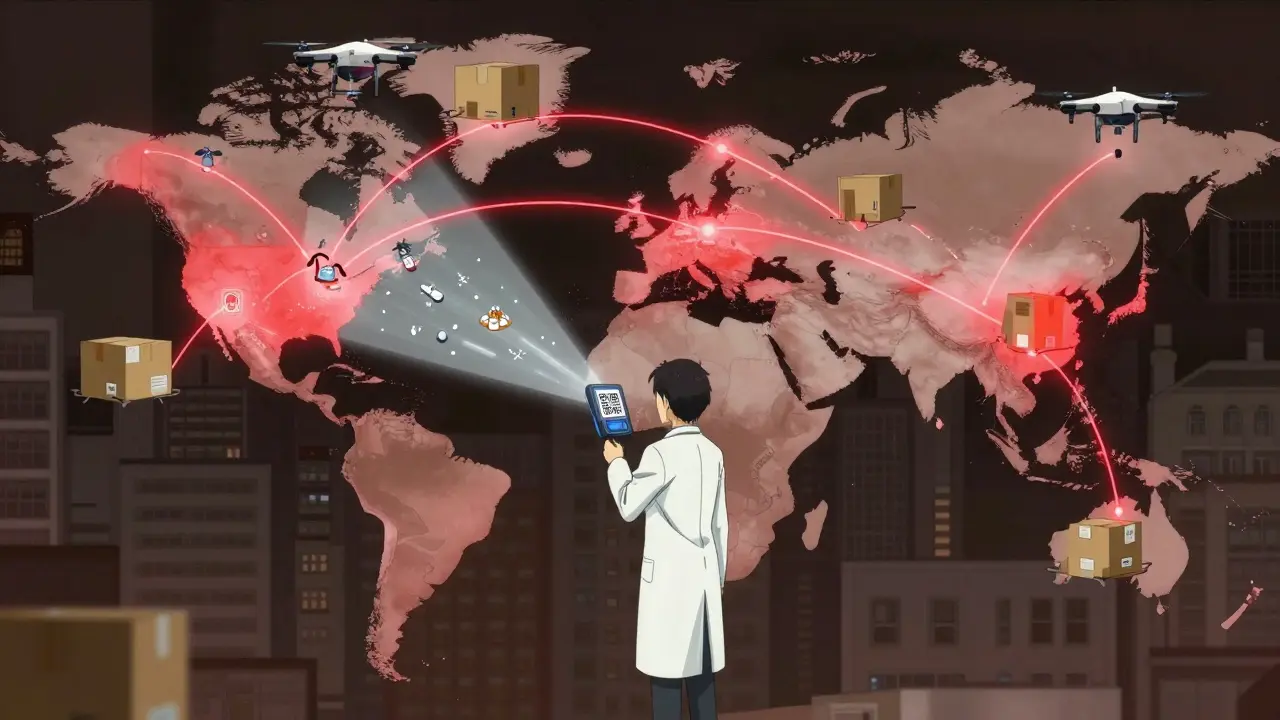
The U.S. Customs and Border Protection intercepted 16,740 counterfeit pre-filled pens in August 2025 alone. Most came from Hong Kong, China, Colombia, and South Korea. These shipments were headed to 40 U.S. states and Washington D.C. In Cincinnati, agents seized $3.5 million in fake pharmaceuticals in one day. In Iowa, a pharmacy was fined $25,000 for selling counterfeit Ozempic. These aren’t isolated incidents - they’re the new normal.
Who’s Making These Fakes - And How
Criminal networks aren’t operating out of basements anymore. They’re running organized factories, often in countries with weak regulatory oversight. In Nigeria, NAFDAC shut down an illegal herbal medicine lab in Kaduna producing unregulated treatments. In South Africa, police seized R2.2 million ($118,000 USD) worth of fake drugs in Gqeberha.
The production methods are chillingly advanced. Counterfeiters now replicate blister packs, holograms, batch numbers, and even the smell of the packaging. Some fake GLP-1 pens contain no active ingredient at all. Others are laced with industrial solvents, heavy metals, or even fentanyl. One patient in California developed severe cellulitis after injecting counterfeit dermal filler - the product looked authentic, but inside were unknown particulates that turned his skin into a battlefield.
And they’re getting smarter. Instead of shipping finished products, criminals now send unassembled parts - vials, labels, caps - to be put together near the target market. This makes detection harder. Customs can’t seize something just because it violates U.S. drug laws. It has to be proven counterfeit. That’s a loophole criminals exploit daily.
The Online Wild West
Most fake drugs don’t come from street dealers. They come from your phone.
According to the National Association of Boards of Pharmacy (NABP), 47% of counterfeit GLP-1 medications are sold on platforms like Etsy. Another 31% come directly from illegal manufacturers via dark web links or Telegram channels. Only 22% are shipped from foreign pharmacies. Social media is the new pharmacy. Instagram ads, TikTok influencers, and Facebook groups all push these products with promises of "authentic" weight loss or "premium" Botox - at 80% off.
And people are buying. The FDA’s MedWatch system saw a 43% jump in adverse event reports linked to suspected counterfeit drugs in the first half of 2025. The vast majority involved weight-loss injectables and cosmetic fillers. One Reddit user, a pharmacist, shared a case where a patient ended up in the ER after using a "Genuine Ozempic" bought from a Shopify store. The pen had the right serial number. The box matched the manufacturer’s design. But the liquid inside was cloudy - and contained no semaglutide.
Why Enforcement Is So Hard
Law enforcement can’t just arrest everyone selling fake pills. There’s a legal wall they can’t cross.
U.S. Customs can only seize products that are proven counterfeit - not just unapproved. That means if a drug is real but imported without FDA approval, it can’t be confiscated under current rules. Only if the packaging is forged, the label is fake, or the active ingredient is missing can it be seized. This gap lets a lot of dangerous products slip through.
Even when seizures happen, prosecution is slow. In one major case, over 70 defendants were charged for defrauding Medicaid of $17 million by selling $9.5 million in fake HIV meds through online marketplaces. The case took two years to build. Meanwhile, new counterfeit batches keep arriving.
And then there’s the scale. The OECD estimates global trade in fake goods hit $467 billion in 2021. Pharmaceuticals make up a small slice - but the most deadly. Sixty-five percent of counterfeit drug seizures come through small mail packages - the kind you get at your door without a signature. There’s no way to inspect every one.
What’s Working - And What’s Not
Some solutions are starting to show results.
Pfizer has trained law enforcement in 183 countries to spot fake packaging - from mismatched fonts to incorrect lot number formats. Their Global Security team has stopped 302 million counterfeit doses of their products since 2004. That’s not luck. It’s persistence.
Blockchain tracking is another win. Major drugmakers like Roche and Novo Nordisk have piloted digital tracking systems that let patients scan a code on the package to verify authenticity. In trials, these systems cut counterfeit incidents by 37%. The tech exists. The question is: will it be rolled out fast enough?
But here’s the hard truth: no single country can fix this alone. Counterfeiters operate across borders, using shipping routes, digital platforms, and financial networks that span continents. Interpol’s Pangea XVI showed what’s possible with global coordination - but it’s still a drop in the ocean.
What You Can Do
If you’re taking medication - especially expensive ones like GLP-1 agonists or biologics - don’t assume you’re safe just because it looks real.
- Only buy from licensed pharmacies. If the website doesn’t require a prescription, walk away.
- Check for the VIPPS seal (Verified Internet Pharmacy Practice Sites) - it’s the only U.S. accreditation for online pharmacies.
- Look for inconsistencies: misspelled names, blurry logos, different colors on the cap.
- If the price seems too good to be true, it is. Ozempic costs hundreds of dollars for a month’s supply. If you’re getting it for $20, it’s fake.
- Report suspicious products. The FDA and NABP both have online portals for reporting counterfeit drugs.
And if you’ve used a drug bought online and felt sick, dizzy, or had an unusual reaction - tell your doctor. Document it. You might be saving someone else’s life.
The Bigger Picture
This isn’t just about pills. It’s about trust. When people can’t be sure what’s in their medicine, they stop taking it. When they stop taking it, chronic conditions flare up. Hospitals fill up. Deaths rise.
The pharmaceutical industry is worth over $1.5 trillion. Counterfeiters aren’t stealing profits - they’re stealing lives. And they’re winning because the system moves too slowly.
What’s next? Experts predict 78% of counterfeit GLP-1 drugs will be sold through social media by 2026. The USTR plans to review notorious online markets this fall. But without stronger laws, better tech, and real global cooperation, we’re just chasing shadows.
The truth? You can’t outsmart a criminal who’s got a factory, a shipping route, and a smartphone. But you can protect yourself. And you can demand better.
How can I tell if my medication is counterfeit?
Look for subtle signs: inconsistent packaging colors, blurry printing, mismatched batch numbers, or a different smell/texture than usual. Check the pharmacy’s credentials - only buy from licensed, verified sources. Some manufacturers offer QR codes on the box that link to a verification page. If the medication came from an online seller without a prescription, assume it’s fake until proven otherwise.
Are counterfeit drugs more dangerous than real ones?
Yes - and in different ways. Real drugs have side effects, but counterfeit ones can contain toxic chemicals like fentanyl, heavy metals, or industrial solvents. Some have no active ingredient at all, meaning your condition worsens. Others have too much of the drug - leading to overdose. A fake GLP-1 pen might cause severe pancreatitis. A fake Botox vial could lead to paralysis. There’s no safety net.
Why are weight-loss drugs like Ozempic so commonly counterfeited?
Because they’re expensive, in high demand, and easy to sell. A single Ozempic pen costs over $1,000 without insurance. Counterfeiters can produce a fake version for under $10 and sell it for $100-$200 online. With millions of people seeking weight-loss solutions, the market is huge. Criminals are targeting it because the profit margin is massive and enforcement is still catching up.
Can I get counterfeit drugs from a regular pharmacy?
It’s rare, but it happens. In 2025, an Iowa pharmacy was fined for selling counterfeit Ozempic. Most licensed pharmacies have strict supply chains, but some get compromised through third-party distributors or shady suppliers. Always verify your pharmacy is accredited (look for VIPPS). If you’re ever unsure, call the manufacturer’s customer service line - they can check the batch number for you.
What’s being done to stop counterfeit drugs at the border?
U.S. Customs and Border Protection works with the FDA and Interpol to scan shipments, especially from high-risk countries like China, Hong Kong, and India. They use X-rays, drug-sniffing dogs, and intelligence-led targeting. But they can only seize products proven to be counterfeit - not just unapproved. This legal gap means many dangerous drugs slip through. Training for inspectors has improved, but resources are limited.
Is blockchain technology actually helping fight fake drugs?
Yes. Companies like Novo Nordisk and Roche have tested blockchain systems that track every vial from factory to patient. Patients scan a code on the package to verify authenticity. In pilot programs, counterfeit incidents dropped by 37%. The tech works - but it’s expensive and not yet mandatory. Until all manufacturers adopt it, and regulators require it, the system remains patchy.
Why are fake drugs still being made in China and India?
China and India are major producers of active pharmaceutical ingredients. Some factories operate legally; others don’t. In China, counterfeiters exploit weak enforcement in certain regions. In India, the problem isn’t manufacturing - it’s export control. The U.S. border seized more counterfeit drugs from India than any other country in FY2024. These countries have the capacity to make real drugs - but criminal networks hijack the system to produce fake ones, often with the same equipment and raw materials.


Vinayak Naik
January 5, 2026 AT 10:48Been working in pharma logistics for 12 years and let me tell you - the fake pens are getting scarily good. I once saw a batch of Ozempic vials that had the exact same hologram shimmer, even the cap click sounded right. But the liquid? Thick like syrup and smelled like burnt plastic. Patient ended up in ICU. These aren’t just scams, they’re silent weapons.
Kiran Plaha
January 7, 2026 AT 03:52So if I buy a $150 Ozempic pen off Instagram, how do I even check if it’s real? My doctor says just get it from the pharmacy, but insurance won’t cover it and I’m not rich. Feels like being punished for needing help.
Melanie Clark
January 8, 2026 AT 12:20Of course the Chinese are behind this. They’ve been flooding our borders with fake meds since the 90s. Why do you think they’re so eager to be our main drug supplier? They don’t care if you die as long as they get paid. This is economic warfare and nobody’s calling it what it is.
Harshit Kansal
January 8, 2026 AT 13:52My cousin bought fake Botox off TikTok. She thought she was saving $800. Ended up with a crooked smile for 6 months and a $12k correction bill. She still swears it looked legit. The packaging had a QR code that scanned to a fake Pfizer page. I swear, people are too trusting these days.
Pavan Vora
January 10, 2026 AT 07:52India also produces genuine generic medicines at low cost, but the problem is when unregulated labs copy the packaging of branded drugs… and then sell them as originals. It’s not just China, it’s a global problem of weak oversight. I’ve seen batch numbers printed with ink that fades in sunlight - that’s a giveaway. But most people don’t look that closely.
Saylor Frye
January 11, 2026 AT 17:45It’s ironic that the same people who scream about Big Pharma greed are the ones buying fake drugs off Telegram. You want cheap medicine? Fine. But don’t pretend you’re being revolutionary when you’re just gambling with your life. The real villain is your impatience.
Kelly Beck
January 12, 2026 AT 01:56Hey, I know it’s scary, but please don’t give up! There are patient assistance programs, and some pharmacies offer discount cards - even for Ozempic. And if you’re worried about authenticity, call the manufacturer directly with the batch number. They’ll verify it for you. You’re not alone in this. 💪❤️
Tiffany Adjei - Opong
January 12, 2026 AT 03:39Blockchain? Really? You think scanning a QR code is going to stop a criminal network that’s already shipping unassembled parts across 12 countries? This is like putting a Band-Aid on a hemorrhage. The real solution is to make these drugs affordable so people don’t feel forced to buy from sketchy websites. But that would require actually fixing the system - and nobody wants that.
Brian Anaz
January 13, 2026 AT 10:5290 countries seized 50 million doses? That’s nothing. There are billions out there. We need to shut down every Chinese and Indian factory making these. Send in the military. No more diplomacy. These people are poisoning Americans and we’re treating it like a traffic violation.
Venkataramanan Viswanathan
January 14, 2026 AT 06:08While I appreciate the detailed analysis, the structural flaw in enforcement lies in the legal definition of ‘counterfeit’ versus ‘unapproved.’ The U.S. FDA lacks authority to seize unapproved but chemically identical drugs, even if they are life-threatening. This regulatory gap must be addressed through legislative reform, not just public awareness campaigns.
Stuart Shield
January 14, 2026 AT 21:21I’ve worked in rural clinics in Ghana. People there buy fake meds because they have no choice. No access. No insurance. No alternatives. It’s not greed - it’s desperation. We can’t just blame the buyers. We need global health equity, not just better packaging. A QR code won’t feed someone who can’t afford insulin.
Amy Le
January 16, 2026 AT 09:22Let’s be honest - most of these fake drugs come from India. The FDA knows it. The DEA knows it. But they won’t say it because they’re scared of upsetting trade relations. Meanwhile, Americans are dying. And the media? Silent. This isn’t about fraud. It’s about betrayal.
Isaac Jules
January 18, 2026 AT 02:46Anyone who buys fake meds online deserves what they get. You think you’re being smart? You’re just a walking biohazard. I’ve seen ER reports - people with organ failure because they trusted a Shopify store. Stop being dumb. Pay the price or die. Simple.
Katelyn Slack
January 18, 2026 AT 19:48i just bought a pen from my local pharmacy and it looked different than last time… is that normal? i dont wanna be one of those people who gets poisoned
Indra Triawan
January 19, 2026 AT 22:23Perhaps the real counterfeit here isn’t the medicine - it’s the promise of health in a system that commodifies survival. We’ve turned healing into a transaction, and the vulnerable are the ones paying the price in blood, not just dollars. The pills are fake, yes - but so is the idea that anyone should have to gamble their life to stay alive.