
It’s easy to scroll past a TikTok video claiming that apple cider vinegar cures migraines, or an Instagram post saying you can replace your blood pressure medication with turmeric. These posts look convincing. The person posting looks healthy. They sound sure. Maybe they even say they’re a "health coach" or "naturopath." But here’s the hard truth: unsafe medication advice on social media is putting lives at risk.
According to the CDC, nearly 60% of Americans look online for health advice. During the pandemic, this number spiked. And with it came a flood of dangerous claims - from unproven supplements that interfere with prescriptions, to viral "cures" that delay real treatment. The World Health Organization called this an "infodemic" - a wave of misinformation just as dangerous as the virus itself. And it’s still here.
Who’s Really Giving This Advice?
Not all health advice on social media comes from people with medical training. In fact, most doesn’t. You might see someone with a big following claiming they "reverse diabetes with fasting" or "cure anxiety with essential oils." But if they don’t have a medical license - MD, RN, PharmD, NP, PA - they’re not qualified to give medical advice. And in many places, it’s actually illegal for licensed professionals to give medical advice to people they haven’t evaluated in person.
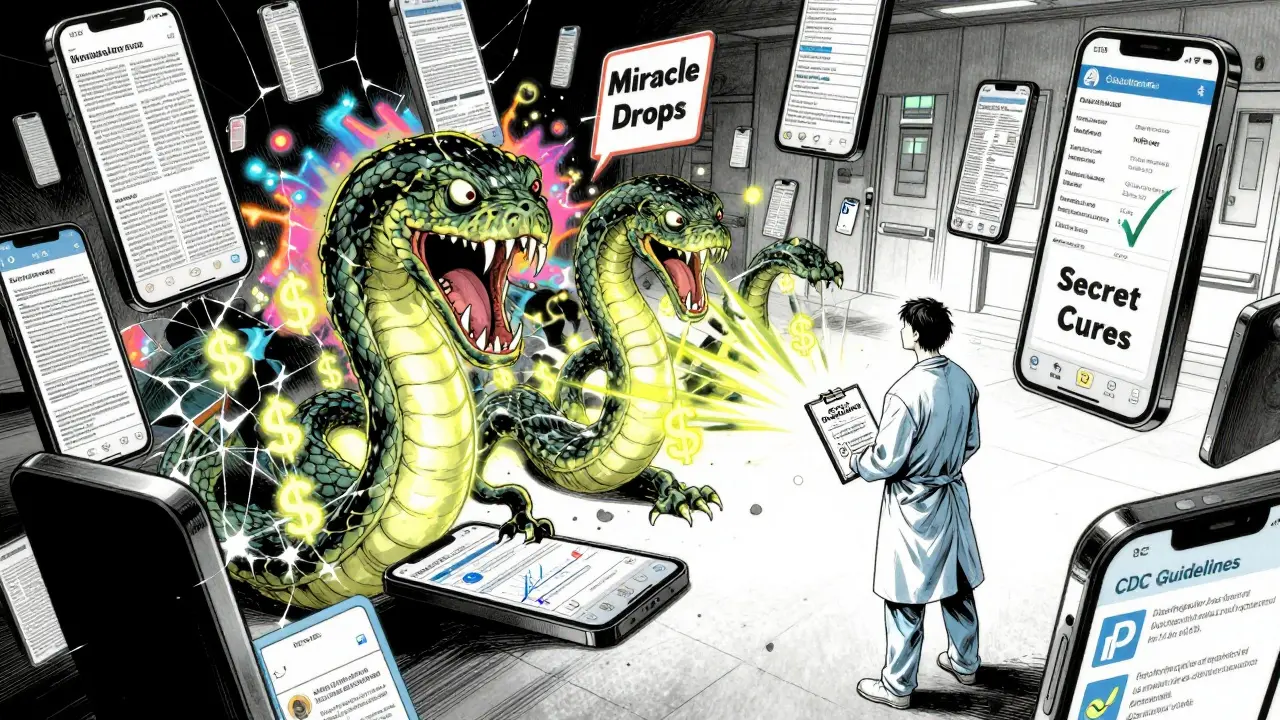
Look at their profile. Do they list credentials? Do they mention a hospital, clinic, or university affiliation? Or are they just a "wellness influencer" selling a $49 bottle of "miracle drops"? If the answer is the latter, walk away. No amount of before-and-after photos makes up for a lack of medical training.
"Miracle Cures" Are Always a Red Flag
If someone says they’ve found a secret cure that big pharma doesn’t want you to know about - run. That’s not deep knowledge. That’s a classic misinformation tactic.
Real medicine doesn’t work that way. Treatments are tested in clinical trials. They’re published in peer-reviewed journals. They’re reviewed by the FDA and other health agencies. If a post claims a single supplement or diet can cure cancer, diabetes, or autoimmune disease - it’s false. No single food, herb, or pill does that. And if they’re pushing it as a replacement for proven medication, they’re putting your life in danger.
Look for words like:
- "Secret remedy"
- "Doctor’s not telling you this"
- "100% natural, so it’s safe"
- "Works for everyone"
These aren’t signs of wisdom. They’re signs of a scam.
Is This Just Marketing in Disguise?
Many social media health posts aren’t advice - they’re ads. And they’re designed to look like advice.
Health influencers often get paid to promote products. They might get free samples, affiliate commissions, or flat fees from supplement companies. That doesn’t make their advice wrong - but it does mean their motivation isn’t your health. It’s their paycheck.
Ask yourself: Are they showing you one side of the story? Do they mention side effects? Do they warn you to talk to your doctor first? Or do they just say, "Just try this!" and link to a product page?
Real medical professionals don’t push products this way. They talk about risks, benefits, and alternatives. They don’t say, "This is the only thing that works." They say, "Here’s what the science says - and here’s what might work for you."
Why One Size Doesn’t Fit All
Someone on Instagram might say they stopped their antidepressant and felt better after drinking lemon water. That’s their story. It’s not medical advice.
Medications work differently for different people. Your liver processes drugs differently than mine. Your allergies, other conditions, and current meds all matter. What’s safe for one person could be deadly for another. Taking advice from someone who doesn’t know your history is like following a GPS that doesn’t know where you are.
The UNMC Health Security article says it plainly: "It’s unsafe to take medical advice from someone who is unfamiliar with your medical history, and what works for one person may not work for everyone." That’s not opinion. That’s medical fact.
How to Check If It’s Real
Here’s a simple three-step check you can use every time you see health advice online:
- Check the source. Who’s saying this? Are they a licensed professional? Do they work for a hospital or university? Or are they just a person with a camera and a sales link?
- Look for bias. Are they pushing a product? Are they ignoring risks? Are they only showing success stories? Real science shows both sides.
- Verify with trusted sources. Don’t trust the post. Go to the CDC, FDA, Mayo Clinic, or a peer-reviewed journal like JAMA. If the claim isn’t backed by these sources, it’s not reliable.
And here’s a rule of thumb: if you can’t find the same claim on three reputable medical websites, it’s probably not true.
Algorithms Are Working Against You
Here’s something most people don’t realize: social media doesn’t show you the truth. It shows you what keeps you scrolling.
Algorithms track what you click, like, and share. If you watch a video about natural cures for arthritis, the algorithm will keep feeding you more of the same - even if it’s wrong. This creates echo chambers. You start believing misinformation because you never see the truth.
Research from the University of Denmark found that people with strong views on vaccines ended up seeing completely different information than others - even if they lived in the same city. That’s not coincidence. That’s design.
The fix? Actively seek out balanced sources. Follow accounts from the CDC, WHO, or your local pharmacy board. Don’t just react to what pops up - go looking for real experts.
What Happens When People Believe This Stuff?
It’s not theoretical. People get hurt.
A study in JAMA Pediatrics found that adolescents exposed to health misinformation online were more likely to skip vaccines, stop prescribed medications, or try dangerous detoxes. Some ended up in the ER. Others suffered long-term damage because they delayed real treatment.
One viral trend during the pandemic told people to tape their mouths shut while sleeping to "improve breathing." It didn’t work. Some people suffocated. Others developed anxiety disorders.
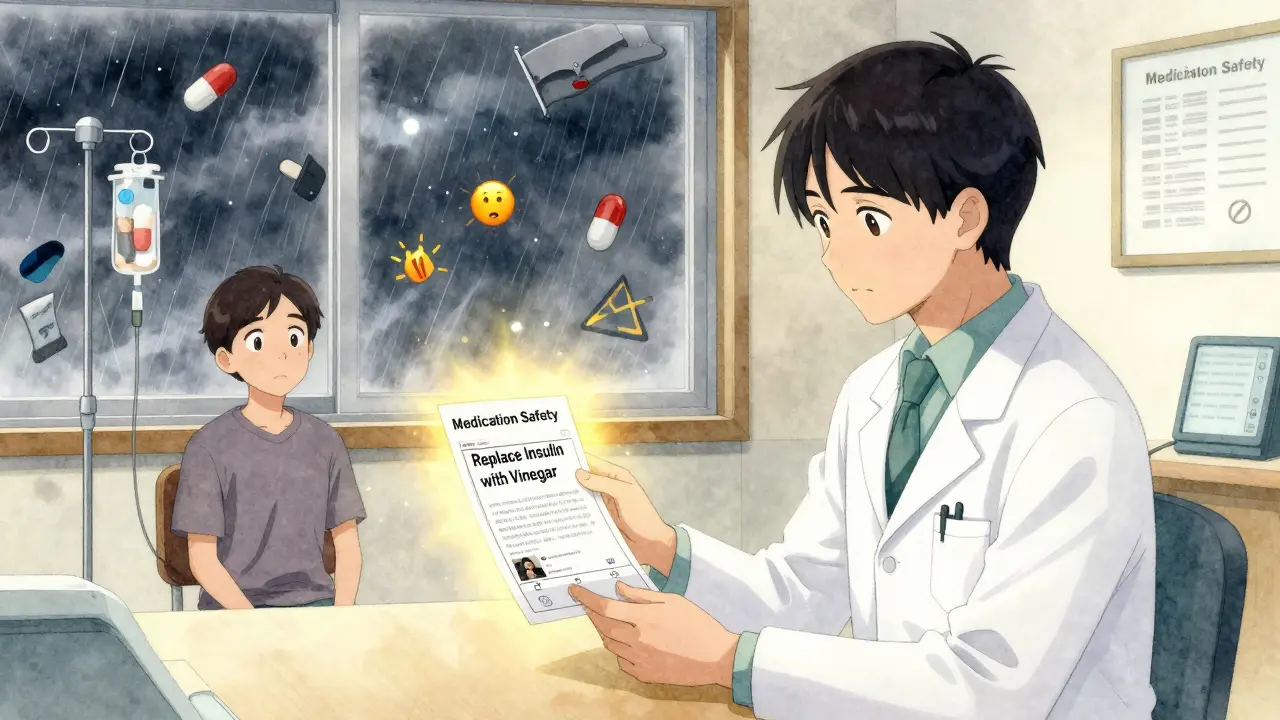
Another claimed that drinking apple cider vinegar every morning could replace insulin for diabetics. People stopped their medication. Some ended up in diabetic ketoacidosis - a life-threatening condition.
These aren’t rare cases. They’re preventable.
What You Can Do
You’re not powerless. Here’s what works:
- Don’t share unverified claims. Even if you think it’s harmless, sharing it gives it more reach.
- Report misleading posts. Facebook, Instagram, and TikTok have tools to flag misinformation. Use them.
- Teach others. If a friend or family member shares dangerous advice, don’t argue. Say, "I found this on the CDC site - let’s compare."
- Always talk to your doctor or pharmacist before changing anything. Even if it’s "natural." Even if it’s "just a supplement."
Pre-bunking works. That’s when you learn the facts before you see the lie. Read up on how medications really work. Know what the FDA says about common supplements. When you know the truth, you’ll spot the fake faster.
When in Doubt, Ask a Pharmacist
Pharmacists are medication experts. They know how drugs interact. They know what’s safe and what’s not. And they’re trained to answer questions - no judgment, no sales pitch.
If you see a post that makes you nervous, take a screenshot and ask your pharmacist. They’ve seen this before. They’ll tell you if it’s dangerous, if it’s useless, or if it’s worth considering. And they won’t try to sell you anything.
That’s the difference between social media and real healthcare.
Can I trust health advice from a doctor on Instagram?
Not necessarily. Even if someone says they’re a doctor, check their credentials. Many use fake titles or work in unrelated fields. Look for their license number, hospital affiliation, or verified badge on their profile. If they’re promoting products or making sweeping claims, it’s likely not legitimate medical advice.
Are herbal supplements safer than prescription meds?
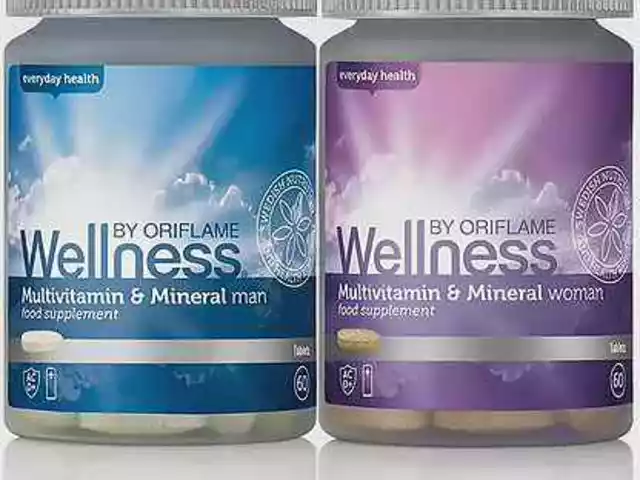
No. Just because something is "natural" doesn’t mean it’s safe. Many herbal supplements interact with prescription drugs, cause liver damage, or contain hidden ingredients. The FDA doesn’t regulate them like medications. A supplement labeled as "turmeric extract" might actually contain undisclosed steroids or blood thinners. Always check with a pharmacist before taking anything new.
What should I do if I already followed bad advice?
Stop immediately. Don’t wait for symptoms. Contact your doctor or pharmacist and tell them what you did. Bring the post or product name with you. They can check for interactions, side effects, or risks. Many health problems from social media advice can be reversed if caught early.
Why do these false claims spread so fast?
Because they’re simple, emotional, and confirm what people already believe. Saying "vitamin C cures colds" is easier to believe than reading a 20-page study on immune function. Social media algorithms reward content that triggers strong reactions - fear, hope, anger - not accuracy. That’s why false claims go viral faster than facts.
Is there any way to protect kids from this?
Yes. Teach media literacy early. Show them how to check sources, spot ads, and question claims. Encourage them to ask an adult before trying any health trend they see online. Schools and libraries often have free programs on digital health safety. The CDC and WHO also offer free resources for parents and educators.
If you’re ever unsure about a health claim you saw online, don’t guess. Don’t rely on a viral video. Pick up the phone. Call your doctor. Visit your pharmacy. Real health doesn’t come from a feed. It comes from trusted, verified, human expertise.


Bailey Adkison
December 24, 2025 AT 12:12Stop pretending natural means safe. Turmeric doesn't cure hypertension. Apple cider vinegar won't replace insulin. If you're dumb enough to believe that, you deserve the ER visit. No one's stopping you from killing yourself but don't drag others into your delusion.
Katherine Blumhardt
December 26, 2025 AT 07:53omg i just found this post and its like my soul was screaming at me to read it 😭 i took that 'miracle drops' last month and my liver is now crying… thank you for writing this
Christopher King
December 26, 2025 AT 07:57They don’t want you to know this but the FDA is owned by Big Pharma and they’re terrified of anything that doesn’t come in a pill. The real cure for everything is sunlight, fasting, and silence. They’ve been suppressing this since the 1950s. Your doctor gets paid to keep you sick. That’s why they hate naturopaths. They know the truth is cheaper and it breaks their monopoly.
Michael Dillon
December 27, 2025 AT 14:10Bro. I got my blood pressure meds from a guy on Reddit who said he got them from his cousin’s uncle who works at a pharmacy. It worked. For three weeks. Then I got dizzy and ended up in the hospital. Turns out it was just sugar pills with food coloring. I’m alive. But now I know. Trust the science. Not the guy with 500k followers and a Shopify store.
sagar patel
December 28, 2025 AT 08:30India has same problem. People believe guru's who sell 'ayurvedic cures' for diabetes. They die slowly. No one cares. Government does nothing. Social media makes it worse. You think you're helping. You're killing.
Linda B.
December 29, 2025 AT 20:38Oh wow. A 12-page manifesto on why your cousin’s Instagram post might be wrong. How original. Did you also write a 3000-word essay on why gravity isn’t real? Maybe the FDA is just a hologram. Or perhaps, just maybe, some people like to try things before they get a prescription from someone who’s never met them.
Gary Hartung
December 30, 2025 AT 10:45Let’s be honest: the real crisis here isn’t misinformation-it’s the collapse of epistemology. When people no longer trust institutions, they turn to influencers who mirror their anxieties. The algorithm doesn’t lie; it reflects. And we, as a society, have become addicted to certainty, even when it’s false. This is postmodernism’s final stage: truth as a product.
Ben Harris
December 31, 2025 AT 10:49I tried the lemon water thing after my antidepressants made me feel like a zombie. It didn’t cure me. But it made me feel like I was doing something. That’s worth something, right? You can’t just tell people to ‘go back to their pill’ when they’re drowning in side effects and no one listens. Sometimes the placebo is the only thing keeping them alive.
Jason Jasper
December 31, 2025 AT 14:54I used to share these kinds of posts. Thought I was helping. Then my mom had a bad reaction to a supplement she bought from a TikTok ad. She ended up in the hospital. I haven’t shared anything unverified since. Just asking people to check with their pharmacist now. Small steps.
Mussin Machhour
December 31, 2025 AT 22:41YES. My grandma took that ‘cancer cure’ powder and skipped chemo. She’s gone now. Don’t let your loved ones fall for this. Talk to them. Show them the CDC page. Don’t yell. Just say ‘I love you, let’s look at this together.’
Justin James
January 1, 2026 AT 12:20Think about it. If a single herb could cure cancer, why would the entire global pharmaceutical industry-worth trillions-spend billions on research, clinical trials, patents, and FDA approvals? Why not just buy the herb, patent it, and make infinite profit? Why would they suppress a cure that costs pennies to produce? The only thing suppressing the cure is the fact that there is no cure. There’s no secret. There’s just science. And science doesn’t care how you feel about it.
Winni Victor
January 2, 2026 AT 10:37Wow. So the real villain here isn’t the influencer-it’s the fact that our healthcare system is so broken that people are desperate enough to believe a stranger on TikTok over their own doctor. That’s not ignorance. That’s trauma. And now we’re blaming the victims for being desperate? Brilliant.
Terry Free
January 2, 2026 AT 15:34There’s a difference between ‘natural’ and ‘unregulated.’ You think garlic is safe? It thins blood. Take it with warfarin? You bleed out. No one’s saying don’t eat garlic. But don’t call it medicine. And don’t pretend you’re not a guinea pig when you’re popping pills from a website that doesn’t list an address.
Lindsay Hensel
January 2, 2026 AT 22:58This post is a vital public service. Thank you for grounding this conversation in evidence, compassion, and clarity. We must protect the vulnerable from predatory marketing disguised as wellness. The stakes are not theoretical. They are lives.
Sophie Stallkind
January 4, 2026 AT 17:42Pharmacists are the unsung heroes of public health. They see the consequences of social media misinformation every day. They don’t have a platform. But they have the knowledge. If you’re unsure, ask one. They won’t judge you. They’ll help you.