When someone you love is taking five, six, or even ten different medications every day, keeping track isn’t just helpful-it’s life-saving. Over 40% of older adults in the U.S. are managing multiple prescriptions, and for caregivers, that means juggling pills, doses, timing, and side effects without room for error. A single mistake-a missed dose, a doubled-up pill, or a drug interaction-can send someone to the hospital. The good news? A simple, well-organized medication list cuts those risks by more than half. You don’t need fancy tech or medical training. Just a clear system, updated regularly, and shared with everyone involved.
What Goes on a Medication List?
A medication list isn’t just a note scribbled on a napkin. It’s a detailed, accurate record that tells every doctor, pharmacist, and caregiver exactly what’s being taken and why. The FDA’s 2023 guidelines say every list must include these 12 key details:
- Medication name-both brand (like Lisinopril) and generic
- Dosage-e.g., "10 mg," "500 mg," or "1 teaspoon"
- Frequency-"twice daily," "every 8 hours," "as needed"
- Purpose-"for high blood pressure," "for arthritis pain," "for sleep"
- Special instructions-"take with food," "do not crush," "avoid grapefruit"
- Start date-when the prescription was first filled
- Prescribing doctor-name and clinic
- Pharmacy name and number-so others can call if needed
- Side effects to watch for-dizziness, nausea, rash, confusion
- Allergies-including reactions like swelling, breathing trouble, or rash
- Stop date-for medications meant to be temporary
- NDC number-the 11-digit National Drug Code on the bottle
Missing even one of these can cause confusion. In fact, 92% of medication errors happen because someone didn’t know when to take it, or if it needed food. Don’t assume anyone remembers. Write it all down.
Choose Your Format: Paper, Digital, or Both
Some caregivers swear by paper. Others rely on apps. The truth? The best system is both.
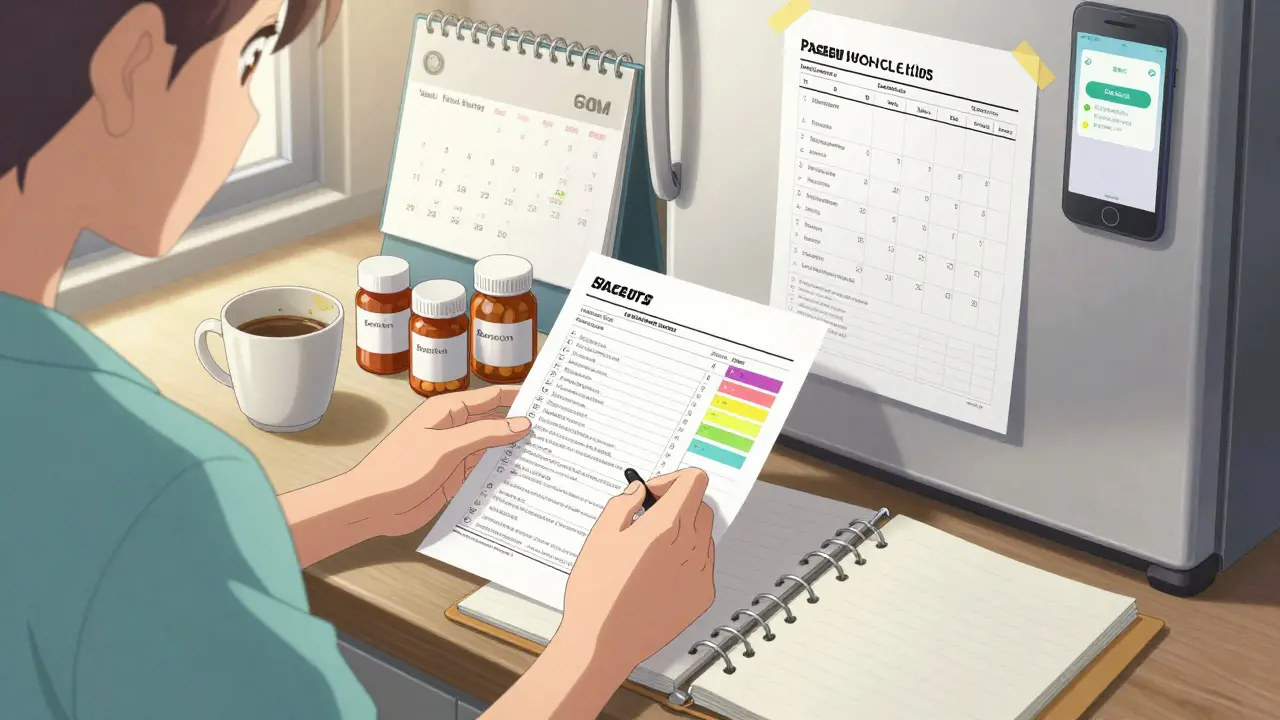
Paper lists are still used by 63% of caregivers. They’re simple, don’t need batteries, and work in emergencies when power’s out or phones die. Many hospitals and ERs still ask for a "brown bag"-bring all the bottles in a bag to your appointment. That’s the gold standard. A laminated, color-coded paper list stuck to the fridge with clear headings makes it easy to scan at a glance.
Digital tools like Medisafe, MyMeds, or pharmacy apps (CVS, Walgreens) automatically update when prescriptions are refilled. They send reminders, track doses, and can even alert you if a new drug might interact with what’s already being taken. For regimens with five or more medications, digital tools cut errors by 42%. But here’s the catch: 62% of caregivers over 65 find apps too confusing. And 71% of family caregivers quit using them within three months because they’re too hard to update.
So here’s the smart move: Keep a printed master list in a three-ring binder (like the Caregiver’s Notebook system), and use a digital app as a backup. Update the paper list after every doctor visit, and let the app handle reminders. If the power goes out, the binder is still there.
Step-by-Step: How to Build Your List
Don’t try to do this all at once. Follow these six steps, and you’ll have a system that works for months-or years.
- Collect everything-Go through every cabinet, drawer, and nightstand. Gather all pills, patches, liquids, and supplements. Don’t skip the OTC meds like ibuprofen, antacids, or sleep aids. They’re just as risky as prescriptions.
- Write down every item-Use the 12-point checklist above. For each medication, spend at least 10 minutes getting it right. Call the pharmacy if you’re unsure about dosage or purpose.
- Organize by time of day-Group meds into morning, afternoon, evening, and bedtime. Use color-coded sticky notes or highlighters: green for morning, blue for night. This makes it easier to follow.
- Create two copies-One stays at home. One goes in your wallet, purse, or car. Give a copy to any other caregiver, family member, or home nurse.
- Set a weekly update time-Every Sunday evening, spend 15 minutes reviewing the list. Did anything change? Was a dose skipped? Add a new pill? Cross out one? Do it right then. 87% of caregivers who stick to a weekly routine say they never miss a dose.
- Share with every provider-Bring the list to every doctor, pharmacist, and ER visit. Ask: "Is this still right?" Don’t wait for them to ask. 58% of caregivers report confusion after hospital stays because discharge instructions didn’t match their list.

What to Do About "As Needed" Medications
"Take as needed" sounds simple. But it’s one of the biggest sources of errors. Painkillers, anxiety meds, or nausea pills given "as needed" can pile up if not tracked.
Create a separate "PRN Log"-a small chart next to the main list. Write the date, time, and dose each time it’s given. If your loved one takes acetaminophen for pain, log every single time. That way, you won’t accidentally give too much. One caregiver on Reddit shared that after her dad overdosed on OTC pain pills, she started a PRN log-and hasn’t had a problem since.
How to Handle Multiple Doctors and Pharmacies
If your loved one sees three different specialists, each prescribing different meds, coordination is key. Designate one person as the "medication coordinator." Usually, that’s the main caregiver. This person:
- Keeps the master list
- Contacts each doctor to confirm doses and purposes
- Uses one pharmacy for all prescriptions
Most pharmacies now offer free medication synchronization-meaning all prescriptions are due on the same day each month. That cuts refill confusion by 75%. Ask your pharmacist if they offer it. CVS and Walgreens both do.
Common Mistakes and How to Avoid Them
Here’s what most caregivers get wrong-and how to fix it:
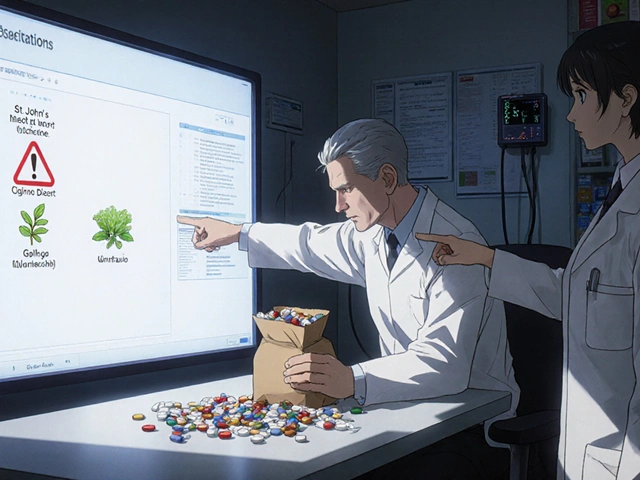
- Mistake: Ignoring supplements. Solution: Treat vitamins and herbal pills like prescriptions. List them with dosage and purpose. Many interact with blood thinners or heart meds.
- Mistake: Not updating after hospital visits. Solution: Right after discharge, sit down and rewrite the list based on what the doctor says. Keep the old version for comparison.
- Mistake: Assuming the doctor remembers what was prescribed. Solution: Always bring the list. Doctors forget. Nurses forget. You can’t.
- Mistake: Using outdated lists. Solution: If a medication was stopped, cross it out with a red pen and write "STOPPED: [date]." Never leave it on the list.
When to Talk to a Pharmacist
You don’t need to be a pharmacist-but you should talk to one. Every three months, schedule a "medication review" at your pharmacy. Bring the full list. Ask:
- "Are all these still necessary?"
- "Is there a cheaper or safer alternative?"
- "Could any of these interact?"
Pharmacists catch dangerous combinations 27% of the time, according to Johns Hopkins research. They also spot "time-limited" prescriptions that were never stopped-like antibiotics or short-term painkillers that still sit in the medicine cabinet. That’s called "phantom prescribing," and it’s a silent danger.
Real Stories from Real Caregivers
One caregiver in Sydney, Australia, started using photos of each pill after her mother was hospitalized for a drug interaction. She took pictures of every pill bottle, printed them, and taped them next to the list. "Now I just look at the picture. No more guessing if it’s the blue pill or the white one." Another, on Reddit, used color-coded pill organizers with morning/afternoon/evening compartments. She added sticky notes with the purpose: "Blue = blood pressure," "Red = pain." Within weeks, her mother’s confusion dropped. "She started asking, ‘Is it time for my blue pill?’-that’s when I knew it worked." The "brown bag method" still works wonders. One caregiver brought all 14 medications to her mother’s appointment. The doctor immediately spotted two duplicates and one expired antibiotic that hadn’t been taken in six months. "We saved $300 a month just by stopping those," she said.
What’s Next? The Future of Medication Lists
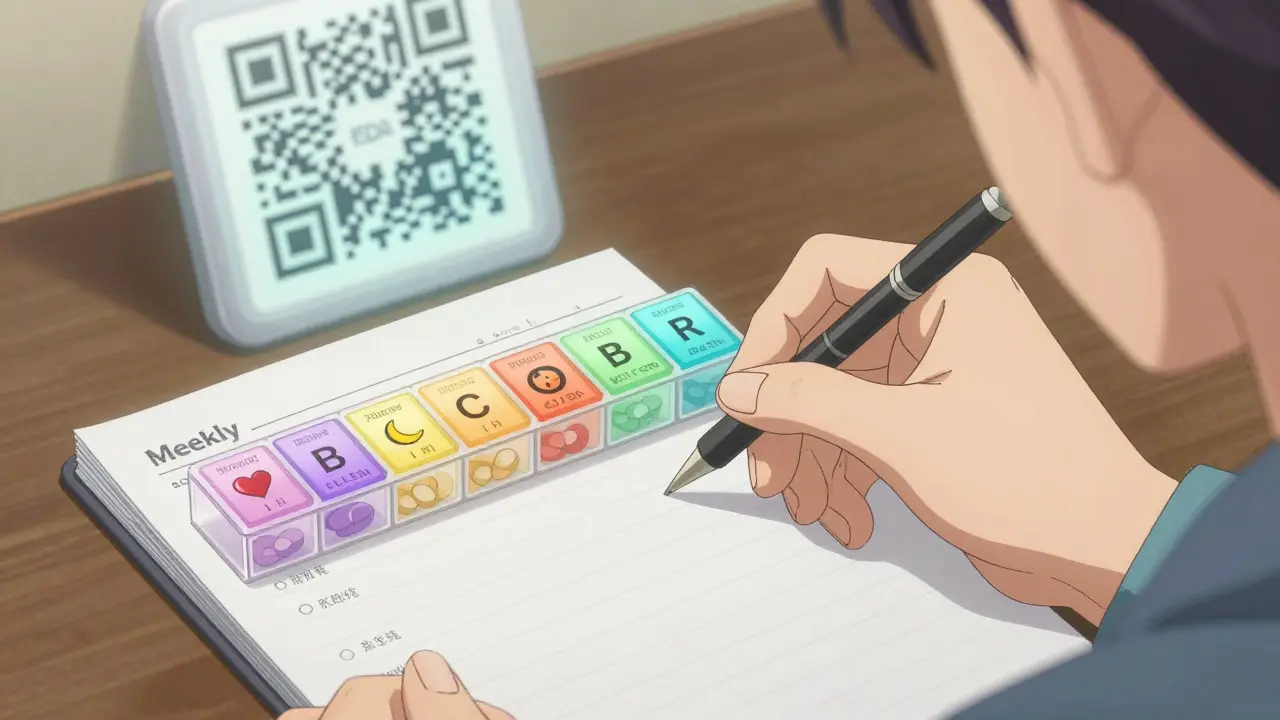
By 2026, medication lists are getting smarter. The FDA just rolled out a new template with QR codes you can scan to see a photo of the pill and its side effects. Pharmacies are starting to integrate lists directly into electronic health records. Amazon and Google are testing voice-activated systems: "Alexa, what did Mom take this morning?"
But for now, the most powerful tool is still the simple, printed list. Updated. Shared. Always available. It’s not glamorous. But it’s the single most cost-effective way to prevent hospital visits, drug interactions, and deadly mistakes.
Start today. Gather the pills. Write it down. Share it. You’re not just organizing medicine-you’re protecting someone’s life.
What’s the most important thing to include on a medication list?
The most important thing is the exact dosage and timing. Many errors happen because someone doesn’t know if a pill is 5 mg or 10 mg, or whether it should be taken with food. Always include brand and generic names, frequency (e.g., "twice daily"), and special instructions like "take with meals" or "do not crush."
Should I use a paper list or a phone app?
Use both. A paper list works in emergencies, at the hospital, or if the power goes out. A digital app helps with reminders and automatic updates. The best system is a printed master list kept at home, with a digital backup that syncs with your pharmacy. Never rely on just one.
How often should I update the medication list?
Update it immediately after every doctor visit, pharmacy change, or hospital discharge. Then, review it every Sunday evening for 15 minutes. Even if nothing changed, check for expired meds or unused bottles. 87% of caregivers who stick to a weekly routine report fewer errors.
Do I need to list vitamins and supplements?
Yes. Supplements like fish oil, ginkgo, or vitamin E can interact dangerously with blood thinners, heart meds, or diabetes drugs. Treat them just like prescriptions. Include the name, dose, purpose, and frequency. Many hospital errors happen because a supplement was left off the list.
What if my loved one sees multiple doctors?
Designate one person as the medication coordinator-usually the main caregiver. Keep one master list and share it with every provider. Try to fill all prescriptions at one pharmacy so they can check for interactions. Ask each doctor: "Is this still needed?" and "Could this interact with anything else?"
Can I use a pill organizer?
Yes, but only if you still have the full written list. Pill organizers help with daily routines, but they don’t replace the need to know what each pill is for, why it was prescribed, or when it was started. Always keep the list visible alongside the organizer.