
Opioid Withdrawal Timeline Calculator
Find Your Withdrawal Timeline
Enter the opioid you were using to estimate when symptoms will begin and how long they'll last.
Withdrawal Timeline Estimate
Onset
-
Peak Symptoms
-
Physical Symptoms Subside
-
Emotional Symptoms May Last
-
When someone stops using opioids after relying on them for weeks or months, their body doesn’t just adjust quietly. It reacts. Hard. The physical and emotional toll of opioid withdrawal is real, unpredictable, and often overwhelming. But knowing what to expect and how to handle it can make all the difference between giving up and moving forward.
When Do Withdrawal Symptoms Start?
It’s not the same for everyone. The timing depends entirely on the kind of opioid you were using. If you were taking heroin, oxycodone, or hydrocodone - the short-acting types - symptoms can begin as early as 8 hours after your last dose. You might notice a runny nose, watery eyes, or an odd restlessness. By 12 to 24 hours, it gets worse. Muscle aches, sweating, nausea, and insomnia kick in. For many, this is when they realize they’re not just "feeling off" - they’re in withdrawal.But if you were on methadone or an extended-release opioid, the clock starts slower. Symptoms might not show up until 24 to 36 hours after the last dose. That delay can be misleading. People think, "I didn’t feel anything yesterday, so I’m probably fine." Then, 48 hours later, they’re curled up in bed, shaking, vomiting, and unable to sleep. The body doesn’t rush - it just builds up pressure until it explodes.
What Does Withdrawal Actually Feel Like?
Withdrawal isn’t one thing. It’s a storm of symptoms that change over time. The first phase - usually days 1 to 3 - is all about the body going into overdrive. You sweat like you’ve run a marathon in a sauna. Your stomach cramps. You can’t stop vomiting or having diarrhea. Your pupils stay wide open, even in bright light. Your skin breaks out in goosebumps. You feel achy all over, like your bones are bruised. And sleep? Forget it. Your mind races even when your body is exhausted.By day 3 to 5, the worst physical symptoms peak. This is when people say they’d do anything to feel normal again. That’s when relapse risk is highest. The body is screaming. The mind is begging. The pain isn’t just physical - it’s emotional. Anxiety crashes in. Depression hits hard. You feel hopeless, trapped, alone. These aren’t just "bad moods." They’re chemical reactions in your brain, scrambling neurotransmitters that used to be flooded by opioids.
After day 5, the physical symptoms start to fade. The vomiting slows. The diarrhea stops. The aches lessen. But here’s the trap: the emotional symptoms don’t vanish. Irritability, anxiety, trouble concentrating, and deep sadness can last for weeks. Some people describe it as feeling like they’re walking through fog. That’s not weakness. That’s your brain trying to relearn how to function without the drug.
How Long Does It Last?
Most people think withdrawal is over in a week. It’s not. For short-acting opioids like heroin or oxycodone, the acute phase usually ends in 7 to 10 days. But for methadone or long-acting pills, it can stretch to 14 days or more. And even after the body calms down, the psychological hangover remains.That’s why detoxing alone - without ongoing support - has such a high failure rate. Studies show only 20 to 25% of people stay off opioids after detox if they don’t get continued treatment. But when medication-assisted treatment (MAT) continues for 6 to 12 months after withdrawal, success rates jump to 40 to 60%. That’s not a small difference. That’s life-changing.
What Works to Manage Symptoms?
There’s no magic cure, but there are proven strategies that work - if you use them correctly.Medication-assisted treatment (MAT) is the gold standard. Three FDA-approved drugs are used: methadone, buprenorphine, and naltrexone. Buprenorphine - often sold as Suboxone - is especially effective. Clinical trials show it reduces withdrawal symptoms by 60 to 70%. Unlike methadone, it doesn’t require daily clinic visits anymore. Since the 2021 MAT Act, any licensed doctor can prescribe it. That’s huge. It means more people can get help without stigma or long waits.
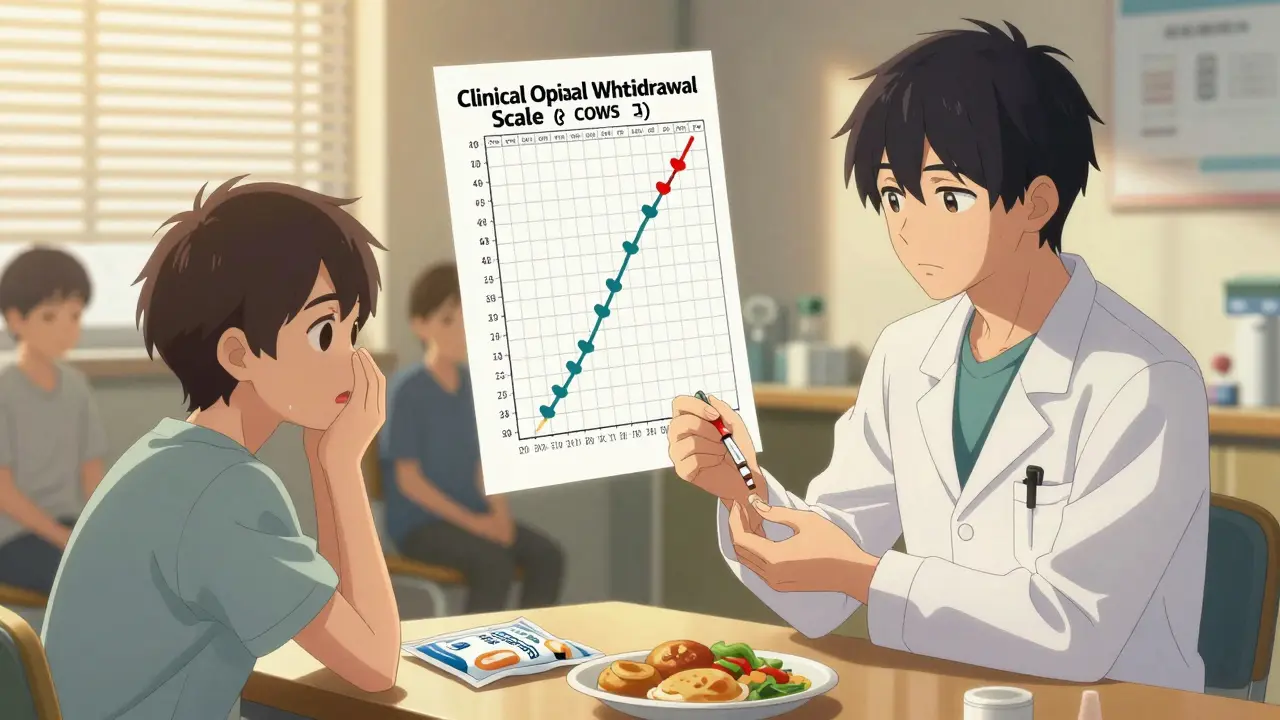
Doctors use something called the Clinical Opioid Withdrawal Scale (COWS) to measure how bad symptoms are. It’s an 11-point checklist - things like tremors, sweating, anxiety, and stomach cramps. Scores from 0 to 47 tell the provider whether you’re in mild, moderate, or severe withdrawal. That helps them adjust your dose precisely. No guesswork. No "wait and see."
For people still on prescription opioids, tapering is often the best first step. Instead of quitting cold turkey, doctors slowly lower the dose - usually by 10 to 20% every 3 to 7 days. This cuts withdrawal severity by up to 80%. A full taper can take 4 to 8 weeks, but it’s far safer than stopping suddenly.
Hydration and nutrition are non-negotiable. Vomiting and diarrhea drain your body of fluids and electrolytes. You need at least 2 to 3 liters of oral rehydration solution every day. Plain water won’t cut it. You need sodium, potassium, and glucose. Broth, sports drinks (low sugar), and over-the-counter rehydration powders help. Eating small, bland meals - toast, rice, bananas - keeps your stomach from shutting down completely.
Non-drug support matters too. Cognitive behavioral therapy helps rewire the thoughts that lead to cravings. Acupuncture has been shown in studies to reduce symptom severity by 25 to 30% in two out of three people. Even simple things - warm baths, light walking, deep breathing - help calm the nervous system. You’re not just treating the body. You’re rebuilding your sense of control.
What’s Dangerous About Withdrawal?
Let’s be clear: opioid withdrawal itself rarely kills. But what happens during and after it? That’s where the real danger lies.Without medical supervision, dehydration from vomiting and diarrhea can lead to kidney failure or dangerous electrolyte imbalances. One study found 12 to 15% of people detoxing at home had severe imbalances. That’s not rare. That’s common.
But the biggest risk? Relapse. When you stop using opioids, your tolerance drops fast. Your body forgets how to handle the same dose you used before. If you go back to using - even half your old amount - you can overdose. Data shows overdose risk triples to fivefold in the first 4 weeks after withdrawal. That’s why so many overdose deaths happen right after someone gets out of jail or finishes rehab.
That’s why experts now say: don’t wait to start treatment. You don’t need to suffer through withdrawal before getting help. Medication-assisted treatment can begin on day one - even while you’re still feeling sick. That’s the new standard. And it works.

What’s Changing in Treatment?
The field is evolving fast. In 2023, a new extended-release buprenorphine formulation cut withdrawal symptoms by 45% in the first 72 hours compared to older versions. That’s a game-changer for people in the most intense phase.Researchers are also looking at genetics. Certain gene variants - like CYP2B6 - can predict how fast your body breaks down buprenorphine. That could one day mean personalized treatment plans based on your DNA. Not trial and error. Precision.
Government funding is increasing too. The U.S. federal government allocated $30 million in 2022 to expand withdrawal services in community clinics, aiming to reach 500,000 more people by 2025. But here’s the hard truth: only 18% of the 2.7 million Americans with opioid use disorder get evidence-based treatment. That’s a massive gap. Access still isn’t equal. Waiting lists are long. Stigma still blocks people from asking for help.
What Should You Do?
If you or someone you care about is considering stopping opioids:- Don’t quit cold turkey. It’s dangerous and rarely works long-term.
- Seek medical help. Talk to a doctor about buprenorphine or a taper plan. You don’t need to suffer to get help.
- Hydrate. Eat. Rest. Your body needs fuel to heal.
- Plan for what comes next. Withdrawal is just the first step. Recovery needs ongoing support - therapy, peer groups, medication if needed.
Recovery isn’t about willpower. It’s about science, support, and time. And it’s possible - if you don’t try to do it alone.
How long do opioid withdrawal symptoms last?
For short-acting opioids like heroin or oxycodone, symptoms usually start within 8 to 12 hours, peak at 48 to 72 hours, and fade within 7 to 10 days. For long-acting opioids like methadone, symptoms begin 24 to 36 hours after the last dose, peak around day 3, and can last up to 14 days or longer. Emotional symptoms like anxiety and depression may persist for weeks after physical symptoms subside.
Is opioid withdrawal life-threatening?
Withdrawal itself is rarely fatal in healthy adults. But complications like severe dehydration from vomiting and diarrhea can lead to dangerous electrolyte imbalances. The biggest danger is relapse after detox, when tolerance drops - leading to a much higher risk of fatal overdose. Medical supervision greatly reduces these risks.
Can you detox from opioids at home safely?
While some people attempt home detox, it’s not recommended without medical oversight. The risk of dehydration, seizures, or relapse is high. Medical detox centers monitor vital signs, provide hydration, manage symptoms with medications like buprenorphine, and reduce the chance of complications. For long-term success, professional support is far more effective.
What medications help with opioid withdrawal?
FDA-approved medications include buprenorphine (Suboxone), methadone, and naltrexone. Buprenorphine is the most commonly used because it reduces withdrawal symptoms by 60-70%, has a lower risk of misuse, and can be prescribed by any licensed doctor since 2021. Methadone is used in clinics for more severe cases. Naltrexone blocks opioids and is used after detox to prevent relapse.
Does tapering off opioids reduce withdrawal symptoms?
Yes. Gradually reducing the opioid dose by 10-20% every 3-7 days can cut withdrawal severity by up to 80% compared to quitting abruptly. Tapering is especially helpful for people on prescription opioids and allows the body to adjust more smoothly. A full taper usually takes 4 to 8 weeks for chronic users.
Why is ongoing treatment important after withdrawal?
Withdrawal only removes the physical dependence. Without ongoing treatment - like medication-assisted therapy, counseling, or peer support - most people relapse. Studies show only 20-25% stay off opioids after detox alone. But with 6 to 12 months of continued treatment, success rates jump to 40-60%. Recovery isn’t a detox. It’s a process.





Ashlyn Ellison
February 9, 2026 AT 02:13Marie Fontaine
February 9, 2026 AT 13:33John Watts
February 10, 2026 AT 08:08Monica Warnick
February 12, 2026 AT 00:34Joshua Smith
February 13, 2026 AT 16:41John McDonald
February 15, 2026 AT 08:56Kathryn Lenn
February 17, 2026 AT 02:05Angie Datuin
February 18, 2026 AT 01:51Ken Cooper
February 18, 2026 AT 19:52Susan Kwan
February 20, 2026 AT 01:10Brett Pouser
February 21, 2026 AT 21:32Andrew Jackson
February 23, 2026 AT 13:05glenn mendoza
February 24, 2026 AT 07:23