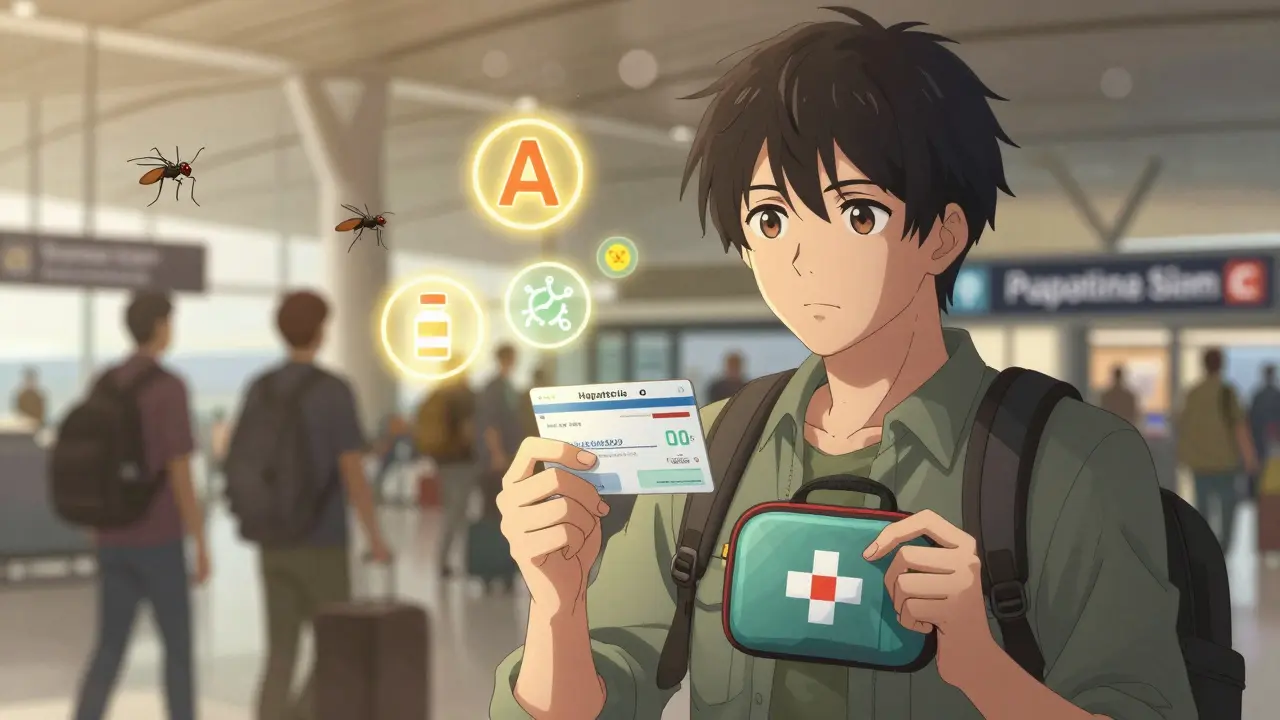
Going abroad doesn’t mean you have to risk getting sick. Every year, millions of travelers return home with more than just souvenirs-they bring back infections like hepatitis A, typhoid, or malaria. But here’s the truth: travel vaccines, proper malaria prevention, and smart food choices can cut your risk by more than 70%. This isn’t about fear-it’s about preparation.
What You Need to Know Before You Book Your Flight
Most people wait until the week before departure to think about travel health. That’s too late. Vaccines like Hepatitis A and typhoid need time to work. The CDC says 73% of travelers don’t see a provider until less than two weeks before leaving. By then, you might miss your second Hepatitis A shot or not have enough time for malaria pills to build up in your system.
Start with the basics. Make sure your routine shots are up to date: MMR, Tdap, and varicella. These aren’t optional just because you’re not going to a remote village. Measles outbreaks still happen in Europe, Asia, and Latin America. A single missed dose can turn a vacation into a hospital stay.
Vaccines That Actually Matter
Not all vaccines are created equal when it comes to travel. Hepatitis A is the most common vaccine-preventable illness among travelers-over 1.4 million cases happen globally every year. It spreads through contaminated food and water. The good news? Two doses of the Hepatitis A vaccine give you 95% protection that lasts at least 25 years. One dose still gives you strong short-term coverage, but don’t skip the second.
Typhoid is another big one. If you’re heading to South Asia, Africa, or parts of Latin America, you need it. The newer typhoid conjugate vaccine (TCV) is better than the old version-it works for kids as young as 6 months and lasts longer. It’s 87% effective for at least three years. The older shot? Only 50-80% effective, and protection fades faster.
Yellow fever vaccine is mandatory in 194 countries. If you’re flying into or from a country where it’s present, you’ll need the International Certificate of Vaccination. No certificate? You could be turned away at the airport or forced into a six-day quarantine. The vaccine lasts for life after one dose, but you need to get it at least 10 days before travel.
Malaria Prophylaxis: Choosing the Right Pill
Malaria isn’t just a tropical disease anymore. Climate change has pushed mosquito zones higher and farther. The CDC estimates 3,000-5,000 cases of imported malaria happen in the U.S. every year-almost all from travelers who didn’t take their pills correctly.
There are four main options, each with trade-offs:
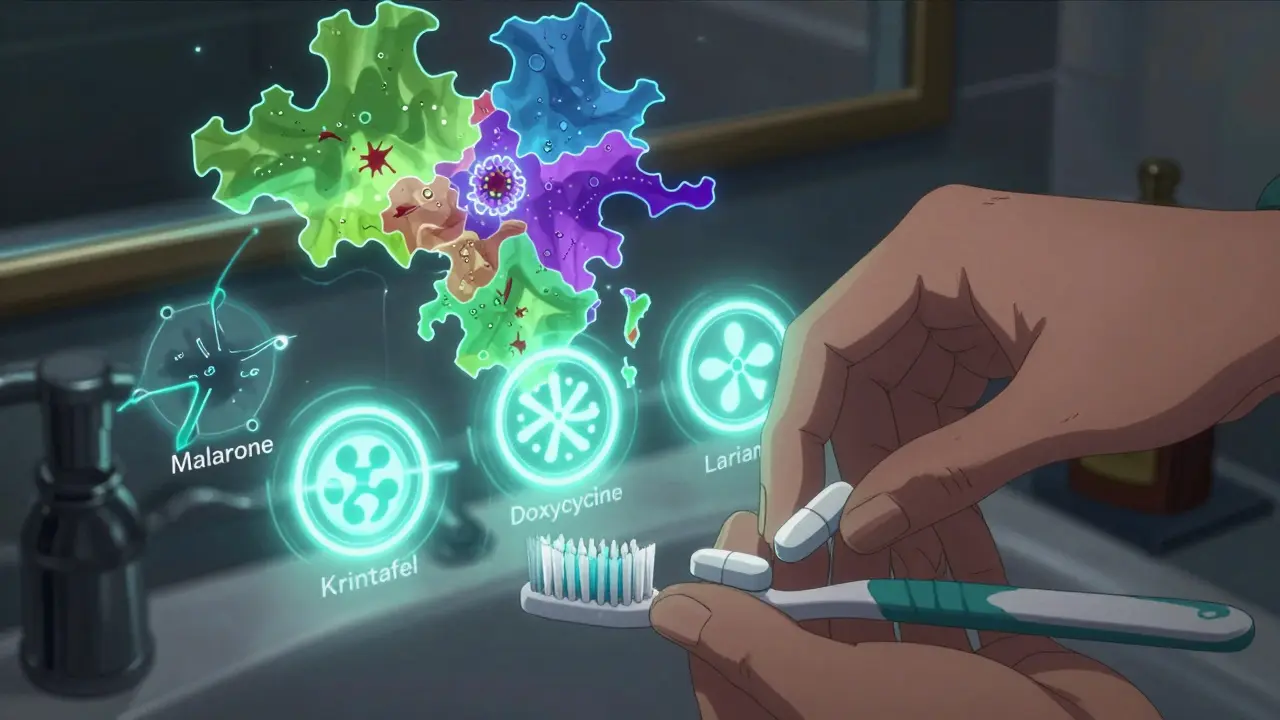
- Atovaquone-proguanil (Malarone): Take one pill daily, starting 1-2 days before travel. It’s 95% effective and has fewer side effects. But it’s expensive-around $220 for a 3-week trip.
- Doxycycline: A daily pill, $45 for the same trip. It’s 90% effective, but 30% of people get bad sunburns because it makes your skin sensitive to UV light. Avoid the beach if you’re on this one.
- Mefloquine (Lariam): Taken weekly, started 2-3 weeks before travel. It’s cheap and convenient, but some people get severe anxiety, dizziness, or even hallucinations. Reddit users report ER visits after taking it in Thailand.
- Tafenoquine (Krintafel): Newer option, taken weekly, started 3 days before travel. Approved for kids over 16 in 2025. Great for convenience, but you must be tested for G6PD deficiency first. If you’re deficient, this drug can destroy your red blood cells.
Adherence is the real problem. Only 62% of travelers take their pills consistently. Missing even a few doses can leave you unprotected. Set phone alarms. Put the pills next to your toothbrush. Don’t rely on memory.
Safe Food Practices: The Simple Rules That Save Lives
Travelers’ diarrhea affects 30-70% of people depending on where they go. In Southeast Asia, it’s closer to 70%. The main culprit? E. coli and other bacteria from contaminated water or food.
Follow the golden rule: boil it, cook it, peel it, or forget it.
- Don’t drink tap water-even brushing your teeth with it can be risky in some places.
- Ice is a silent killer. If you didn’t see it made from bottled or boiled water, skip it.
- Street food isn’t off-limits, but watch how it’s handled. Hot, freshly cooked food is safer than something sitting out for hours.
- Raw vegetables? Skip them unless you’re sure they were washed in clean water. Salads are a common source of illness.
- Undercooked meat? Avoid it. Cook poultry to 165°F (74°C), ground meats to 160°F (71°C), and fish to 145°F (63°C).
Still worried? Bismuth subsalicylate (Pepto-Bismol) can reduce your risk by up to 65%. Take two tablets four times a day while you’re in high-risk areas. It’s not a cure, but it’s a shield.
What to Pack in Your Travel First-Aid Kit
Don’t wait until you’re sick to figure out what to do. Pack these essentials:
- Standby antibiotics: Azithromycin is now the top choice for travelers’ diarrhea. But here’s the catch-many U.S. pharmacies are running low because pediatric doses are prioritized. Ask your doctor for a prescription before you leave.
- Oral rehydration salts: Essential if you get diarrhea. Dehydration hits fast in hot climates.
- Bismuth subsalicylate: As mentioned, for prevention.
- Hand sanitizer with at least 60% alcohol: Use it before eating, even if you’re not touching food directly.
- Prescription meds in original bottles with doctor’s letters: Many countries restrict ADHD meds, opioids, or strong painkillers. A letter with generic names can save you from being detained at customs.

What No One Tells You
Some things are harder than they look. You might think you’re being careful-eating only from busy stalls, drinking bottled water-but still get sick. Why? Contaminated ice. Unpasteurized fruit juice. A chef using tap water to rinse lettuce. Even in luxury hotels.
Also, resistance is rising. Azithromycin, once a miracle drug for diarrhea, now fails in over 30% of cases in Southeast Asia. That’s why having a backup plan matters. Your doctor should give you more than one option.
And yes-climate change is making this worse. Malaria zones are expanding. Floods spread contaminated water. Heat makes food spoil faster. What was safe five years ago might not be now.
Final Checklist: 7 Things to Do Before You Leave
- See a travel clinic 4-6 weeks before departure.
- Get Hepatitis A, typhoid, and any other destination-specific vaccines.
- Choose your malaria pill and start taking it on time.
- Get a prescription for azithromycin and oral rehydration salts.
- Bring all meds in original containers with doctor’s notes.
- Carry a small bottle of hand sanitizer and disinfectant wipes.
- Download the CDC Yellow Book app or print the latest edition (2026 released April 23, 2025).
Travel medicine isn’t about being paranoid. It’s about being prepared. The same people who lock their bags and buy travel insurance forget to protect their health. Don’t be one of them.
Do I need a yellow fever vaccine for my trip?
Yes, if you’re traveling to or from a country where yellow fever is present. The vaccine is required by law in 194 countries. You’ll need an International Certificate of Vaccination, which is only valid 10 days after the shot. Without it, you could be denied entry or quarantined for up to six days.
Can I get all travel vaccines at my regular doctor’s office?
Some can, but not all. Routine vaccines like MMR and Tdap are usually available. But specialized ones like typhoid, yellow fever, or rabies are often only given at travel clinics or public health departments. Many regular doctors don’t stock them or aren’t trained in the timing and combinations needed for travel.
Is it safe to take malaria pills if I’m pregnant?
Avoid travel to malaria zones if you’re pregnant. If you must go, atovaquone-proguanil is considered the safest option, but only under a doctor’s supervision. Mefloquine is not recommended in the first trimester. Doxycycline is strictly avoided because it affects fetal bone and tooth development. Always consult a travel medicine specialist.
What if I get sick while traveling and can’t find a pharmacy?
If you’ve packed oral rehydration salts and bismuth subsalicylate, you can manage mild diarrhea at first. For more serious cases, try to find a clinic-many tourist areas have one. If you have a prescription for azithromycin, take it as directed. Don’t wait to see if it gets better. Dehydration can become life-threatening fast, especially in children and older adults.
Are travel vaccines covered by insurance?
Some plans cover routine vaccines, but many don’t cover travel-specific ones like typhoid or yellow fever. Check with your insurer before your appointment. Some clinics offer payment plans, and public health departments often have lower prices. Consider it part of your travel budget-it’s cheaper than a hospital bill abroad.
Why is the CDC Yellow Book so important?
It’s the gold standard. Used by 92% of U.S. travel clinics, it’s updated every two years with the latest data on outbreaks, vaccine recommendations, and drug resistance. Other guides exist, but none have the same depth or authority. Download the app or print the latest edition (2026) before you go.
Can I skip vaccines if I’m only staying in a resort?
No. Hepatitis A and typhoid spread through food and water-even in high-end hotels. Ice in your drink, unpeeled fruit, or poorly washed salad greens can carry the virus. Resorts aren’t immune. You’re still exposed to the same environment as everyone else.




jenny guachamboza
December 21, 2025 AT 18:53Kiranjit Kaur
December 22, 2025 AT 06:52Sai Keerthan Reddy Proddatoori
December 23, 2025 AT 06:59Cara Hritz
December 24, 2025 AT 16:38Jeremy Hendriks
December 26, 2025 AT 02:03Candy Cotton
December 26, 2025 AT 05:37Julie Chavassieux
December 27, 2025 AT 22:52Ajay Brahmandam
December 28, 2025 AT 11:21Tarun Sharma
December 29, 2025 AT 00:20Aliyu Sani
December 30, 2025 AT 12:43Gabriella da Silva Mendes
December 30, 2025 AT 15:43Jim Brown
December 31, 2025 AT 05:09Herman Rousseau
December 31, 2025 AT 14:12Sam Black
January 1, 2026 AT 11:02Jamison Kissh
January 1, 2026 AT 17:52