
Why Your Medications Expire So Fast
You buy a bottle of pills, take a few, and forget about it-until months later you find it tucked behind the toothpaste, looking a little different. Maybe the tablets are cracked. Maybe the liquid looks cloudy. You wonder: is it still safe? The truth is, most medications don’t expire because they go bad on their own-they expire because they were stored wrong.
The FDA says expiration dates aren’t arbitrary. They’re the last day a drug is guaranteed to work at full strength-if stored exactly as the manufacturer intended. That means if you keep your antibiotics in the bathroom, your insulin on the kitchen counter, or your nitroglycerin in a sunny window, you’re not just wasting money-you’re risking your health.
Here’s what actually happens when meds are stored poorly: humidity turns aspirin into vinegar-smelling powder. Heat breaks down antibiotics in under three months. Light degrades eye drops, turning them into breeding grounds for bacteria. And in Australia, where humidity spikes above 80% in summer, this isn’t just a theory-it’s a daily reality in homes without climate control.
The Three Biggest Storage Mistakes (And How to Fix Them)
Most people make the same three mistakes. Let’s break them down, so you don’t have to.
Mistake 1: Storing meds in the bathroom
The bathroom is the worst place in your house for medicine. Every time you shower, humidity spikes to 85-95%. That’s enough to make pills absorb moisture, break down, and lose potency. A UCHealth study showed aspirin degrades 300% faster in bathroom conditions than in a dry room.
Fix: Move your meds out. Keep them in a cool, dry place-like a bedroom dresser drawer or a closet shelf. Avoid places near windows, vents, or mirrors.
Mistake 2: Leaving them near the stove or fridge
Heat is the silent killer of meds. The kitchen is full of temperature swings. A stove can raise the air temperature by 15°C in under 30 minutes. That’s enough to ruin antibiotics, thyroid meds, and even some painkillers.
And while refrigerators seem safe, storing meds in the door or near the freezer causes freezing and thawing cycles. That’s bad for liquids like insulin or eye drops.
Fix: Keep meds in the center of the fridge-only if the label says “refrigerate.” Otherwise, store them at room temperature, away from any heat source. Ideal range: 20-25°C (68-77°F).
Mistake 3: Transferring pills to pill organizers or random containers
It’s tempting to dump your pills into a plastic pillbox for convenience. But that removes the protective packaging. Original bottles are amber-colored to block 97% of UV light. Clear containers? They let light in-and light breaks down meds like antidepressants and epilepsy drugs.
Plus, pill organizers don’t control humidity. Moisture gets in. Labels get lost. You forget what’s what.
Fix: Keep meds in their original bottles. If you use a pill organizer, only fill it for the day or week. Keep the main supply sealed and stored properly.
What Each Type of Medication Really Needs
Not all meds are the same. Some are delicate. Others are tough. Here’s what you need to know for the most common types:
- Tablets and capsules (ibuprofen, antibiotics, birth control): Store at room temperature (20-25°C), away from moisture. Keep in original bottle.
- Insulin: Unopened? Refrigerate at 2-8°C. Opened? Can stay at room temperature for up to 28 days. Never freeze it.
- Nitroglycerin (heart medication): Must stay in its original dark glass bottle. Light and air destroy it fast. Replace every 3-6 months after opening.
- Liquid antibiotics and eye drops: Refrigerate if instructed. Once opened, throw away after the date on the label-even if it looks fine. Contaminated eye drops can cause blindness.
- Suppositories and creams: Some need refrigeration. Check the label. If they melt or smell odd, toss them.
- Emergency inhalers (albuterol): Don’t leave them in the car. Extreme heat or cold can damage the valve. Store at room temperature.
Pro tip: If your medication came with a leaflet, keep it. The storage instructions are printed there. If you lost it, look up the drug name + “storage” on the FDA or TGA website.
How to Spot a Degraded Medication
You don’t need a lab to tell if your meds are bad. Here are the red flags:
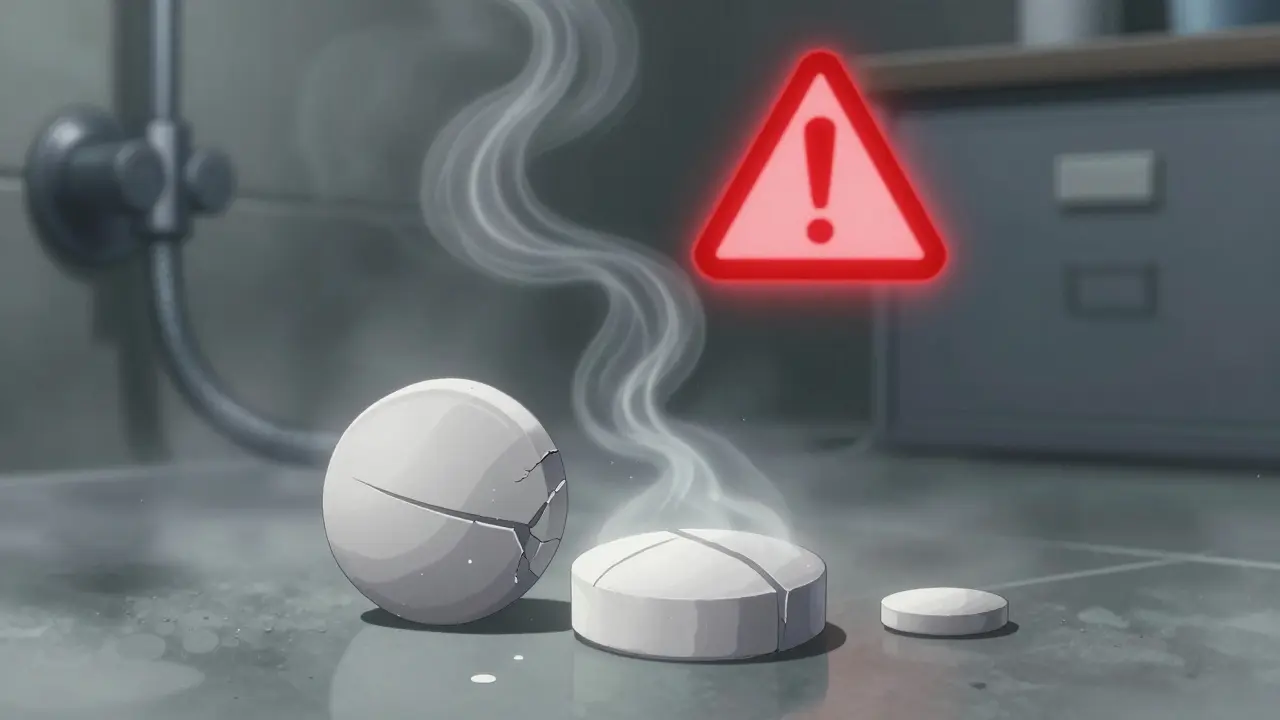
- Smell: Aspirin that smells like vinegar? That’s acetylsalicylic acid breaking down. Toss it.
- Color: Tablets that are darker, lighter, or have spots? Don’t take them.
- Texture: Pills that crumble, stick together, or feel oily? Gone bad.
- Liquids: Cloudiness, particles, or a change in thickness? Throw it out.
- Odor: Any unusual smell-even if it’s just “off”-means chemical change.
And don’t rely on the expiration date alone. If the medicine looks wrong, it’s wrong-even if the date is still months away.
Smart Storage Hacks That Actually Work
Here are proven, real-world tricks used by pharmacists and hospitals:
- Use a humidity monitor: A $15 hygrometer from a hardware store tells you if your storage spot is too damp. Aim for under 60% humidity.
- Put silica gel packs in your medicine box: Those little packets that come with new shoes or electronics? Save them. Toss one into your medicine drawer. They absorb moisture.
- Color-code expiration dates: Use dot stickers: red for this year, blue for next, green for two years out. Makes checking easy.
- Assign one person to check monthly: In households where someone checks meds every 30 days, 89% fewer expired drugs are kept around.
- Use a locked cabinet: Keeps meds safe from kids, pets, and theft. Bonus: it’s usually in a cooler, less humid spot than the bathroom.
Some people use smart pillboxes like MedMinder Pro, which track temperature and humidity. They’re expensive, but if you’re on multiple critical meds, they’re worth it.
What to Do With Expired or Unused Meds
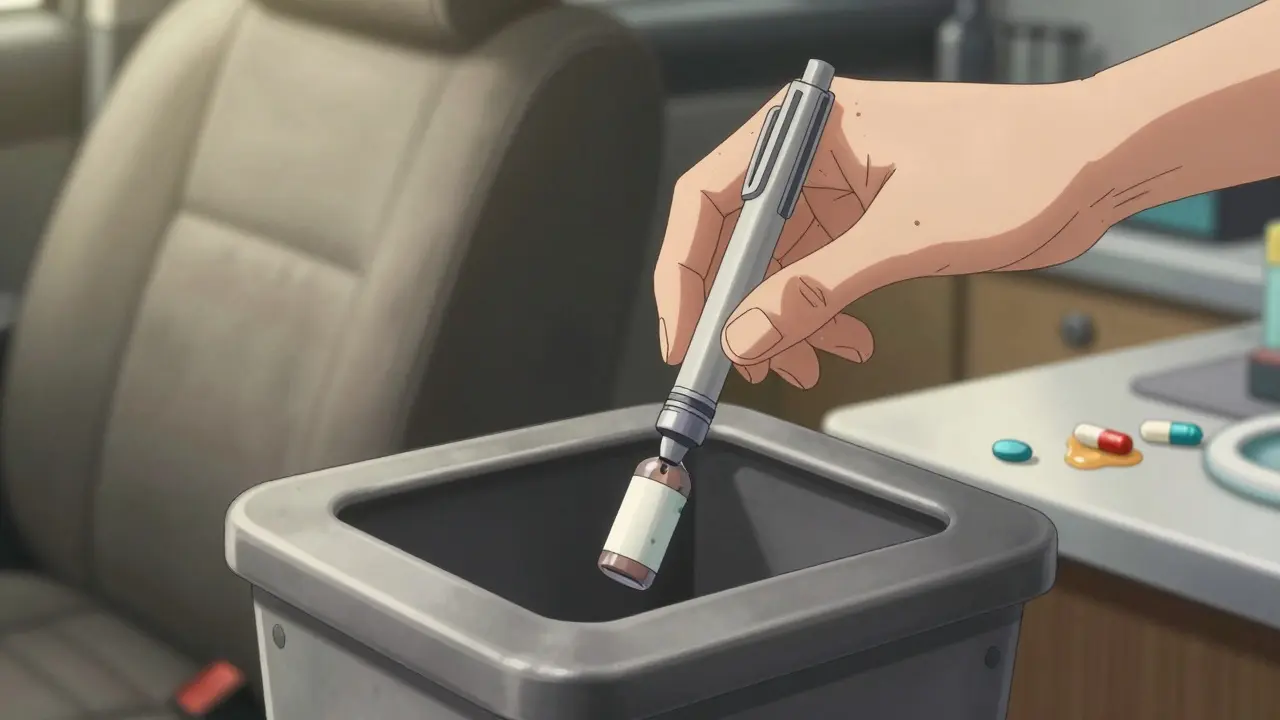
Never flush pills down the toilet. Never throw them in the trash without mixing them with coffee grounds or cat litter. Both are dangerous and illegal in many places.
Here’s what to do instead:
- Find a take-back program. In Australia, pharmacies like Chemist Warehouse and TerryWhite Chemmart offer free disposal bins. The DEA’s National Prescription Drug Take Back Day (next event October 26, 2024) also collects meds at over 11,000 sites nationwide.
- If no program is nearby, mix pills with kitty litter or coffee grounds in a sealed bag. Throw it in the trash. This makes them unappealing and unusable.
- For needles or sharps, use a dedicated sharps container. Don’t use soda bottles-they’re not safe.
Pro tip: Clean out your medicine cabinet every six months. Toss anything expired, discolored, or unlabeled. It’s not hoarding-it’s safety.
The Bigger Picture: Why This Matters
Every year, $20 billion in medications are wasted in the U.S. alone because they were stored wrong. In Australia, it’s not far behind. That’s money, yes-but it’s also lives.
Imagine someone with asthma takes an inhaler that lost potency. Or a diabetic uses insulin that degraded in the heat. These aren’t hypotheticals. They happen every day.
And it’s not just about money. Degraded meds can cause poisoning, allergic reactions, or treatment failure. The CDC says 37% of premature expiration cases come from improper storage. That’s nearly 4 in 10.
Proper storage isn’t a chore. It’s a habit that keeps you and your family safe. And it’s easier than you think.
Final Checklist: Your Medication Storage Plan
- Remove all meds from the bathroom.
- Keep everything in original containers with labels.
- Store at 20-25°C, away from heat, light, and moisture.
- Refrigerate only if the label says so.
- Check for changes in color, smell, or texture every month.
- Use a hygrometer if you live in a humid climate.
- Dispose of expired or damaged meds through a take-back program.
- Assign one person to do monthly checks.
If you follow this, your meds will last. Your health will stay protected. And you’ll stop wasting money on pills that never worked.
Can I still use medicine after the expiration date?
The expiration date is the last day the manufacturer guarantees full potency and safety-under proper storage. If the medicine was stored perfectly (cool, dry, dark), some may still work after that date. But in real homes? Almost never. Heat, humidity, and light degrade meds fast. Never take expired medicine if it looks, smells, or feels different. For critical drugs like insulin, epinephrine, or heart meds, never risk it.
Is it safe to store pills in the fridge?
Only if the label says so. Most pills don’t need refrigeration. In fact, moisture from the fridge can make them degrade faster. If a medication requires refrigeration (like insulin or some liquids), store it in the center of the fridge-not the door. Keep it in its original bottle to avoid condensation.
Why do some medicines say ‘keep in original container’?
Original bottles are made of amber plastic or glass to block UV light, which breaks down active ingredients. They also have tight seals to keep moisture out. Transferring pills to a plastic pillbox or Ziploc bag removes that protection. Even if the pills look fine, they may have lost potency.
What’s the best place to store medicine in a small apartment?
A locked drawer in a bedroom dresser, away from windows or vents. Avoid bathrooms, kitchens, and laundry rooms. If you have no closet, use a small plastic storage box with silica gel packs. Keep it out of reach of kids and pets. Temperature should stay between 20-25°C. A $15 digital thermometer helps you check.
Can I use expired epinephrine (EpiPen) in an emergency?
If you have no other option during a life-threatening allergic reaction, using an expired EpiPen is better than using nothing. But don’t rely on it. Expired epinephrine can lose potency-sometimes by 30% or more. Always replace it before it expires. Keep a backup. Keep it at room temperature, not in the car or in direct sunlight.
How do I dispose of old meds safely in Australia?
Take them to any pharmacy that offers a medicine disposal bin. Chemist Warehouse, TerryWhite Chemmart, and many independent pharmacies participate. You can also check with your local council for community collection days. Never flush or throw them in the trash without mixing them with coffee grounds or kitty litter first.
What’s Next for Medication Storage?
Pharmaceutical companies are starting to design drugs that last longer in heat and humidity. Merck’s new heat-stable insulin, approved in late 2023, stays effective at 30°C for 56 days. That’s a game-changer for people in hot climates.
Future prescriptions may come with built-in sensors that change color if the drug degraded. The FDA is testing this for high-risk meds by 2025. In the meantime, the best tool you have is knowledge-and a simple habit: check your meds every month.
Store them right. Check them often. Toss what’s wrong. It’s not complicated. But it saves lives.



Diana Alime
December 23, 2025 AT 14:46Adarsh Dubey
December 25, 2025 AT 09:47Jillian Angus
December 25, 2025 AT 11:35Pankaj Chaudhary IPS
December 27, 2025 AT 00:55Paula Villete
December 28, 2025 AT 13:28Steven Mayer
December 28, 2025 AT 19:02Charles Barry
December 29, 2025 AT 10:37Rosemary O'Shea
December 30, 2025 AT 10:01siddharth tiwari
January 1, 2026 AT 09:22Bartholomew Henry Allen
January 1, 2026 AT 20:28Andrea Di Candia
January 2, 2026 AT 01:25bharath vinay
January 2, 2026 AT 14:42