Side Effect Analyzer
Enter details about your medication and side effect to determine if it's likely an on-target or off-target effect based on medical evidence.
This analysis is based on the principles explained in the article. Always consult your doctor for medical advice.
When you take a pill for high blood pressure, depression, or cancer, you expect it to help. But sometimes, it causes unexpected problems - nausea, rashes, fatigue, or even heart issues. Why does this happen? The answer isn’t just "bad luck" or "all drugs have side effects." It’s about whether the drug is hitting the right target or accidentally hitting the wrong one. This is the core difference between on-target and off-target drug effects - and understanding it changes how you think about every medication you take.
What Exactly Is an On-Target Effect?
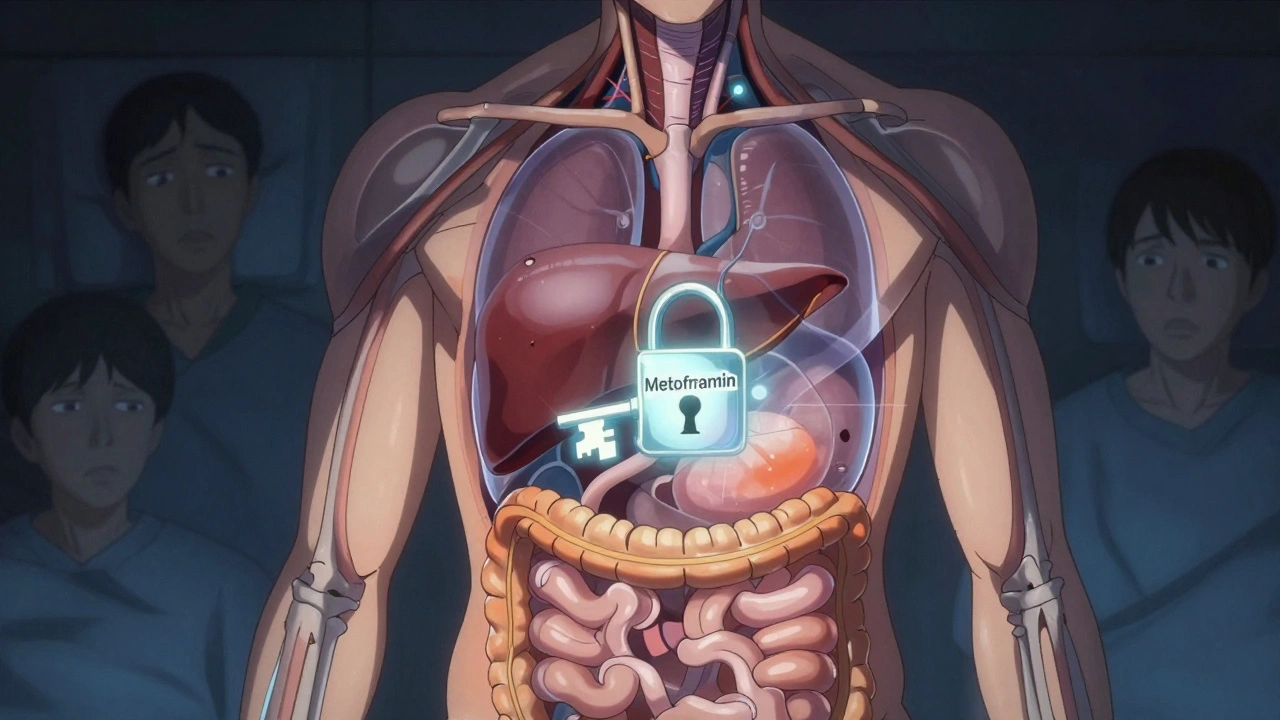
An on-target effect is when a drug does exactly what it’s supposed to do - but in the wrong place. Think of it like a key that fits perfectly in one lock, but you accidentally use it in another lock that looks similar. The mechanism works, but the result isn’t what you wanted.
For example, metformin, a common diabetes drug, lowers blood sugar by reducing glucose production in the liver. That’s its on-target effect. But it also slows digestion and changes gut bacteria. That’s why so many people get diarrhea - not because the drug is broken, but because the same mechanism that helps control blood sugar is also active in the intestines. This is on-target toxicity: the intended action causing side effects in healthy tissues.
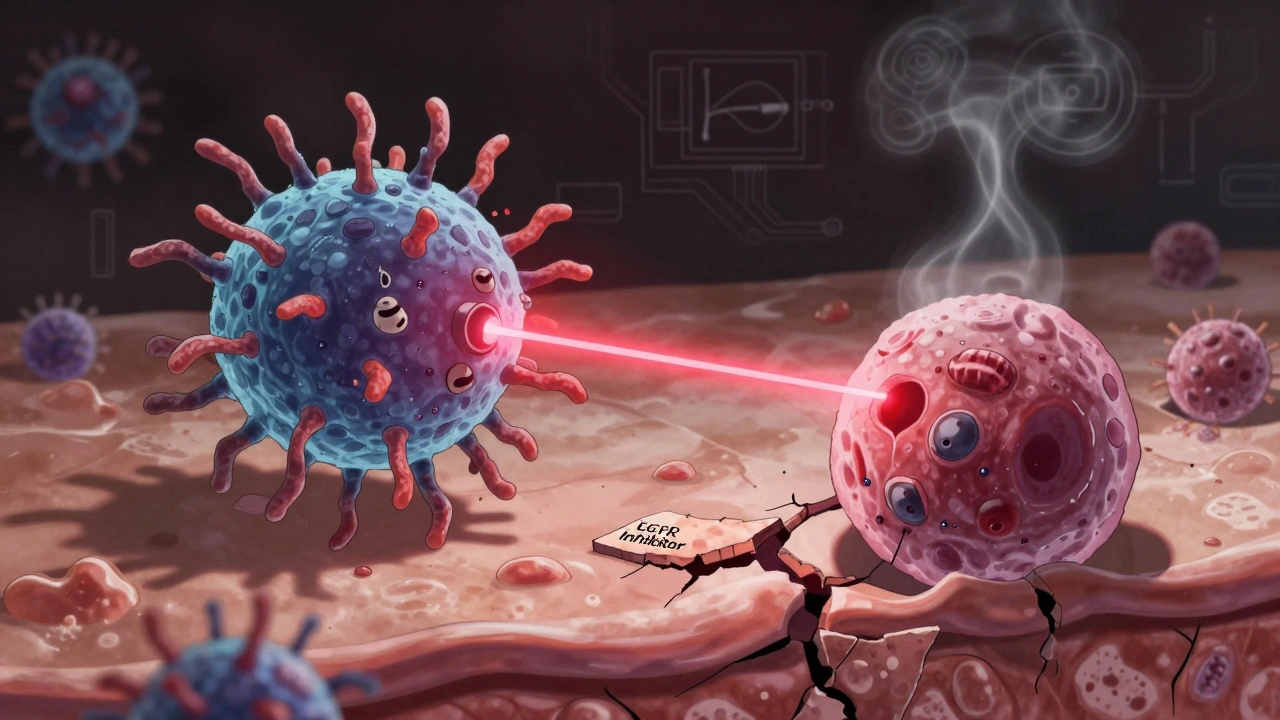
Another clear case is skin rash from EGFR inhibitors used in lung cancer. These drugs block a protein (EGFR) that cancer cells rely on to grow. But EGFR is also vital for healthy skin cells. When you block it in tumors, you also block it in your skin. Result? A painful, itchy rash in nearly 70% of patients. Doctors expect this. They don’t stop treatment - they manage it with creams and dose adjustments.
On-target side effects are predictable. They’re listed in the drug’s package insert. They’re common enough that clinicians know how to handle them. But they’re also the reason some drugs get pulled from the market - not because they’re dangerous, but because the side effects are too severe for the benefit they offer. For instance, certain heart drugs that lower blood pressure too aggressively can cause dangerously low blood pressure in elderly patients. That’s not a glitch. It’s the drug working too well in the wrong context.
What Makes an Effect Off-Target?
Off-target effects are the surprise attacks. The drug wasn’t designed to bind to that protein, enzyme, or receptor - but it did anyway. And now you’re paying the price.
Statins, the cholesterol-lowering drugs millions take daily, are a textbook example. Their main job is to block HMG-CoA reductase, an enzyme in the liver that makes cholesterol. That’s on-target. But statins also interfere with pathways involved in muscle cell energy production. In some people, this leads to muscle pain, weakness, or even rhabdomyolysis - a rare but life-threatening breakdown of muscle tissue. That’s off-target. The drug didn’t mean to do this. It just happened because the molecule happened to fit another biological target.
Kinase inhibitors, used in cancer treatment, are notorious for this. One drug, imatinib (Gleevec), was designed to block the BCR-ABL protein in leukemia. But it also blocks c-KIT, a protein found in gut cells and mast cells. That’s why some patients get swelling in their face and legs - fluid retention from off-target effects. The drug still works against cancer, but the side effects are real.
And it’s not just small molecules. Even biologics - large, complex drugs like antibodies - aren’t immune. Trastuzumab (Herceptin) targets HER2 in breast cancer. It’s highly specific, so off-target effects are rare. But when they happen, they’re serious: heart damage from unintended interference with heart muscle signaling. That’s off-target too.
Here’s the scary part: most drugs bind to more than one target. Studies show that small molecule drugs interact with an average of six unintended proteins at therapeutic doses. Kinase inhibitors? They bind to 25-30 different kinases. That’s not a flaw in design - it’s chemistry. Molecules are messy. They don’t always know where to stop.
Why Off-Target Effects Are Harder to Predict
On-target side effects are predictable because scientists know the target. They can test it in cells, animals, and humans. Off-target effects? They’re hidden. They show up only after the drug is in people - sometimes years after approval.
Why? Because labs test drugs on one or two cell types. But the human body has over 200 types of cells. A drug might be safe in liver cells but toxic in heart cells. Or it might work fine in mice but cause liver damage in humans. That’s what happened with a p38α MAPK inhibitor tested in dogs - it caused severe inflammation, but not in rats or primates. It took 18 months of testing to figure out why.
Modern tools are helping. The Open Targets Platform, used by 87% of top pharma companies, combines genetic, chemical, and clinical data to predict which proteins a drug might accidentally bind to. Transcriptome analysis - looking at how genes turn on and off after drug exposure - can show patterns that reveal off-target activity. One 2019 study used this to prove that statins triggered immune responses in some cells, even though that wasn’t their intended action.
Still, it’s not foolproof. The FDA found that 65% of Phase II drug failures due to toxicity were caused by off-target effects. That’s more than half. And these failures cost billions. A single failed drug can cost $1.2 million just in screening - not counting clinical trials.
When Off-Target Effects Become a Benefit
Here’s the twist: sometimes, off-target effects save lives.
Thalidomide was pulled from shelves in the 1960s after causing severe birth defects. Its off-target effect - interfering with blood vessel growth - was terrible in pregnancy. But decades later, researchers discovered it also suppressed inflammation and modulated the immune system. Now, it’s a frontline treatment for multiple myeloma. The same molecule that caused tragedy became a lifeline.
Sildenafil (Viagra) was originally designed to treat angina by relaxing blood vessels in the heart. But during trials, men reported something else: improved erections. That was an off-target effect on blood vessels in the penis. The company pivoted. Viagra became a billion-dollar drug.
Even chloroquine, once used for malaria, was repurposed during the early pandemic for COVID-19 because it disrupted viral entry into cells - not by hitting its original target, but by changing the pH inside cellular compartments. That’s off-target, but potentially useful.
These aren’t accidents. They’re discoveries. And they’re why some companies now use phenotypic screening - testing drugs on whole cells or organisms instead of isolated targets. It’s messier, but it finds drugs that work in the real body, not just in a test tube.
How Doctors and Patients Can Tell the Difference
As a patient, you don’t need to know the molecular biology. But you do need to know what’s likely and what’s not.
- If the side effect is common, expected, and listed in the drug’s warning label - it’s probably on-target. Skin rash from cancer drugs? Common. Diarrhea from metformin? Expected. Manage it. Don’t panic.
- If the side effect is rare, unusual, or affects a system unrelated to the drug’s purpose - it’s likely off-target. Heart palpitations from a diabetes drug? Muscle pain from a cholesterol pill? These need attention. Report them.
Surveys show that 82% of doctors consider on-target side effects "manageable," but only 37% feel the same about off-target ones. Why? Because off-target effects are unpredictable. They can come out of nowhere. They might require stopping the drug. They might need hospitalization.
One patient on Reddit summed it up perfectly: "I didn’t realize the diarrhea from my diabetes medication was actually the intended effect working too well in my gut." That’s on-target. If you got a seizure instead? That’s off-target. And that’s when you call your doctor.
What’s Changing in Drug Development
The industry is waking up. In 2015, only 35% of pharmaceutical companies did thorough off-target screening. By 2022, that number jumped to 78%. Why? Because the cost of failure is too high.
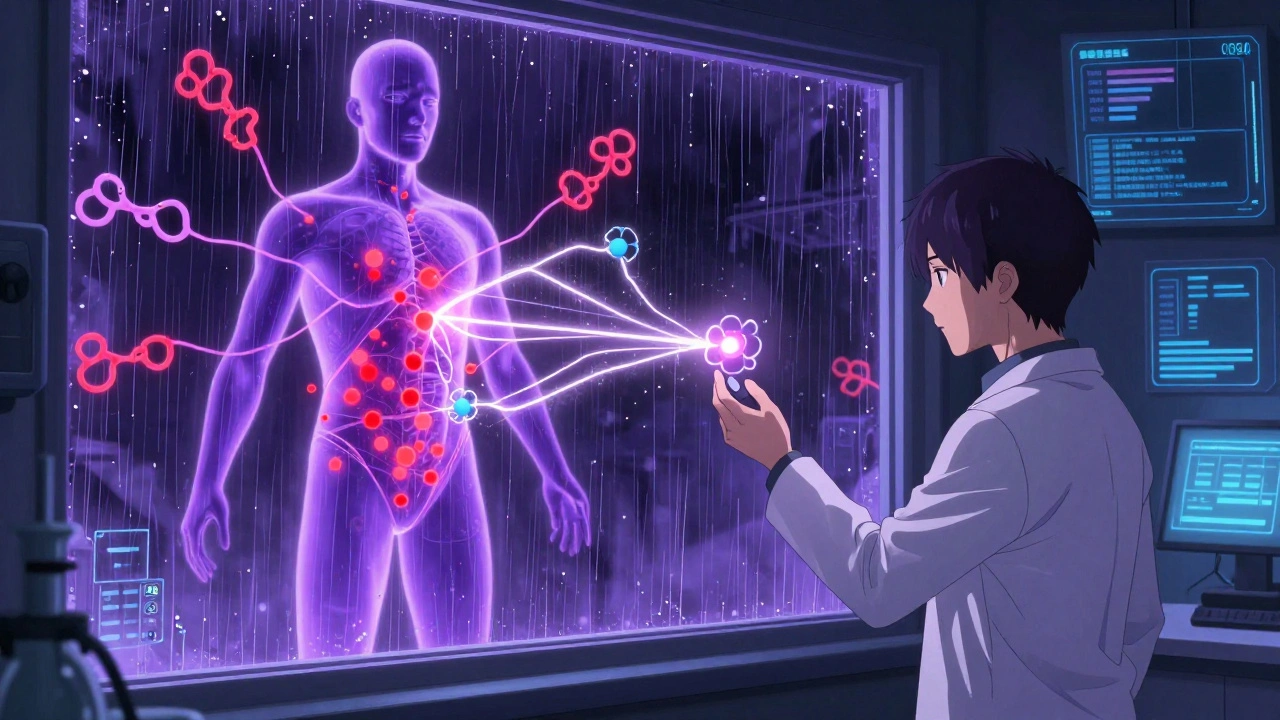
Companies like Genentech and Novartis now use tools like KinomeScan to test drugs against hundreds of kinases at once. AstraZeneca combines gene expression, protein levels, and metabolism data to spot trouble before it reaches humans. The European Medicines Agency now requires at least two different methods to prove a drug isn’t hitting the wrong targets.
And AI is stepping in. The Open Targets Platform 6.0, launched in early 2023, uses machine learning to predict off-target binding with 87% accuracy based on chemical structure. That’s a game-changer. It means drugs with clean profiles - minimal off-target hits - are more likely to succeed. And they’re more profitable. Drugs with fewer off-target effects generate 34% more revenue over their lifetime, according to IQVIA.
The future isn’t just about finding the right target. It’s about knowing every target a drug might touch - and avoiding the dangerous ones before a single human takes it.
What This Means for You
Whether you’re a patient, a caregiver, or just someone who takes medication, this knowledge gives you power. Side effects aren’t random. They’re biological consequences - either the drug working too well in the right place, or accidentally working in the wrong one.
Don’t assume all side effects are the same. Don’t stop a drug because you got a rash - ask if it’s expected. If your doctor says, "This is common with this class," it’s likely on-target. If they say, "We didn’t see this in trials," it might be off-target. Either way, report it.
And remember: the drugs that work best aren’t always the most specific. Sometimes, a little messiness - a few off-target hits - is what makes a drug truly effective. The goal isn’t perfection. It’s balance. The right effect, with the least harm.
Are all side effects caused by off-target effects?
No. Many side effects are on-target - meaning the drug is doing exactly what it’s supposed to do, but in a place where it causes problems. For example, metformin causes diarrhea because it slows digestion, which is part of how it lowers blood sugar. Skin rashes from cancer drugs happen because the drug blocks a protein needed for healthy skin. These aren’t mistakes. They’re predictable consequences of the drug’s intended action.
Can off-target effects be dangerous even if they’re rare?
Yes. Off-target effects are often rare, but they can be severe. Statins can cause rhabdomyolysis - a life-threatening muscle breakdown - in a tiny fraction of users. Some blood pressure drugs accidentally affect heart rhythm, leading to arrhythmias. These events are unpredictable and hard to screen for, which is why they’re the leading cause of drug failures in clinical trials. Even if the chance is 1 in 10,000, the impact can be catastrophic.
Why do some drugs have more off-target effects than others?
Small molecule drugs - like pills - are usually smaller and more chemically flexible, so they can bind to multiple proteins. Kinase inhibitors, for example, often hit 25-30 different targets. Biologics - like antibody injections - are larger and more precise, so they typically have fewer off-target interactions. That’s why drugs like Herceptin have cleaner side effect profiles than many oral cancer pills.
Is it possible to design a drug with zero off-target effects?
Not really - at least not with current technology. Molecules interact based on shape and chemistry, and the human body has thousands of similar proteins. Even highly selective drugs end up binding to something unexpected. The goal isn’t zero off-target effects - it’s minimizing them enough that the benefit outweighs the risk. That’s why modern drug development focuses on profiling every possible interaction before human testing.
How do doctors decide whether to keep a drug despite side effects?
They weigh the severity and frequency of side effects against the drug’s benefit. If a cancer drug causes a rash in 70% of patients but extends life by years, most will manage the rash. But if a drug causes a 1 in 100 risk of heart failure - even if it’s effective - doctors will hesitate. Off-target effects that are rare but severe often lead to discontinuation. On-target effects, even if common, are usually tolerated if they’re manageable.





iswarya bala
December 9, 2025 AT 09:15om guru
December 10, 2025 AT 17:22Jennifer Blandford
December 11, 2025 AT 02:21Iris Carmen
December 12, 2025 AT 23:51Delaine Kiara
December 13, 2025 AT 18:15Katherine Rodgers
December 15, 2025 AT 12:53Darcie Streeter-Oxland
December 16, 2025 AT 18:44Mona Schmidt
December 17, 2025 AT 17:09Guylaine Lapointe
December 18, 2025 AT 09:53Courtney Black
December 19, 2025 AT 09:52Ronald Ezamaru
December 19, 2025 AT 16:29Rich Paul
December 19, 2025 AT 21:40Ruth Witte
December 21, 2025 AT 07:45Noah Raines
December 22, 2025 AT 07:46