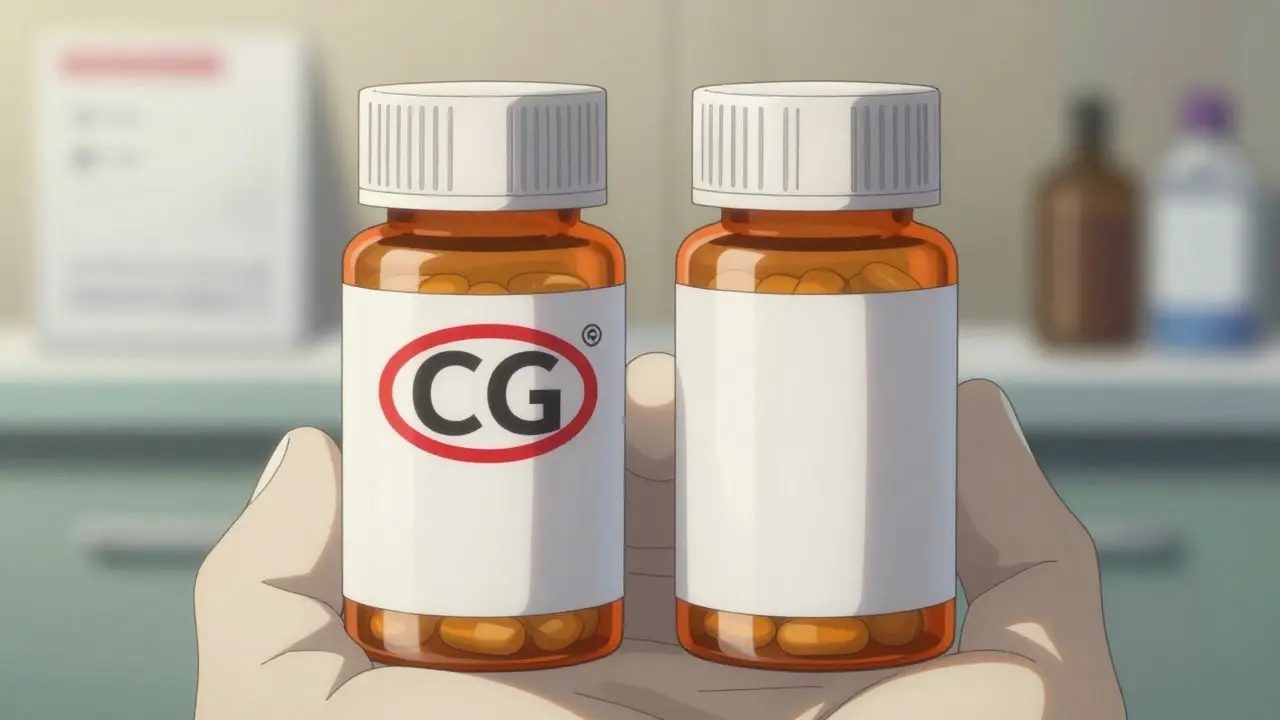
When your doctor prescribes a medication, you might get a pill that looks completely different from the brand-name version you saw in the ad. That’s because it’s a generic. But not all generics are the same. There are two main types: authorized generics and traditional generics. And the difference matters-more than most people realize.
What Exactly Is an Authorized Generic?
An authorized generic is the exact same drug as the brand-name version, down to the last ingredient. It’s made by the same company that makes the original brand, on the same production line, in the same factory. The only difference? No brand name on the label. No fancy packaging. Just the active ingredient and all the same inactive ingredients-fillers, dyes, coatings-unchanged. For example, if you take Singulair (montelukast) for asthma, the authorized generic is identical. Same chemical structure. Same absorption rate. Same effectiveness. The only thing missing is the Merck logo. It’s not a copy. It’s the real thing, just sold under a different name. These aren’t approved through the usual generic process. Instead, they’re sold under the original brand’s New Drug Application (NDA). That means the FDA doesn’t review them again. The brand manufacturer just needs to notify the FDA they’re launching an authorized generic. No bioequivalence studies. No extra testing. Just a label change.How Traditional Generics Are Different
Traditional generics, on the other hand, are made by completely different companies. They don’t use the brand’s formula. They create their own version that must meet FDA standards for bioequivalence. That means it has to deliver the same active ingredient at the same rate and in the same amount as the brand. But here’s the catch: the inactive ingredients can be different. That might sound minor. But for some drugs, even small changes in fillers or coatings can affect how the medicine is absorbed. This is especially true for drugs with a narrow therapeutic index-where the difference between a helpful dose and a harmful one is tiny. Think blood thinners like warfarin, seizure meds like phenytoin, or thyroid meds like levothyroxine. Traditional generics go through the Abbreviated New Drug Application (ANDA) process. That’s cheaper and faster than developing a brand drug, but it still requires proof that the generic works the same way in the body. The FDA accepts this because they already know the brand drug is safe and effective. So they don’t require new safety studies. Just proof of equivalence.Why the Ingredient Match Matters
Let’s say you’ve been taking your brand-name asthma inhaler for years. Your lungs respond perfectly. Then your pharmacy switches you to a traditional generic because it’s cheaper. You start having more flare-ups. You don’t know why. Maybe it’s stress. Maybe it’s pollen. Or maybe it’s the new coating on the pill that changed how fast the drug released. That’s not speculation. It’s documented. Some patients report noticeable differences when switching between traditional generics and the brand-or between different traditional generics. These aren’t placebo effects. For complex formulations like extended-release pills, patches, or inhalers, minor differences in inactive ingredients can alter how the drug behaves in the body. Authorized generics avoid this entirely. Because they’re identical to the brand, switching between them and the original brand is seamless. No adjustment period. No unexpected side effects. No guesswork.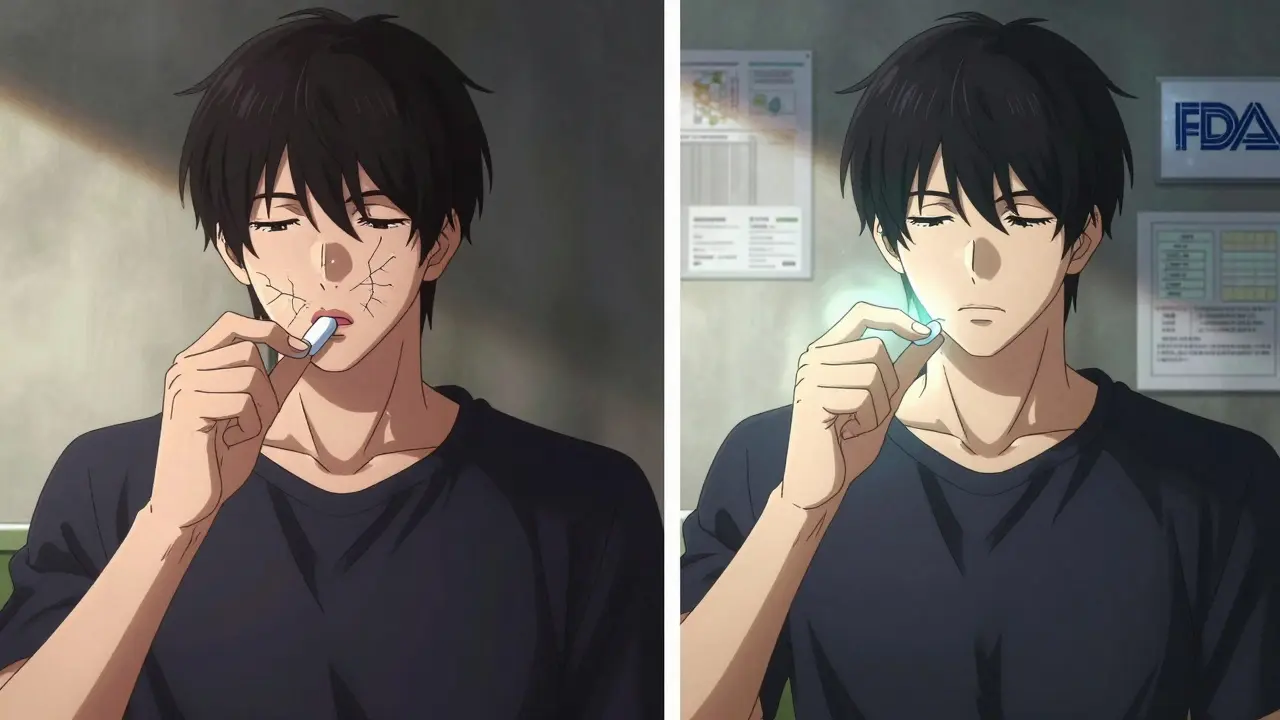
Cost: Who Pays Less?
You’d think authorized generics would cost more since they’re the exact same product. But they often cost less than the brand-and sometimes even less than traditional generics. Why? Because brand manufacturers use authorized generics as a strategic tool. When a patent is about to expire, they might launch their own authorized generic to compete with the first traditional generic. That drives down prices faster. Sometimes, they even launch the authorized generic before the first traditional generic hits the market. That’s called “authorized generic seeding.” Insurance companies often prefer authorized generics because they’re cheaper than the brand but just as reliable. Many formularies list them as preferred options. Pharmacists can substitute them without needing special permission from your doctor. Traditional generics are usually the cheapest option. But their price can vary wildly depending on how many manufacturers are making them. If only one company makes a traditional generic, prices can stay high. If five companies jump in, prices drop fast.How to Tell Them Apart
Here’s the problem: you can’t tell just by looking. Authorized generics aren’t listed in the FDA’s Orange Book-the official database of approved generic drugs. Traditional generics are. So if your pharmacist says, “This is a generic,” they might mean either. The best way to know? Ask. Say: “Is this an authorized generic?” If the answer is yes, you’re getting the brand’s exact formula. If not, it’s a traditional generic-and you might want to check if the inactive ingredients could affect you. Some pharmacies will tell you on the label. Others won’t. If you’re on a critical medication, ask your doctor to write “DAW” (dispense as written) on the prescription. That means no substitution unless you or your doctor approves it.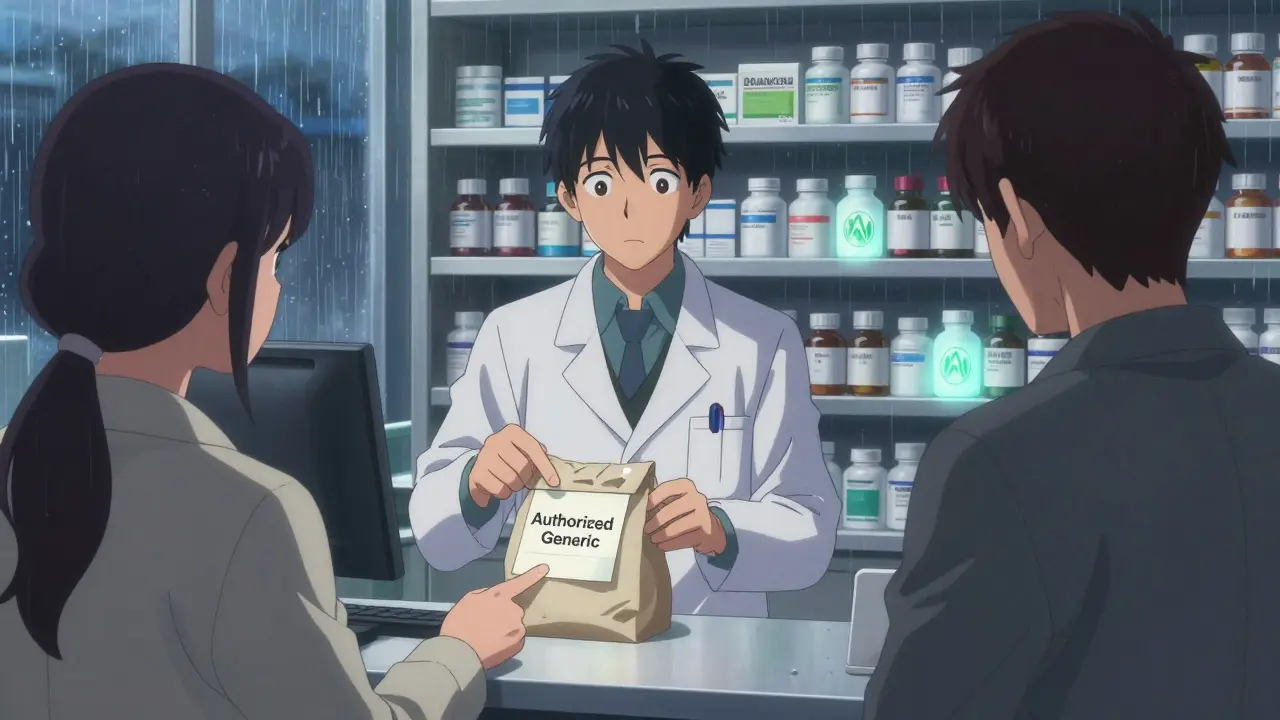
When to Choose One Over the Other
For most people, traditional generics are perfectly fine. For antibiotics, blood pressure meds, or cholesterol drugs, the differences are negligible. Millions take them safely every day. But if you’re on a drug where small changes can cause big problems-like epilepsy, heart rhythm disorders, or hormone treatments-stick with the authorized generic if it’s available. Or better yet, stick with the brand. If you’ve ever had a bad reaction after switching generics, that’s a sign. Talk to your doctor. Ask if an authorized generic is an option. Don’t assume all generics are equal.What’s Changing in 2025?
More brand manufacturers are using authorized generics now than ever before. Between 2010 and 2020, over 200 unique authorized generics were launched in the U.S. That number keeps rising. The FDA has started publishing a quarterly list of authorized generics to help patients and providers track them. At the same time, regulators are paying closer attention to traditional generics, especially for complex drugs like inhalers and injectables. The FDA is tightening requirements for bioequivalence in these cases. That could make traditional generics harder to develop-and make authorized generics even more attractive. For patients, this means more choices. But also more confusion. The key is to be informed. Ask questions. Know what you’re taking.Final Thought: It’s Not About Cheap-It’s About Consistent
Generic drugs save the U.S. healthcare system billions every year. That’s a good thing. But saving money shouldn’t mean sacrificing consistency. Authorized generics give you the brand’s reliability at a lower price. Traditional generics give you lower prices, but with a small risk of variation. If your health depends on stability-your asthma, your heart, your brain-choose the version that gives you the least uncertainty. That’s not always the cheapest. But it’s the safest.Are authorized generics the same as the brand-name drug?
Yes. Authorized generics contain the exact same active and inactive ingredients as the brand-name drug. They’re made by the same manufacturer, on the same line, with the same quality controls. The only difference is the label doesn’t have the brand name on it.
Why are authorized generics not listed in the FDA’s Orange Book?
Because they’re not approved through the Abbreviated New Drug Application (ANDA) process. They’re sold under the original brand’s New Drug Application (NDA). The FDA doesn’t require separate approval for them, so they don’t appear in the Orange Book, which only lists ANDA-approved generics.
Can pharmacists substitute an authorized generic for a brand-name drug without a doctor’s permission?
Yes, in most cases. Since authorized generics are considered therapeutically equivalent to the brand, pharmacists can substitute them just like traditional generics-unless the prescription says “DAW” (dispense as written) or “do not substitute.”
Do authorized generics cost more than traditional generics?
Usually not. Authorized generics often cost the same or less than traditional generics because they’re sold by the brand manufacturer to compete with the first generic entry. Prices vary by drug and insurer, but they’re typically cheaper than the brand and competitive with other generics.
Should I always choose an authorized generic over a traditional one?
Not always. For most medications, traditional generics are safe and effective. But if you’re on a drug with a narrow therapeutic index-like warfarin, levothyroxine, or phenytoin-or if you’ve had issues switching generics before, an authorized generic is the safer choice because it’s identical to the brand.
How do I know if my prescription is an authorized generic?
Ask your pharmacist directly: “Is this an authorized generic?” You can also check the drug’s label for the manufacturer’s name. If it’s the same company that makes the brand-name version, it’s likely an authorized generic. The FDA also publishes a quarterly list of authorized generics online.
Can I request an authorized generic from my doctor?
Yes. You can ask your doctor to prescribe the brand name and note “DAW” or “dispense as written.” Then, when the pharmacy fills it, they may offer the authorized generic as a lower-cost option. You can also ask your doctor to write “authorized generic preferred” on the prescription if your state allows it.



Brandon Boyd
December 30, 2025 AT 19:49Just had my pharmacist switch me to an authorized generic for my thyroid med last month. No weird side effects, no brain fog, no crashes. Seriously, if you’re on levothyroxine and you’ve ever felt ‘off’ after a switch, this is the fix. Don’t let them trick you into thinking all generics are the same. Ask for the authorized one. It’s literally the same pill, just cheaper.
My insurance even covers it at the generic tier now. Win-win.
Branden Temew
December 31, 2025 AT 00:03So let me get this straight-we’re paying Big Pharma to sell us their own drug under a different label just so they can undercut the real generics? That’s not capitalism. That’s corporate judo.
Meanwhile, I’m over here wondering if the FDA is just a glorified stamping machine for pharma PR. ‘Oh, this one’s identical? Cool, no testing needed.’ Sure, Jan. Next you’ll tell me the logo’s the only thing that changed. And yet somehow, the same company that made me pay $500 for a pill last year is now selling me the exact same thing for $12. I’m not mad… I’m just disappointed.
Frank SSS
January 1, 2026 AT 08:15Look, I don’t care if it’s authorized or not. I just want the damn thing to work. I’ve been on the same asthma inhaler for 8 years. Switched to a traditional generic once because my insurance forced it. Felt like I was breathing through a straw for two weeks. My pulmonologist laughed and said, ‘You’re lucky you didn’t end up in the ER.’
Now I ask for the authorized one every time. If I have to pay $5 more, fine. My lungs aren’t a cost-saving experiment.
Also, why do pharmacists act like asking about generics is weird? Like I’m asking for the moon. Just tell me what I’m getting. It’s not that hard.
Paul Huppert
January 2, 2026 AT 17:45Just checked my last prescription-authorized generic. Didn’t even know that was a thing until now. Thanks for the post. I’ve been on warfarin for years and never thought about the fillers. Weird how something so small can matter. I’ll definitely ask next time.
Hanna Spittel
January 3, 2026 AT 00:02🚨 BIG PHARMA IS HIDING THE TRUTH 🚨
They’re selling you the SAME pill but calling it ‘generic’ to trick you into thinking it’s cheaper. But wait-why does the brand make the ‘generic’? 🤔
They’re controlling the market. They’re manipulating your insurance. They’re making you think you’re saving money when they’re just rebranding their profit.
Also, did you know the FDA doesn’t even test these? 😱
Ask your pharmacist if your pill has ‘sodium starch glycolate’-if it does, it’s probably a traditional one. And that’s a red flag. 🚩
Kayla Kliphardt
January 4, 2026 AT 23:48I’ve never heard of authorized generics before. This makes so much sense for my epilepsy med. I’ve had two bad seizures after switching generics. I didn’t connect the dots until now. I’m going to talk to my neurologist tomorrow. Thank you for writing this.
John Chapman
January 6, 2026 AT 15:26Y’all are overthinking this. I take generic ibuprofen every day. My body doesn’t care if it’s made by Pfizer or some random Chinese factory. If your body’s freaking out over fillers, you’re probably allergic to air.
Also, ‘authorized generic’ sounds like a marketing scam to make you feel better about paying $12 instead of $8. Chill out. The active ingredient is the same. That’s all that matters for 95% of people.
And if you’re one of the 5%? Good for you. You get to be special. But don’t make the rest of us feel guilty for saving money.
Stewart Smith
January 7, 2026 AT 09:12Bro, I used to be the guy who always took the cheapest generic. Then I switched to an authorized one for my blood pressure med and suddenly I wasn’t dizzy all day. I didn’t even realize I’d been feeling off for months.
Now I just ask my pharmacist: ‘Is this the brand’s version?’ If they hesitate, I say ‘no thanks.’ Simple.
Also, I’ve started telling my friends. They think I’m a nerd. I don’t care. My BP is stable.
Lawver Stanton
January 8, 2026 AT 18:15Let’s be real here. This whole ‘authorized generic’ thing is just Big Pharma’s way of keeping control after their patent expires. They don’t want you to have real competition-they want you to think you’re getting a bargain while they’re still the only game in town.
And don’t get me started on how pharmacies are trained to say ‘this is a generic’ like it’s a badge of honor. They don’t even know the difference. I once asked my pharmacist if my levothyroxine was authorized and she looked at me like I asked if the pill was made of unicorn tears.
Meanwhile, the FDA publishes a quarterly list? That’s not transparency-that’s damage control. They knew this was a problem and waited a decade to make a list? Come on.
And why does the brand manufacturer get to bypass the ANDA process? That’s not fairness. That’s favoritism wrapped in a white pill.
And yet… I still take the authorized one. Because I don’t want to risk another seizure. But that doesn’t mean I’m not furious about the system that made me choose between safety and cost.
Sara Stinnett
January 10, 2026 AT 12:28How quaint. We’ve reduced human health to a corporate chess match where the pawns are patients who can’t read the fine print. Authorized generics? How poetic. The same company that priced their drug at $1,200 a pill now offers it for $12 under a different label-because, apparently, the label is the only thing that defines value.
And yet, we’re told to be grateful. ‘Look how much you’re saving!’
Save money? Or save your life? Because for some of us, the difference between ‘bioequivalent’ and ‘identical’ is the difference between a seizure and a Sunday. But sure, let’s call it a ‘choice.’
Meanwhile, the FDA’s quarterly list is a Band-Aid on a hemorrhage. They don’t regulate the fillers. They don’t require transparency. They just… list them. Like a grocery store shelf.
And you wonder why people don’t trust medicine anymore?