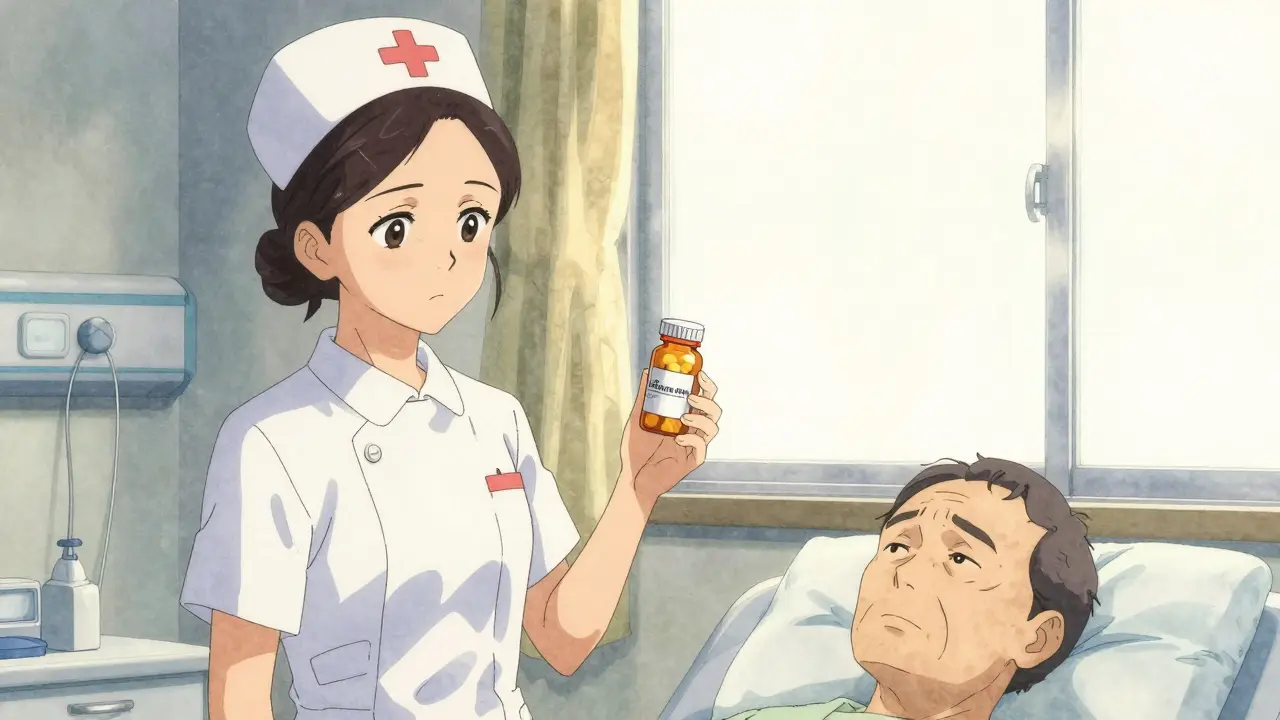
When a patient picks up a prescription and sees a pill that looks completely different from what they’ve taken before, panic can set in. Generics aren’t cheaper because they’re inferior-they’re cheaper because they don’t carry brand-name marketing costs. But patients don’t always know that. That’s where nurses come in.
Nurses are often the last person a patient talks to before swallowing a pill. In hospitals, clinics, and even home care settings, nurses see the moment of doubt: the furrowed brow, the hesitant hand, the quiet question, “Is this really the same?” This isn’t just about giving out medicine. It’s about rebuilding trust.
Why Patients Worry About Generics
It’s not irrational. Patients notice things. The color changes. The shape is different. The label says something unfamiliar. A 2021 FDA survey found that 68% of patients believe generics are less effective than brand-name drugs. That’s not a myth-it’s a perception built from years of advertising, packaging, and silence.
One ICU nurse in Chicago told me about a patient on warfarin who refused to take a new generic because the pill was blue instead of white. “He thought the color change meant the dose was wrong,” she said. “He’d been on the same brand for 12 years. Suddenly, it looked like a different drug.”
What patients don’t realize is that the FDA requires generics to have the same active ingredient, strength, dosage form, and route of administration as the brand. They must also prove they’re bioequivalent-meaning they deliver the same amount of medicine into the bloodstream within a very tight range (80-125% of the brand). This isn’t a loophole. It’s science. And it’s enforced.
What Nurses Actually Say
Nurses don’t recite FDA guidelines like a textbook. They translate them. Here’s what works in real conversations:
- “The medicine inside is exactly the same. The FDA checks this before it ever reaches the pharmacy.”
- “The outside changes because companies can’t copy the brand’s look-but the inside? Identical.”
- “Your doctor prescribed this because it works just as well, and it saves money for you and the system.”
- “I’ve seen thousands of patients switch. None lost control of their condition because of the switch.”
One of the most powerful tools nurses use is the teach-back method. Instead of asking, “Do you understand?”, they say, “Can you tell me in your own words why we switched you to this pill?” If the patient says, “Because it’s cheaper,” the nurse doesn’t correct them. They say, “Yes, it is cheaper. But the most important thing is-it’s the same medicine. Can you show me where the active ingredient is listed on the label?”
Studies show this simple technique boosts patient understanding by over 30%. It’s not about memorizing facts. It’s about making the patient feel heard and informed.
When Generics Get Tricky
Not all drugs are created equal when it comes to switching. Some medications have a narrow therapeutic index-meaning the difference between an effective dose and a harmful one is very small. These include drugs like warfarin, levothyroxine, phenytoin, and lithium. For these, even tiny variations in absorption can matter.
Nurses know this. They don’t just say, “It’s fine.” They check: Is this the same manufacturer? Has the patient had issues before? Are they stable? In one case, a 68-year-old man stopped taking his generic levothyroxine after a pill change. He felt tired. He didn’t call anyone. Two weeks later, he was hospitalized with myxedema coma. The root cause? No one explained that the switch wasn’t just about cost-it was about consistency.
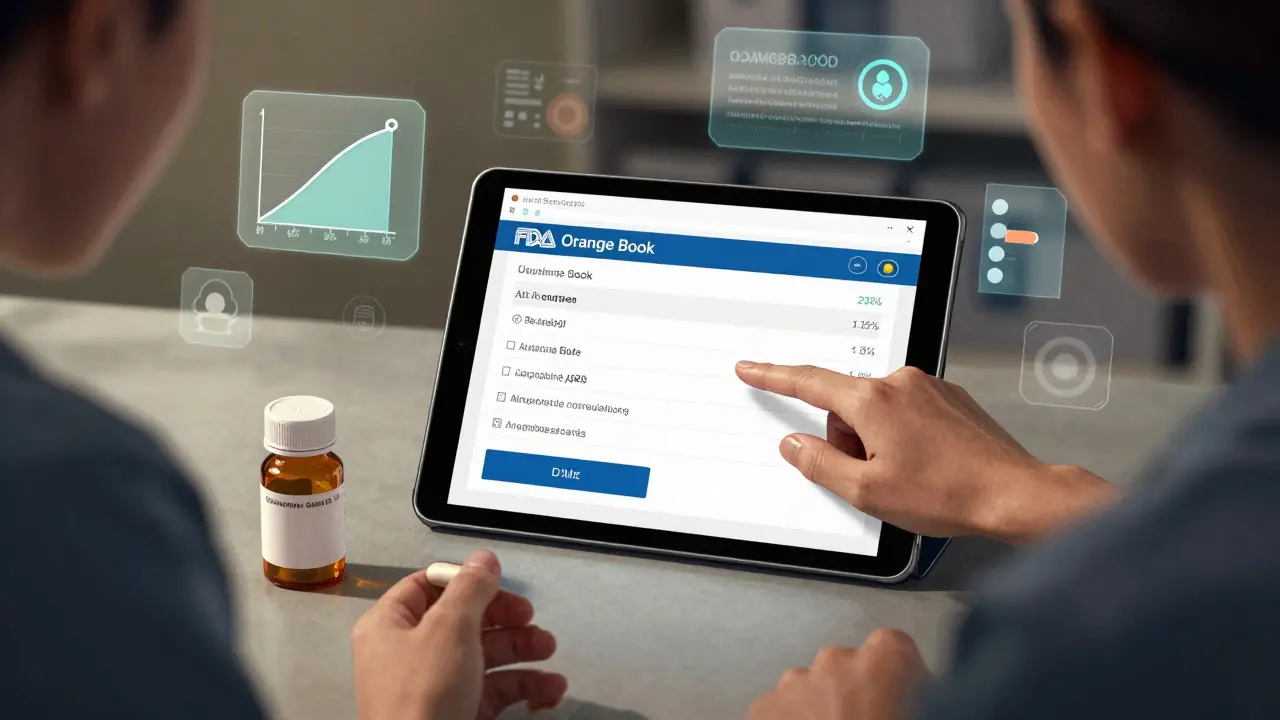
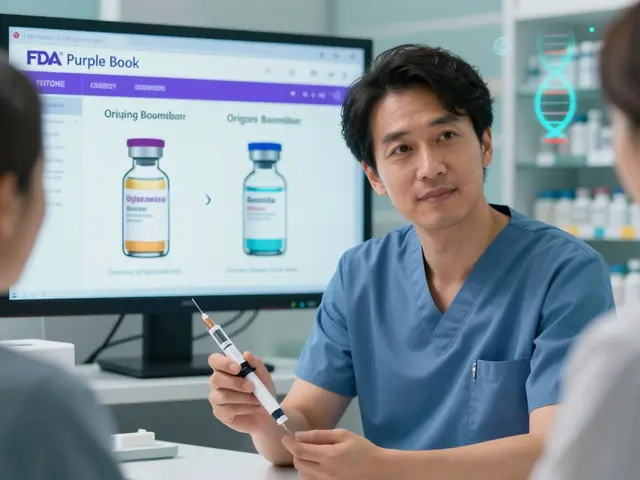
That’s why many hospitals now use the FDA’s Orange Book to guide decisions. It rates generics as “AB” (therapeutically equivalent) or “BX” (not equivalent). Nurses are trained to pull this up on their tablets during rounds. Showing a patient the official rating-“This one is rated AB, same as your old pill”-changes everything.
Time, Training, and Technology
Most nurses have less than five minutes to explain a new medication. In emergency departments, it’s often 90 seconds. That’s not enough for deep dives. So hospitals are building tools to help.
Electronic health records now include mandatory prompts: “Did you explain why the pill looks different?” “Did the patient verbalize understanding?” “Was the Orange Book rating shown?”
Training has improved too. A 2023 survey found that 41% of new nurses felt unprepared to counsel on generics. That’s changed. Now, nursing schools require students to demonstrate competency in explaining therapeutic equivalence. Hospitals run annual simulations where nurses practice with mannequins that ask tough questions: “What if my heart feels weird after the switch?” “Why did my doctor say this one is better?”
And technology is stepping in. AI tools now give nurses real-time access to FDA data at the bedside. A nurse scans a pill bottle, and a pop-up says: “This generic is rated AB. Manufacturer: Teva. Bioequivalence margin: 97%. Same as brand.” No guesswork. No guesswork means fewer errors.
The Bigger Picture
Generics make up 90% of all prescriptions filled in the U.S. That means nurses are counseling on generics in nearly every medication interaction. And it’s not just about saving money. It’s about access. A patient who can’t afford their brand-name drug might skip doses-or skip treatment entirely. Nurses help bridge that gap.
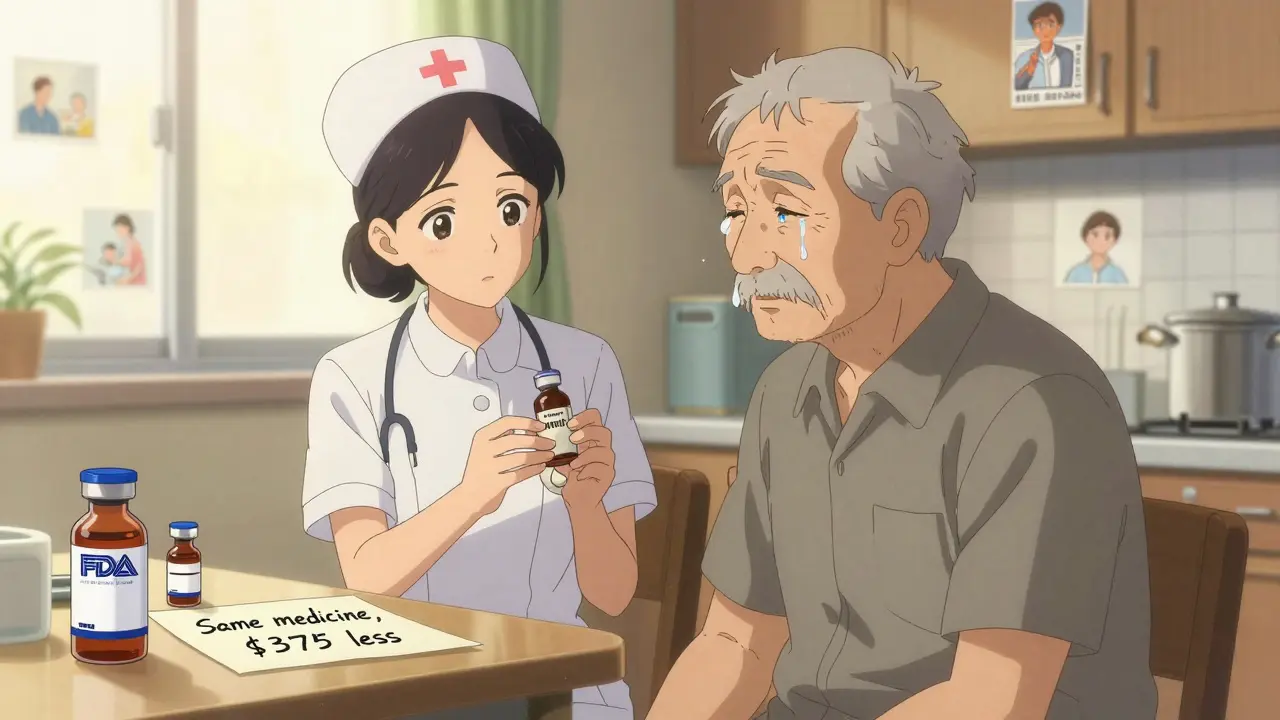
One nurse in Atlanta told me about a diabetic patient who couldn’t afford insulin. The brand cost $400 a month. The generic? $25. The patient cried when she heard the price. The nurse didn’t just hand her the script. She sat with her. Showed her the FDA page. Explained the manufacturing standards. Took her to the pharmacy to compare the pills side by side. “Now she takes it every day,” the nurse said. “And she tells her friends.”
That’s the real impact. Nurses don’t just prevent errors. They prevent despair.
What’s Next?
By 2026, the Nursing Generic Medication Education Collaborative will have trained 500 hospitals across the U.S. to use standardized counseling tools. The goal? Zero patients who stop taking their meds because they thought the pill looked wrong.
And as biosimilars-complex biologic generics-become more common, nurses will need to learn even more. These aren’t simple pills. They’re living medicines. But the principle stays the same: explain clearly. Listen closely. Verify understanding. Never assume.
Because for patients, a pill isn’t just chemistry. It’s safety. It’s trust. And nurses? They’re the ones holding both.
Are generic medications really as effective as brand-name drugs?
Yes. The FDA requires generics to contain the same active ingredient, strength, dosage form, and route of administration as the brand-name drug. They must also prove they’re bioequivalent-delivering the same amount of medicine into the bloodstream within 80-125% of the brand’s rate. This isn’t a guess. It’s tested in clinical trials before approval. Thousands of studies confirm that generics work just as well.
Why do generic pills look different from brand-name ones?
The appearance-color, shape, size-isn’t part of the FDA’s approval requirements. Only the active ingredient and how it’s absorbed matter. Brand-name companies trademark their pill’s look, so generic manufacturers must make theirs different to avoid legal issues. But the medicine inside? Identical. Nurses often show patients the FDA Orange Book or a side-by-side comparison to prove it.
Can switching to a generic cause side effects or make my condition worse?
For most people, no. But for drugs with a narrow therapeutic index-like warfarin, levothyroxine, or phenytoin-even small changes in absorption can matter. Nurses check if the patient was stable on the brand, if the generic is from the same manufacturer, and if the FDA rating is AB. If there’s any doubt, they delay the switch or coordinate with the pharmacist. Most side effects reported after switching are due to anxiety, not the drug itself.
Do nurses have enough training to counsel on generics?
Training has improved significantly. As of 2023, 100% of nursing schools require graduates to demonstrate competency in explaining therapeutic equivalence. Hospitals now include mandatory 8-10 hour training modules on generics, using real patient scenarios. However, some nurses-especially those in high-turnover settings-still report gaps. That’s why tools like AI-powered FDA data and standardized scripts are being rolled out.
What should I do if I’m worried about a generic switch?
Don’t stop taking your medication. Talk to your nurse or pharmacist. Ask: “Is this generic rated AB by the FDA?” “Is it from the same manufacturer as before?” “Can I see the Orange Book listing?” Most nurses will show you the data. If you still feel uneasy, ask your doctor to write “Dispense as written” on the prescription. You have the right to request the brand if cost isn’t a barrier.

Lillian Knezek
February 26, 2026 AT 05:08They're in bed with Big Pharma.
The color change? That's a signal.
They're putting tracking chips in generics.
They want to monitor our bodies.
And the 'bioequivalence' range? 80-125%? That's not the same.
That's a gamble.
My cousin took a generic and her thyroid went haywire.
They never told her.
Now she's on 3 different meds.
It's all controlled.
Just sayin'.
👁️🗨️
Maranda Najar
February 26, 2026 AT 12:50Nurses aren’t just caregivers-they’re alchemists turning fear into faith, one pill at a time.
That Atlanta nurse who sat with the diabetic patient? She didn’t hand her a script-she handed her dignity.
And the teach-back method? It’s not a technique-it’s a sacred ritual.
Patients don’t need data dumps.
They need to feel seen.
To be held in the quiet space between doubt and safety.
Thank you for writing this.
For every nurse who whispers, ‘It’s the same medicine,’ into a trembling hand-you are the quiet heroes of our broken system.
💔❤️🩺
Christopher Brown
February 27, 2026 AT 07:53China makes 80% of our generics.
They don’t follow our standards.
Stop pretending this is science.
It’s corporate convenience.
Americans need real drugs.
Not foreign-made copies.
End of story.
Sanjaykumar Rabari
February 27, 2026 AT 09:47Indian factories are dirty.
They use bad chemicals.
My uncle died after switching.
They never tested it properly.
Government lies.
Always.
Kenzie Goode
March 1, 2026 AT 09:17It’s not about memorizing FDA guidelines-it’s about listening.
That moment when a patient hesitates? That’s where healing begins.
Not in the pharmacy.
Not in the chart.
But in the space between a nurse’s voice and a patient’s fear.
So much of healthcare is about the invisible work.
This piece makes it visible.
Thank you.
Dominic Punch
March 3, 2026 AT 08:20They’re the translators between clinical jargon and human fear.
That teach-back method? Genius.
It’s not about testing knowledge-it’s about building trust.
And the Orange Book? That’s the secret weapon.
Showing a patient the official rating? That’s power.
Real, tangible, science-backed power.
Let’s get this into every clinic, every ER, every home visit.
Nurses deserve better tools-and we owe them better support.
Lou Suito
March 3, 2026 AT 22:45That’s a 45% variation.
That’s not equivalent.
That’s a gamble.
And you call that science?
Wrong.
It’s negligence.
Period.
Joseph Cantu
March 4, 2026 AT 11:42They’re told it’s ‘the same’-but it’s not.
The fillers change.
The absorption changes.
The body reacts.
And nurses? They’re just repeating corporate scripts.
They don’t know the real risks.
They’re trained to sell the lie.
It’s not trust they’re building.
It’s compliance.
And I’m not buying it.
Jacob Carthy
March 5, 2026 AT 05:19My doc switched me to a generic for blood pressure and I felt like crap for a week
They said it was fine
But I know my body
Now I pay extra for the brand
Worth it
Lisandra Lautert
March 6, 2026 AT 07:28Cory L
March 6, 2026 AT 12:30Then I worked in a rural clinic.
Saw a grandma choose between insulin and groceries.
Switched her to generic.
Walked her to the pharmacy.
Let her hold both pills side by side.
She cried.
Then she smiled.
That’s the moment.
Not the science.
The humanity.
Bhaskar Anand
March 7, 2026 AT 00:19Why?
Because we have the best scientists.
Western countries are jealous.
They don't want to admit it.
Our factories are clean.
Our quality is superior.
Stop spreading fear.
Generics from India save lives.
Every day.
And you're doubting them?
William James
March 9, 2026 AT 00:09Science is complex.
But trust?
Trust is simple.
It’s built in moments.
When someone looks you in the eye and says, ‘I’ve seen this work.’
Not ‘the FDA says.’
Not ‘the data shows.’
But ‘I’ve seen it.’
That’s the magic.
That’s why nurses matter.
Stephen Archbold
March 9, 2026 AT 12:37Our NHS does generics better than most.
But it’s not about the pill.
It’s about the hand that holds it.
That nurse who sat with the diabetic patient?
She didn’t just hand her medicine.
She handed her hope.
And that?
That’s priceless.