Why Storage Matters More Than You Think
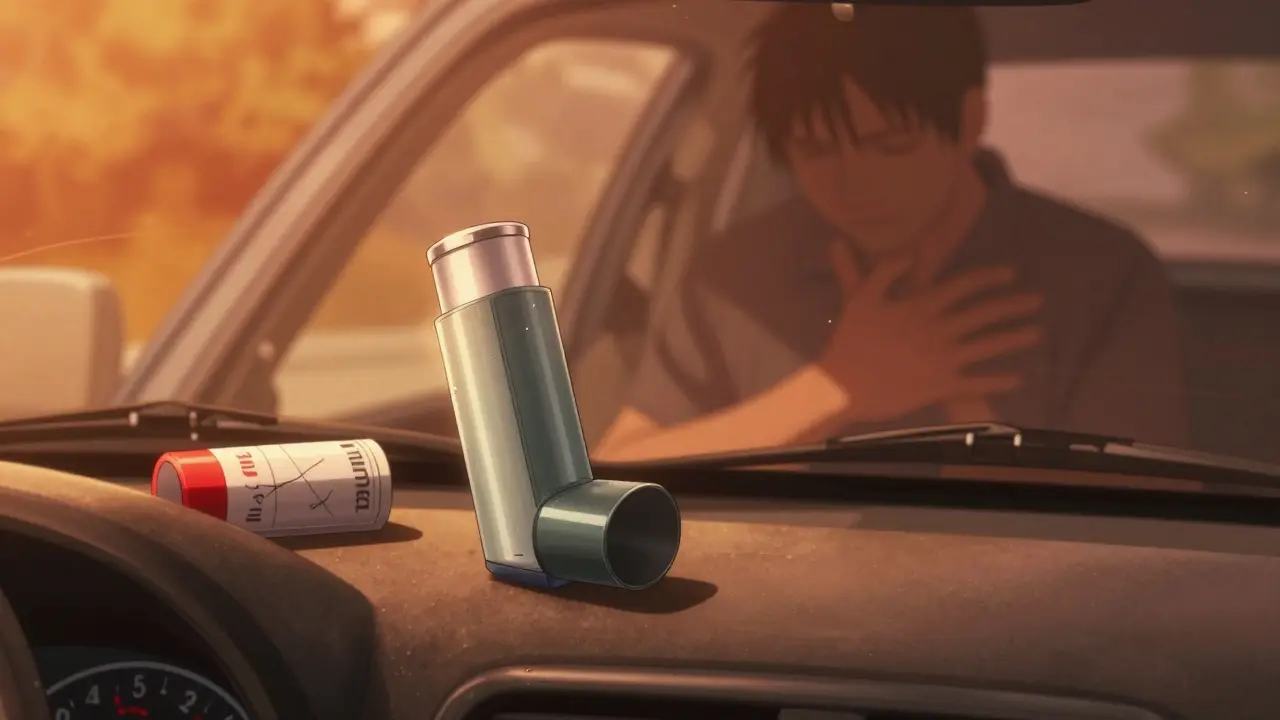
Imagine this: you’re out for a walk, your chest tightens, and you reach for your inhaler. You press it. Nothing happens. Not a puff. Not a whisper of relief. That’s not a broken device. That’s degraded medication. Every year, thousands of people experience asthma attacks that turn dangerous because their inhaler didn’t work-not because they forgot it, but because they stored it wrong. In Sydney’s summer heat, your car can hit 158°F in under 30 minutes. That’s hotter than an oven. And if your inhaler was inside? The medicine inside could be ruined.
The American Lung Association found that about 12% of asthma emergency visits happen because someone’s inhaler didn’t work due to improper storage. That’s not rare. That’s common. And it’s preventable.
What Temperature Is Safe for Inhalers?
Most inhalers need to stay between 59°F and 77°F (15°C to 25°C). That’s room temperature. Not cold. Not hot. Just normal. Some, like ProAir HFA or Ventolin, can handle up to 86°F (30°C) for short periods-but don’t test it. Don’t leave them in the glovebox. Don’t keep them on the bathroom counter next to the shower.
Pressurized inhalers (pMDIs) have metal canisters under pressure. Heat makes them expand. If they get too hot, they can leak, burst, or lose their dose accuracy. Dry powder inhalers (DPIs) like Spiriva or Ellipta don’t have pressurized gas, but they hate moisture. And heat makes humidity worse. When humidity hits above 60%, the powder inside clumps. It won’t fly out when you inhale. You get nothing.
Nebulizer solutions like albuterol ampules are even more sensitive. They need to be kept between 68°F and 77°F (20°C to 25°C). If they get above 104°F (40°C), they start breaking down in minutes. That’s not a myth. A 2022 study showed 30 minutes in a hot car can destroy the active ingredient. No second chances.
What About Refrigeration?
Some people think cold = better. Not always. Most inhalers should NOT go in the fridge. Refrigeration can cause condensation inside the device. Moisture gets in. The medicine gets ruined. The American Thoracic Society says no refrigeration for multi-dose inhalers like Symbicort or Advair.
But here’s the exception: Pulmicort Respules (nebulizer liquid) need to be refrigerated at 36°F-46°F (2°C-8°C) until you open them. Once opened, they’re good for only 7 days at room temperature. If you leave them on the counter for two weeks? They’re not just weak-they’re unsafe.
And don’t freeze them. Ever. Freezing destroys the chemical structure. You’re not preserving it. You’re killing it.
Humidity Is the Silent Killer
Your bathroom is the worst place to store any respiratory medication. Why? Steam. Moisture. Condensation on the mirror after a hot shower? That’s moisture in the air. And moisture is poison to dry powder inhalers.
Boehringer Ingelheim’s 2022 report found that when humidity goes above 65%, the capsules in Spiriva HandiHaler become brittle. They crack. The powder sticks. You press the lever. Nothing comes out. You think it’s broken. It’s not. It’s just damp.
Even metered-dose inhalers aren’t safe from humidity. Moisture can corrode the valve mechanism over time. A 2023 study from St. Jude Children’s Research Hospital showed that storing an albuterol inhaler in the bathroom for 14 days reduced its dose by 35%. That’s more than a third of your rescue dose gone.
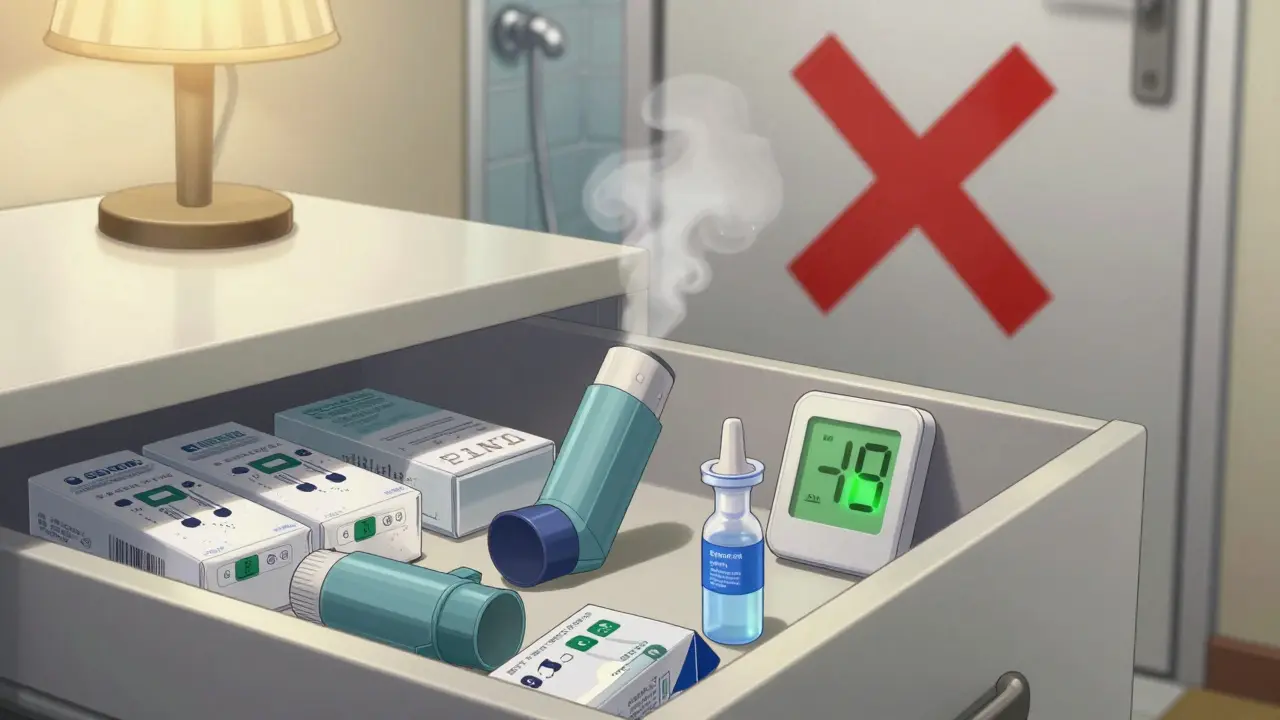
Store them in a cool, dry place. A bedroom drawer. A kitchen cabinet away from the stove. A dedicated medicine box on a shelf. Not the bathroom. Not the car. Not the gym bag.
How to Store Nebulizer Equipment
Nebulizers aren’t just about the medicine. The machine matters too. The compressor shouldn’t be near Wi-Fi routers, microwaves, or Bluetooth speakers. Philips Respironics says keep it at least 12 inches away. Electromagnetic interference can mess with the timing of the air flow, making your treatment less effective.
After each use, rinse the nebulizer cup and mouthpiece with warm water. Let them air-dry on a clean towel. Don’t wipe them dry-tiny fibers from a towel can get inside. Don’t put them in the dishwasher unless the manufacturer says it’s okay. Most aren’t dishwasher-safe.
Store the tubing and parts in a clean, sealed plastic bag. Keep them away from dust. Dust in the tubing? That’s not just dirt. It’s a trigger for asthma.
Traveling With Inhalers and Nebulizer Meds
When you’re on the move, your inhaler is your lifeline. Don’t trust your pocket. Don’t leave it in the car while you grab coffee. Use an insulated case. The kind that looks like a small lunchbox. The ones with a gel pack inside.
The American College of Physicians recommends the “Rule of 15”: no more than 15 minutes outside a temperature-controlled environment. That means if you’re at the beach and your inhaler’s in the car, you’ve got 15 minutes max before it starts degrading.
For longer trips, consider the SmartInhale case-FDA-cleared in 2023. It has Bluetooth sensors that send alerts to your phone if the temperature goes out of range. It’s not cheap, but it’s cheaper than an ER visit.
And never pack your nebulizer liquid in checked luggage. Checked bags go through extreme temperatures in cargo holds. Keep it in your carry-on. Always.
What Happens When You Store Them Wrong?
Let’s say you leave your ProAir HFA in a car on a 95°F day. After 24 hours, tests show it delivers only 62% of the labeled dose. That’s not 10% less. That’s almost 40% less. You think you’re getting your full dose. You’re not.
Users on Reddit’s r/Asthma community report stories like this: “My inhaler stopped working during an attack last summer. I’d been keeping it in my gym bag. It hit 110°F in my car.”
And it’s not just inhalers. A 2023 study in Respiratory Care found nebulizer solutions degrade 3.2 times faster than inhalers under the same bad conditions. That’s why 78% of medication errors linked to respiratory devices come from storage mistakes.
Expired isn’t the issue. It’s degraded. The expiration date on the box? That’s only valid if stored correctly. If you didn’t store it right, it’s expired long before that date.
How to Check If Your Inhaler Still Works
You can’t taste or smell if it’s degraded. But you can test it.
Take the inhaler out. Remove the cap. Hold it away from your face. Press it once. You should see a fine mist. Not a spray. Not a drip. A mist. If you see liquid dripping out, the valve is damaged. Stop using it.
For dry powder inhalers, check the capsule. If it looks cracked or dusty when you load it, it’s been exposed to moisture. Don’t use it.
And if you’ve had a recent attack and your inhaler didn’t help like it used to? Don’t assume it’s your asthma getting worse. Assume your inhaler might be broken. Get a new one. Don’t wait.
What to Do With Old or Expired Inhalers
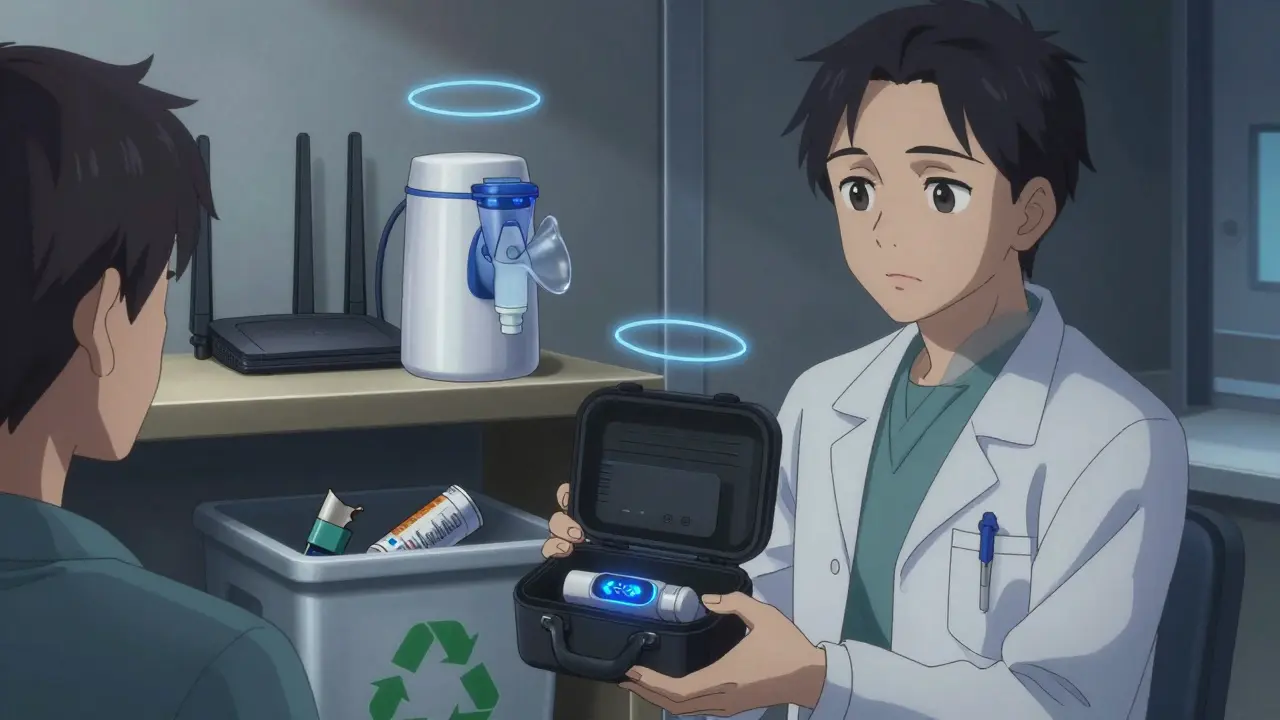
Never throw them in the trash. Never flush them. Never burn them. Inhalers are pressurized. They can explode in landfills or incinerators. They contain propellants that harm the environment.
Take them to a pharmacy that has a drug take-back program. Most major chains like Chemist Warehouse or Pharmacy Direct in Australia offer this for free. Some hospitals and clinics do too.
If you can’t find a drop-off point, remove the metal canister (if it’s removable) and recycle it as metal. The plastic parts go in general waste. But never, ever puncture it yourself. That’s dangerous.
Real Solutions That Work
St. Jude Children’s Research Hospital created something called the “Cool Cubby”-a small, temperature-monitored storage box in every classroom. It keeps inhalers at 72°F ±2°F. Result? 89% fewer medication failures.
GlaxoSmithKline now makes Ellipta inhalers with humidity-indicating packaging. The label changes color if moisture has gotten in. You don’t need a thermometer. You just look.
And if you’re tired of guessing? Get a Timestrip temperature monitor. Stick it to the outside of your inhaler case. It turns red if the temperature went too high. Simple. Clear. No apps. No batteries.
Final Checklist: Your Daily Storage Routine
- Store inhalers and nebulizer meds at room temperature: 59°F-77°F (15°C-25°C)
- Keep humidity below 60%. Avoid bathrooms, kitchens, and garages.
- Never leave inhalers in cars, especially in summer.
- Refrigerate nebulizer liquids like Pulmicort only until first use.
- Keep nebulizer machines 12+ inches away from Wi-Fi routers and microwaves.
- Use an insulated case for travel. Follow the Rule of 15.
- Check your inhaler mist before each use. No mist? Don’t use it.
- Return expired or unused inhalers to a pharmacy take-back program.
Bottom Line
Your inhaler isn’t just a device. It’s your emergency lifeline. If it doesn’t work when you need it, the consequences can be life-threatening. Storing it right isn’t optional. It’s survival. You don’t need fancy gadgets. You just need to know where to put it-and where not to. Keep it cool. Keep it dry. Keep it safe. And don’t assume it’s still good just because the expiration date hasn’t passed. It might not be.
Can I store my inhaler in the fridge?
Generally, no. Refrigeration can cause moisture to build up inside the inhaler, which damages the valve and ruins the medication. Exceptions include nebulizer liquids like Pulmicort Respules, which must be refrigerated until first use. Once opened, they’re good for 7 days at room temperature. Always check the manufacturer’s instructions.
What happens if my inhaler gets too hot?
Heat can cause the medicine to break down, the canister to leak, or the valve to fail. In temperatures above 86°F (30°C), the dose delivered can drop by 15-40%. In a hot car (100°F+), it can happen in under an hour. You might not feel any difference until you need it-and then it won’t work.
Is it safe to store inhalers in the bathroom?
No. Bathrooms are humid, especially after showers. Moisture causes dry powder inhalers to clump and metal valves to corrode. Studies show albuterol concentration drops by 35% in just 14 days if stored in a bathroom. Keep inhalers in a dry, cool place like a bedroom drawer or kitchen cabinet.
How do I know if my inhaler is still working?
Remove the cap and spray it away from your face. You should see a fine, even mist-not a stream of liquid or nothing at all. If you see liquid dripping, the valve is damaged. For dry powder inhalers, check if the capsule is cracked or dusty. If it is, don’t use it. If you’ve had a recent attack and the inhaler didn’t help, assume it’s degraded and get a new one.
Can I recycle my old inhaler?
Never throw it in the trash or flush it. Inhalers are pressurized and contain environmental hazards. Take them to a pharmacy with a drug take-back program. If the canister is removable, recycle the metal part. Plastic parts go in general waste. Never puncture the canister yourself-it’s dangerous.
Do nebulizer machines need special storage?
Yes. Keep the compressor at least 12 inches away from Wi-Fi routers, microwaves, or other electronics that emit electromagnetic fields. After each use, rinse parts with warm water and let them air-dry. Store tubing and pieces in a clean, sealed plastic bag to keep out dust. Don’t wash them in the dishwasher unless the manual says it’s safe.
Why do some inhalers stop working before the expiration date?
Expiration dates assume the medication was stored correctly. If it was exposed to heat, moisture, or direct sunlight, the medicine can degrade long before that date. A 2023 Johns Hopkins study found that 35% of users who thought their inhaler expired early were actually just storing it wrong. Always check storage conditions before assuming the device is faulty.






Bridget Molokomme
February 2, 2026 AT 10:31Bob Hynes
February 3, 2026 AT 08:23larry keenan
February 3, 2026 AT 13:30Similarly, humidity-induced clumping in DPIs follows a logarithmic degradation curve above 60% RH. The structural integrity of lactose carriers is compromised via hygroscopic swelling. This is why the manufacturer guidelines exist.
Storage protocols are not suggestions. They are evidence-based interventions with direct clinical correlates.
Akhona Myeki
February 4, 2026 AT 04:00Chinmoy Kumar
February 5, 2026 AT 05:50Murarikar Satishwar
February 6, 2026 AT 04:00The real issue isn’t education-it’s habit formation. People need systems, not just facts. That’s why I support the Cool Cubby model. It removes the burden of decision-making. Make the safe choice the default choice.
Dan Pearson
February 8, 2026 AT 02:23Ellie Norris
February 9, 2026 AT 17:28Marc Durocher
February 11, 2026 AT 13:10Now I have a tiny insulated pouch. Looks like a fanny pack for medicine. I look like a weirdo. Worth it.
Ansley Mayson
February 13, 2026 AT 11:24phara don
February 13, 2026 AT 18:29Hannah Gliane
February 13, 2026 AT 20:12Eli Kiseop
February 15, 2026 AT 01:21Nick Flake
February 15, 2026 AT 11:28Maybe the real problem isn’t storage. It’s how little we value the fragile, invisible things that keep us alive.
Vatsal Srivastava
February 15, 2026 AT 16:56