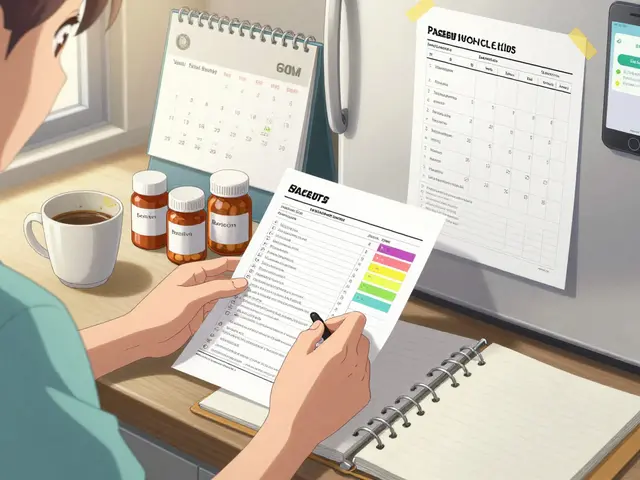
Traveling with medical supplies can feel like a gamble. You're worried about a security officer confiscating your life-saving medication or causing a scene at the checkpoint. But here is the good news: if you have a medical need, the rules are actually on your side. You are allowed to carry carrying injectables on airplanes, including insulin and EpiPens, as long as you follow a few basic protocols.
The goal is to balance your health needs with aviation security. Whether you are managing diabetes or another condition requiring injections, the key is transparency and organization. If you've never done this before, the first time can be nerve-wracking, but once you know the system, it becomes a routine part of your trip.
Quick Guide to Medical Air Travel
- Liquids: Medically necessary liquids can exceed the 3.4oz (100ml) limit; just declare them.
- Syringes: Allowed if accompanied by the medication they are intended for.
- Cooling: Gel packs and ice packs for temperature-sensitive meds are permitted.
- Sharps: Used needles must go in an FDA-approved, puncture-resistant container.
- Docs: A doctor's note is helpful and recommended, though not always mandatory by TSA.
What the Rules Actually Say
Most people panic about the "3-1-1" liquid rule, but medical supplies are a major exception. According to the Transportation Security Administration (TSA), you can bring as much medication as you need for your trip. If your injectable medication is in a bottle larger than 3.4 ounces, you simply need to tell the officer at the start of the screening process.
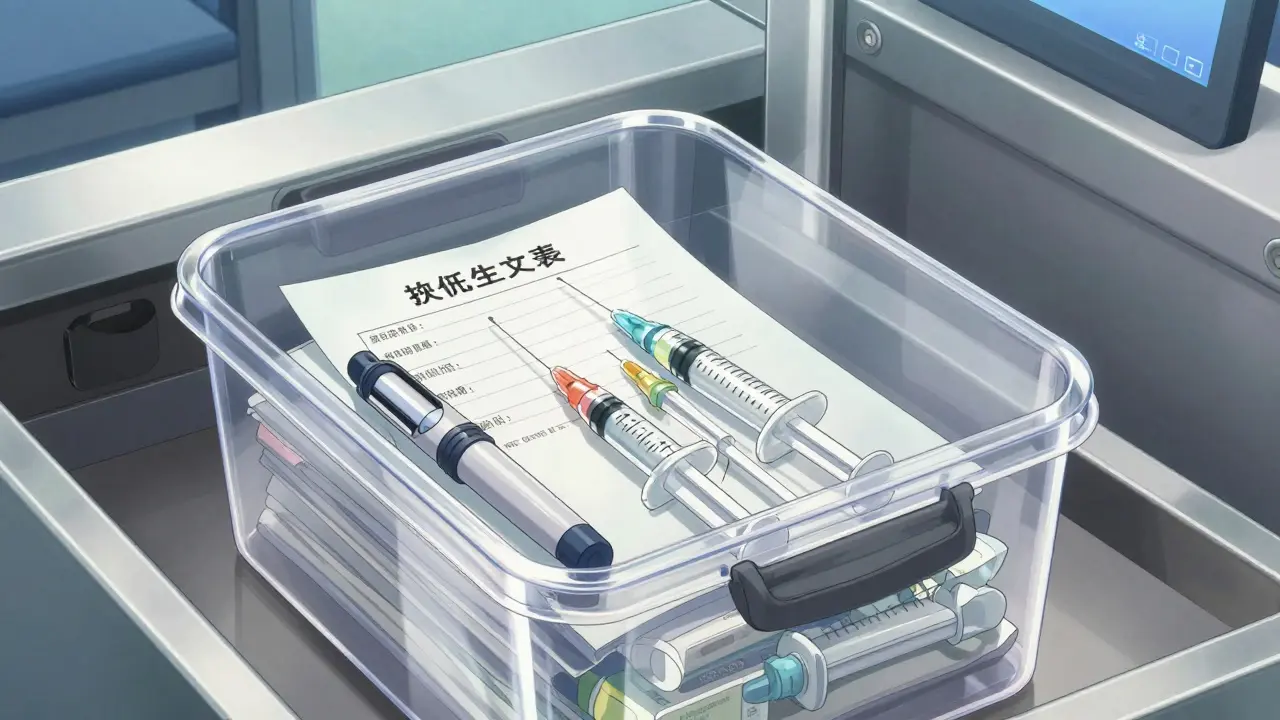
The same flexibility applies to syringes. You aren't limited to a specific number of unused needles, provided you have the medicine to go with them. However, carrying a bag of loose needles without any medication is a red flag for security and can lead to significant delays or questioning. Always keep your supplies together.
Managing Temperature-Sensitive Medications
If your medication needs to stay cold, don't stress about the ice packs. The TSA allows frozen or gel packs. While these might be pulled aside for a quick extra screen, they won't be confiscated.
A pro tip here is to request a visual inspection of your cooling gear rather than letting it go through an X-ray if you're worried about the integrity of the medication. Most officers are happy to accommodate this if you explain the situation calmly. Keep your meds in their original pharmaceutical packaging so the name on the label matches your ID; this eliminates 90% of the potential friction at the checkpoint.
The Right Way to Handle Sharps
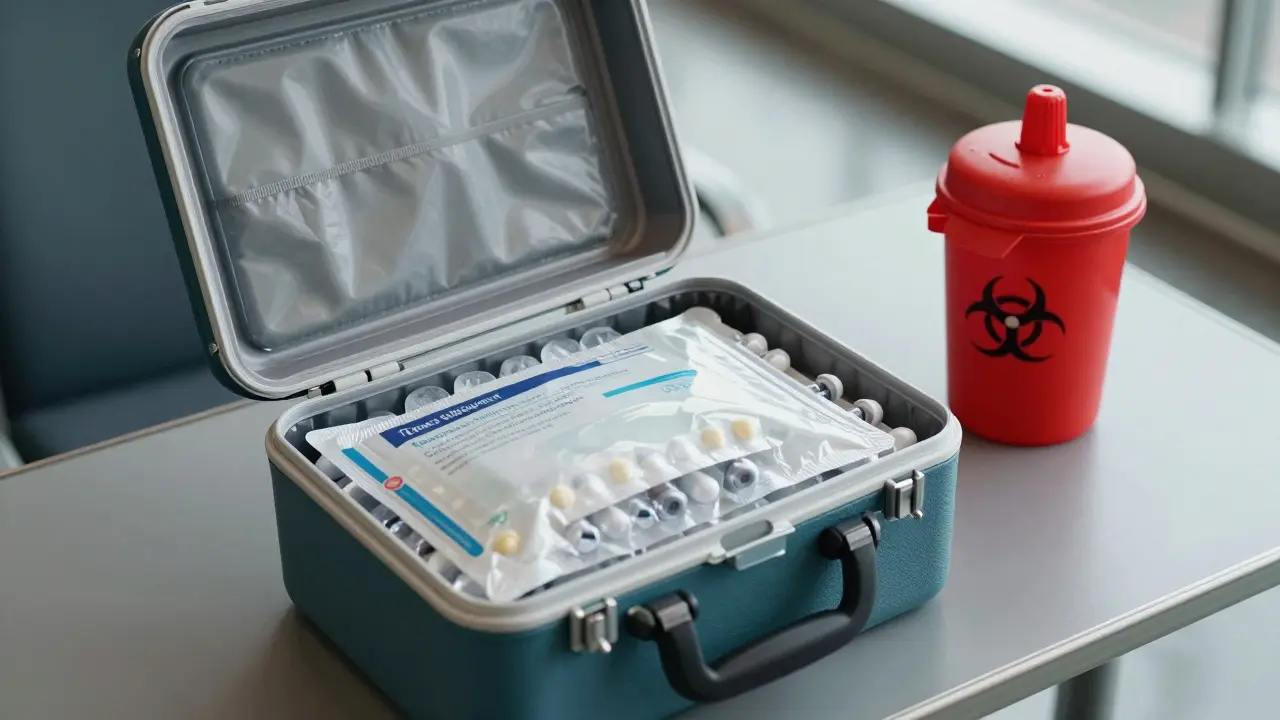
This is where many travelers make mistakes. You cannot simply throw used needles into a plastic water bottle or a cardboard box. To protect flight crews and security staff from accidental needlesticks, used syringes must be placed in an FDA-approved sharps container. These containers are rigid, puncture-resistant, and usually marked with a biohazard symbol.
Using a certified container doesn't just keep you legal; it's safer. Data shows that travelers using official sharps containers have a much higher success rate of getting through security without issues compared to those using improvised containers. If you're flying internationally, these standards are even more critical, as different countries have varying levels of tolerance for biohazardous waste.
| Feature | US-Based (TSA) | International (EASA/Other) |
|---|---|---|
| Documentation | Recommended (not always required) | Often required in destination language |
| Liquid Limits | Exempt if declared | Variable by country/airline |
| Syringe Limits | No limit if medication is present | Some countries (e.g., Japan) have strict limits |
| Screening Consistency | High at major hubs | Varies significantly by region |
Packing for a Smooth Checkpoint Experience
The best way to avoid a 20-minute delay is to be proactive. Instead of waiting for the officer to find your needles on the X-ray, pull your medical kit out of your bag and place it in a separate bin. When you hand it over, simply say, "I have medically necessary injectables and syringes here."
If you have a complex setup, like an Insulin Pump or a continuous glucose monitor (CGM), be aware that these may trigger additional screening. Many users report that while they are always permitted to board, the process can take longer. Using a TSA Notification Card can help bridge the communication gap, especially if you're feeling overwhelmed or the airport is crowded.
For those with TSA PreCheck, the process is generally much faster. Since you've already been vetted, the medical screening is often less intrusive, though you should still declare your supplies.

International Travel Considerations
Flying from New York to LA is one thing; flying to Tokyo or Dubai is another. International regulations are not as uniform as the US system. Some countries treat injectable medications as "controlled substances" regardless of your prescription. For example, Japan may require a special permit (called a Yakkan Shoumei) for certain syringes or medications.
If you're heading abroad, start your research 30 to 60 days before your flight. Check the embassy website of your destination country. Ensure your doctor's note is clear, concise, and translated into the local language if possible. Having a digital copy of your prescription on your phone is a great backup, but a physical paper copy is still the gold standard for customs officers.
Do I need a doctor's note to bring insulin or EpiPens?
While the TSA does not strictly require a doctor's note for medically necessary supplies, it is highly recommended. A note helps verify your needs quickly, especially if you are carrying large quantities of medication or using a medical device like an insulin pump. It is almost always required for international travel.
Can I put my medication in checked luggage?
You can, but it's a bad idea. Checked bags are subject to extreme temperature swings and can be lost or delayed. Always keep your injectables and syringes in your carry-on to ensure you have immediate access to them and that they stay within a safe temperature range.
Will my insulin pump set off the metal detector?
Yes, it often does. Most insulin pumps and CGM devices contain metal and electronics. You should inform the security officer immediately. In many cases, you can request a "pat-down" or a visual inspection rather than going through a full-body scanner if you are concerned about the device's electronics.
What happens if I run out of sharps containers during a long trip?
Always pack extra containers or a few small, travel-sized versions. If you're in a pinch, some pharmacies or clinics may provide a disposal bin, but you should never discard sharps in regular airport trash cans, as this is a safety hazard and may be illegal.
Can I carry liquid medication that's over 3.4 oz?
Yes. Medically necessary liquids are exempt from the 3.4 oz limit. Just make sure the medication is in its original packaging with your name on it, and declare it to the TSA officer as soon as you enter the security line.
What to do if things go wrong
Even with a perfect plan, you might run into an officer who isn't fully briefed on medical exceptions. If you feel you're being unfairly delayed or if your supplies are being questioned, stay calm. Ask to speak with a supervisor or a "Lead Officer." Most airports have a designated supervisor who is better trained in medical exceptions and can resolve the issue quickly.
If you are traveling with a companion, have them hold your documentation and a list of your medications. In the event of a medical emergency at the airport, this allows them to provide critical information to first responders without you having to dig through your bags.