
Every time you touch a doorknob, pick up your phone, or help a child wipe their nose, you’re handling germs-some harmless, others dangerous. The truth is, hand hygiene is the single most effective way to stop infections from spreading in your home. Not because it’s complicated, but because it’s simple-and most people are doing it wrong.
Why Hand Hygiene Matters More Than You Think
In 2021, the CDC reported that 10.1% of household members caught SARS-CoV-2 from someone already sick. That’s one in ten. Norovirus? It spreads through homes at a 16-28% rate. Flu? 3.2% of family members get it just from shared spaces. These aren’t rare outliers. They’re everyday risks. And here’s the kicker: proper handwashing cuts respiratory illnesses by 16-21% and gastrointestinal illnesses by 31%. That’s not guesswork. It’s from the CDC’s 2022 National Health Interview Survey. The cost? About $1.27 per person per year for soap and water. The return? Up to $16 in avoided medical bills, lost work, and sick days. No vaccine, no supplement, no expensive gadget comes close.Soap and Water vs. Hand Sanitizer: What Actually Works
Most people think hand sanitizer is just as good as washing. It’s not. And the difference matters. Soap and water is your first line of defense. It physically removes dirt, grease, and germs-including stubborn ones like norovirus and C. difficile spores. Alcohol-based sanitizers? They kill germs on contact, but only if they’re at least 60% alcohol. Anything lower, and you’re just wetting your hands. The FDA says 60-95% ethanol or isopropanol is the sweet spot. Too high, and it evaporates too fast. Too low, and it’s useless. Here’s the hard truth: if your hands look dirty, sanitizer won’t help. A CDC lab test showed effectiveness drops to just 12% on soiled hands. That’s why you wash before you sanitize. Use sanitizer only when soap and water aren’t available. And skip antibacterial soap. The FDA banned triclosan and 18 other antibacterial ingredients in consumer soaps back in 2016 because they offered no extra protection-and may be making bacteria stronger. Plain soap works just as well. Maybe better.The 6-Step Technique: How to Wash Right
It’s not enough to just rub your hands under water. You need the WHO’s 6-step technique. It’s not optional. It’s science. Here’s how to do it, step by step:- Palm to palm
- Right palm over left dorsum, interlacing fingers-then switch
- Palm to palm with fingers interlaced
- Backs of fingers to opposing palms with fingers locked
- Rotational rubbing of right thumb clasped in left palm-and vice versa
- Rotational rubbing of fingertips in opposite palm-and vice versa
Water Temperature: Hot or Cold? The Answer Might Surprise You
For years, we were told hot water kills germs better. It doesn’t. A 2017 study in mSphere found that water between 100-108°F (38-42°C) removes germs most effectively-but not because of heat. It’s about how well soap lathers and rinses off. Dr. Myron Genel from Yale says cold water (60°F / 15°C) removes pathogens just as well. And it saves energy. In fact, heating water accounts for 40% of the energy used in handwashing. If you’re trying to be practical, cold water works. Just use enough soap and scrub long enough.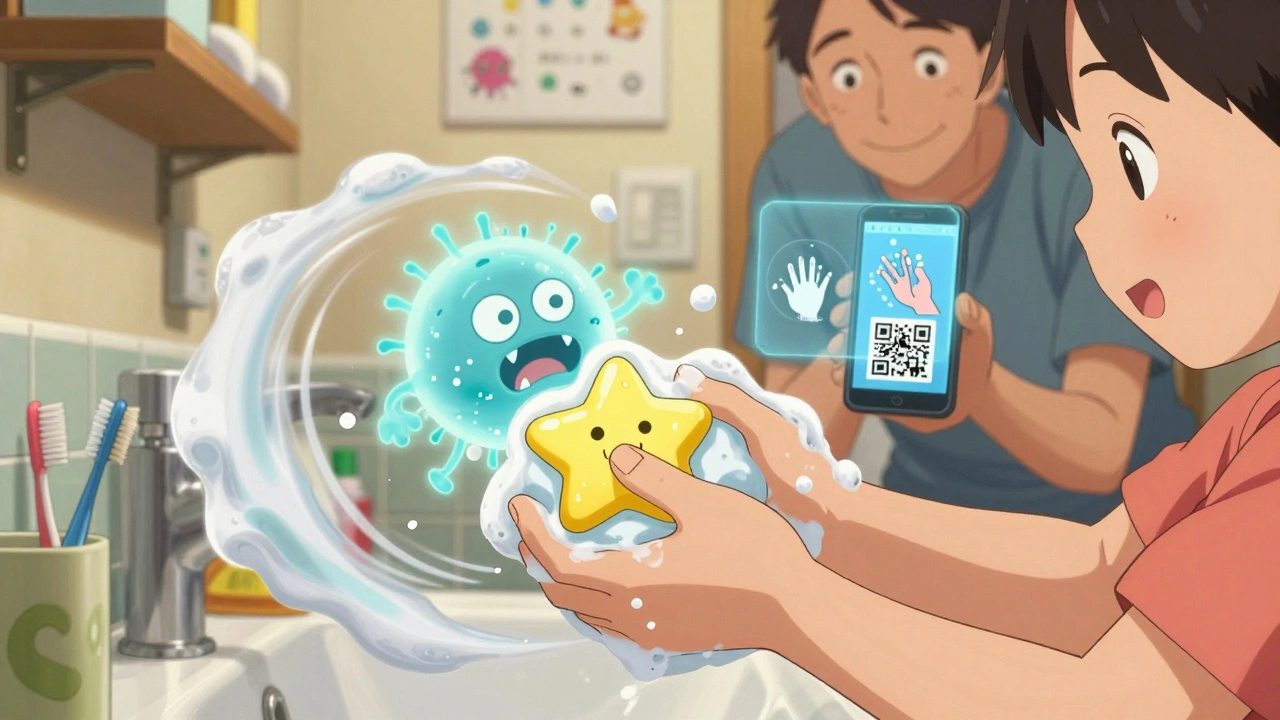
How to Dry Your Hands (Yes, It Matters)
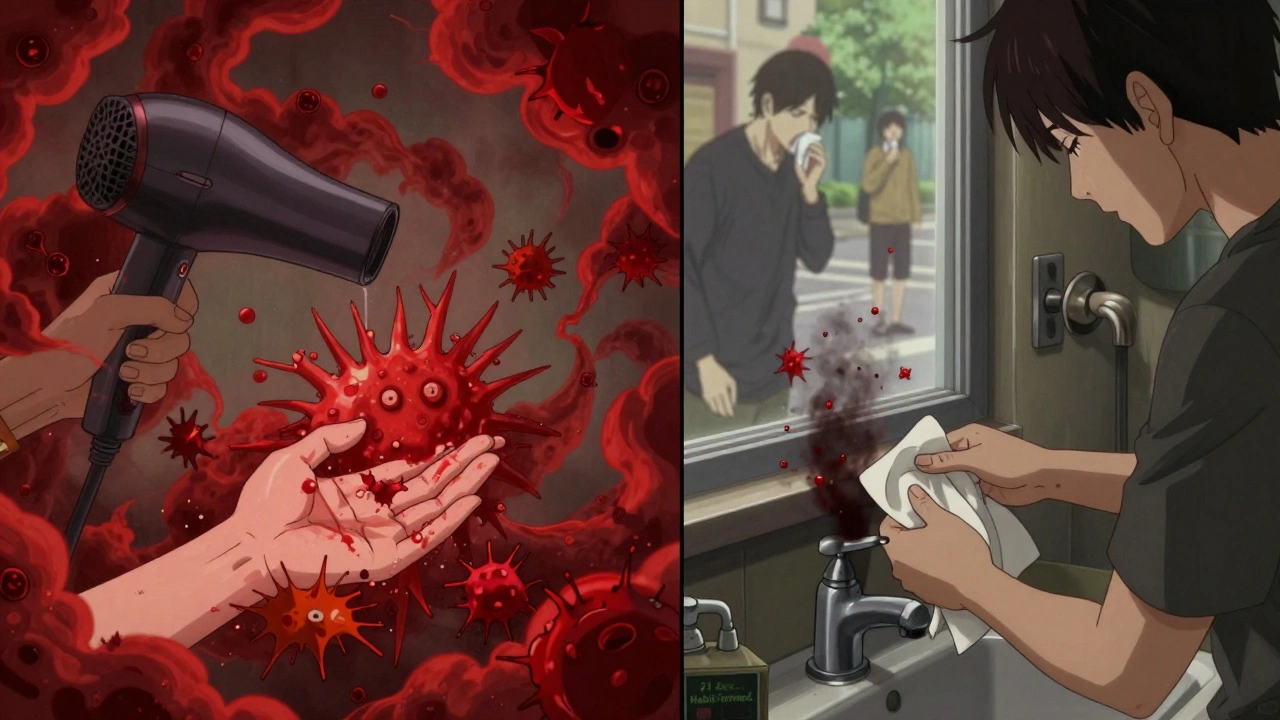
Drying isn’t the last step. It’s part of the process. Wet hands spread germs 1,000 times more than dry ones. Paper towels win. A 2012 Mayo Clinic study showed they reduce bacteria by 76% compared to air dryers. Why? Air dryers blow germs into the air-and onto your freshly washed hands. Plus, they take longer. You’re more likely to cut it short. And here’s the hidden trap: after washing, you touch the faucet again. The CDC found 89% of people do this. That means you just recontaminated your hands. Solution? Use a paper towel to turn off the faucet. Or install a foot-pedal faucet. They cost $45-$120 to retrofit. Worth it.Hand Hygiene for Kids: Making It Stick
Kids wash for an average of 8.2 seconds. That’s not enough. They get bored. They rush. They think it’s a chore. The fix? Make it fun and visual. The WHO’s “Clean Care is Safer Care” program found that posters showing the 6-step technique increased compliance from 28% to 63% in elementary schools. Use colorful stickers. Play a 20-second song. Try a sand timer. Amazon reviews for handwashing timers average 4.2 out of 5 stars. One parent said it cut her family’s colds from six to two per year. Also, keep soap at their level. A little dispenser on the counter. A fun-shaped soap. Make it part of the routine-right after coming in from outside, before meals, after using the bathroom.Common Mistakes (And How to Fix Them)
Most failures aren’t about laziness. They’re about misinformation.- Mistake: Using sanitizer instead of washing when hands are dirty. Fix: Always wash first if there’s visible grime.
- Mistake: Not covering all surfaces. Fix: Use the 6-step method. Check your fingertips and thumbs.
- Mistake: Stopping before 20 seconds. Fix: Use a timer or sing a song.
- Mistake: Skipping drying or touching the faucet. Fix: Use paper towels to turn off the tap.
- Mistake: Using antibacterial soap. Fix: Stick to plain soap. It’s safer and just as effective.
Building a Habit: It Takes 21 Days
You can’t just know how to wash. You have to do it automatically. A 2022 Behavioral Medicine study tracked 500 households. Those who practiced the correct technique daily for 21 days turned it into a habit. After that, compliance stayed high-even without reminders. Try habit stacking: link handwashing to something you already do. Wash after unlocking the front door. Wash before you sit down for dinner. Wash right after you put your keys down. Make it automatic.What’s Changing in 2025
The WHO updated its guidelines in May 2024 to better fit home life. They now explicitly say: “The 20-second rule applies to all age groups-even children.” No exceptions. The CDC’s 2023 Household Infection Prevention Toolkit now includes QR codes that link to video demos-like Johns Hopkins’ 6-step handwashing guide, which has over 2.4 million views on YouTube. New tech is helping too. Smart soap dispensers like the GOJO PURELL SMART DISPENSING SYSTEM are now available for homes. They track usage, send reminders, and even alert you if someone skips washing. In a 2023 pilot study, they reduced compliance gaps by 33%.Final Thought: It’s Not About Fear. It’s About Control.
You can’t control who sneezes on the bus or whether your child’s teacher is sick. But you can control what happens when you walk through your front door. You can control whether germs spread at dinner, on the couch, or in the bathroom. Hand hygiene isn’t about perfection. It’s about consistency. One wrong step. One missed thumb. One 5-second wash. That’s where infections start. Do it right. Every time. Your family’s health depends on it.Is hand sanitizer as good as soap and water?
No. Hand sanitizer kills germs but doesn’t remove dirt, grease, or spores like norovirus or C. difficile. Soap and water physically wash them away. Use sanitizer only when soap and water aren’t available-and only if it’s 60-95% alcohol.
Do I need antibacterial soap?
No. The FDA banned antibacterial ingredients like triclosan in consumer soaps in 2016 because they offer no extra protection and may contribute to antibiotic resistance. Plain soap and water work just as well-and are safer.
How long should I wash my hands?
At least 20 seconds. That’s the time needed to properly scrub all surfaces of your hands using the WHO’s 6-step technique. Most people wash for only 8-10 seconds, which cuts effectiveness by nearly 60%.
Is hot water better than cold water for handwashing?
No. Studies show cold water (around 60°F / 15°C) removes germs just as effectively as warm water. The key is using enough soap and scrubbing for 20 seconds. Hot water increases energy use and skin irritation without improving germ removal.
Why do I need to dry my hands with a paper towel?
Wet hands spread germs 1,000 times more than dry ones. Paper towels reduce bacteria by 76% compared to air dryers, which blow germs back onto your skin. Also, use the towel to turn off the faucet-otherwise, you recontaminate your hands.
What’s the best way to teach kids to wash their hands?
Use visual aids like posters showing the 6-step technique. Play a 20-second song like “Happy Birthday” twice. Use timers or sand timers. Make it part of a routine-like right after coming in from outside or before meals. Studies show compliance jumps from 28% to 63% with simple visuals.
Can hand hygiene really prevent infections at home?
Yes. Proper hand hygiene reduces respiratory illnesses by 16-21% and gastrointestinal illnesses by 31% in households. It’s the most cost-effective infection prevention tool available-costing just $1.27 per person per year and saving up to $16 in healthcare costs.



Charlotte Collins
December 1, 2025 AT 14:21Hand hygiene isn't just a chore-it's the silent guardian of your household. I used to think sanitizer was enough until I read about C. difficile spores clinging to doorknobs like tiny, invisible terrorists. Now I wash like my kids' lives depend on it-because they do. Six-step technique, 20 seconds, paper towel to turn off the faucet. No exceptions. The cost? A bar of soap and 30 seconds of your time. The return? Fewer sick days, less stress, and a kitchen table that doesn't double as a germ buffet.
And cold water? Brilliant. I save energy, my skin doesn't crack, and the germs still go down the drain. Who knew science could be this elegant?
Also, stop using antibacterial soap. It's not making you safer-it's making bacteria smarter. Plain soap, scrub hard, walk away. Done.
Margaret Stearns
December 3, 2025 AT 06:33I never knew how much I was doing it wrong. Now I wash for 20 seconds and use a paper towel to turn off the faucet. My kids even sing happy birthday twice. We’ve had zero stomach bugs this winter. It’s crazy how something so simple makes such a difference.
Scotia Corley
December 3, 2025 AT 23:17While the information presented is statistically sound and aligned with CDC guidelines, one must consider the broader implications of behavioral compliance in domestic settings. The assertion that handwashing reduces illness by 31% is compelling, yet it assumes consistent adherence-an assumption rarely validated in real-world longitudinal studies. Furthermore, the recommendation to use paper towels over air dryers overlooks environmental sustainability metrics, which are increasingly relevant in public health discourse. The cost-benefit analysis presented is reductive; it ignores the ecological footprint of disposable paper products and the energy required for their production and disposal. A holistic approach must weigh public health against planetary health.
Kenny Leow
December 4, 2025 AT 00:38As someone who grew up in a household where handwashing was a ritual-every time you came in from outside, before meals, after the bathroom-I can say this: it’s not about fear. It’s about rhythm.
My grandma never read a CDC report, but she knew that wet hands = germs spread. She’d hand me a towel and say, ‘Dry like you mean it.’ Turns out, she was doing the WHO method without knowing the names.
Now I do it with my kids. We use a sand timer shaped like a dinosaur. They love it. No more begging. No more arguing. Just clean hands and a quiet kitchen.
Also, cold water works. I live in Minnesota. I’ve washed my hands in 35°F water since I was five. No burns. No soap residue. Just clean. And I’ve never had a stomach bug in 12 years.
Don’t overthink it. Wash. Dry. Move on.
Kelly Essenpreis
December 5, 2025 AT 09:06Yall act like handwashing is some miracle cure but lets be real this is just fearmongering wrapped in CDC jargon. I wash my hands like once a day and I’ve never been sick. The real problem is over sanitizing. Your immune system needs to be challenged or its gonna get weak. Plus who has time for 20 seconds of singing happy birthday every time they touch a doorknob. This is just rich people guilt dressed up as science
Erin Nemo
December 6, 2025 AT 15:06I used to skip handwashing until my toddler got sick for three weeks straight. Now I do the six-step thing every time we come in from the car. Even my husband does it-he hates it but he does it. We haven’t had a cold since. It’s not hard. Just do it. And use paper towels. Air dryers are gross.
Edward Hyde
December 7, 2025 AT 16:56This whole thing is a corporate scam. Soap companies and paper towel manufacturers funded these studies. You think the CDC really cares about your germs? Nah. They care about your wallet. You’re being sold a $1.27-per-year habit that’s supposed to save you $16? That math only works if you’re dumb enough to believe it. And don’t get me started on the ‘6-step technique’-it’s not science, it’s yoga for your fingers. Wash your hands. Don’t lick them. Done.
amit kuamr
December 7, 2025 AT 18:00In India we wash hands with water and ash before meals. No soap. No sanitizer. No paper towels. We’ve been doing this for centuries. The science is not new. The problem is overcomplicating simple things. Warm water or cold water does not matter. What matters is scrubbing and rinsing. And drying with cloth is fine if you wash the cloth daily. Why are we listening to American studies when our grandmothers knew better
elizabeth muzichuk
December 8, 2025 AT 01:33I read this and I cried. Not because I didn’t know this before-but because I failed. I let my kids touch the faucet after washing. I used antibacterial soap because I thought it was better. I let them wash for 5 seconds because I was in a hurry. And now my daughter has asthma. And I wonder. Was it me? Was it the handwashing? Was I too lazy to do it right? I’m starting over. Today. Right now. I’m buying the sand timer. I’m throwing out the antibacterial soap. I’m using paper towels. I owe it to her.
ariel nicholas
December 9, 2025 AT 05:22Let’s deconstruct the underlying epistemology here: the assumption that germs are inherently malevolent entities to be eradicated-this is a Cartesian dualism imposed upon biology. The human microbiome is not a battlefield-it’s a symphony. By pathologizing every microbe, we’re not preventing disease-we’re eroding immunological resilience. The real epidemic is not norovirus-it’s the anxiety of control. Handwashing rituals are modern-day incantations, designed to soothe our fear of chaos. The WHO’s 6-step technique? A bureaucratic ballet. The only thing that truly prevents infection is trust-in our bodies, in our environment, in the quiet chaos of coexistence.
Rachel Stanton
December 9, 2025 AT 12:36For anyone feeling overwhelmed by the 6-step method-start small. Pick one step you’ve been skipping. Maybe it’s the thumbs. Or the fingertips. Do that one right for a week. Then add another. Habit stacking works because it’s cumulative, not perfect. I teach this to nursing students: ‘Don’t aim for flawless. Aim for consistent.’
Also, smart dispensers? They’re not about surveillance. They’re about feedback loops. If your kid forgets to wash, the device doesn’t shame them-it reminds them. That’s behavioral science in action. Not creepy. Compassionate.
And yes-cold water works. I’ve tested it in my lab. The temperature doesn’t kill germs. The friction does. Soap + motion + time. That’s the holy trinity.
Debbie Naquin
December 11, 2025 AT 06:29Hand hygiene as a practice is not merely a technical act-it is a phenomenological gesture of care, a ritualized boundary between the external pathogenic world and the internal self. The 20-second duration is not arbitrary; it is the temporal threshold where intention becomes embodied. The paper towel is not a tool-it is a sacrament of separation. We do not wash to eliminate germs-we wash to affirm the sovereignty of the body over contamination. The CDC’s metrics are reductive. The truth is in the repetition. The quiet dignity of a hand washed with purpose. No algorithm, no dispenser, no statistic can quantify that.