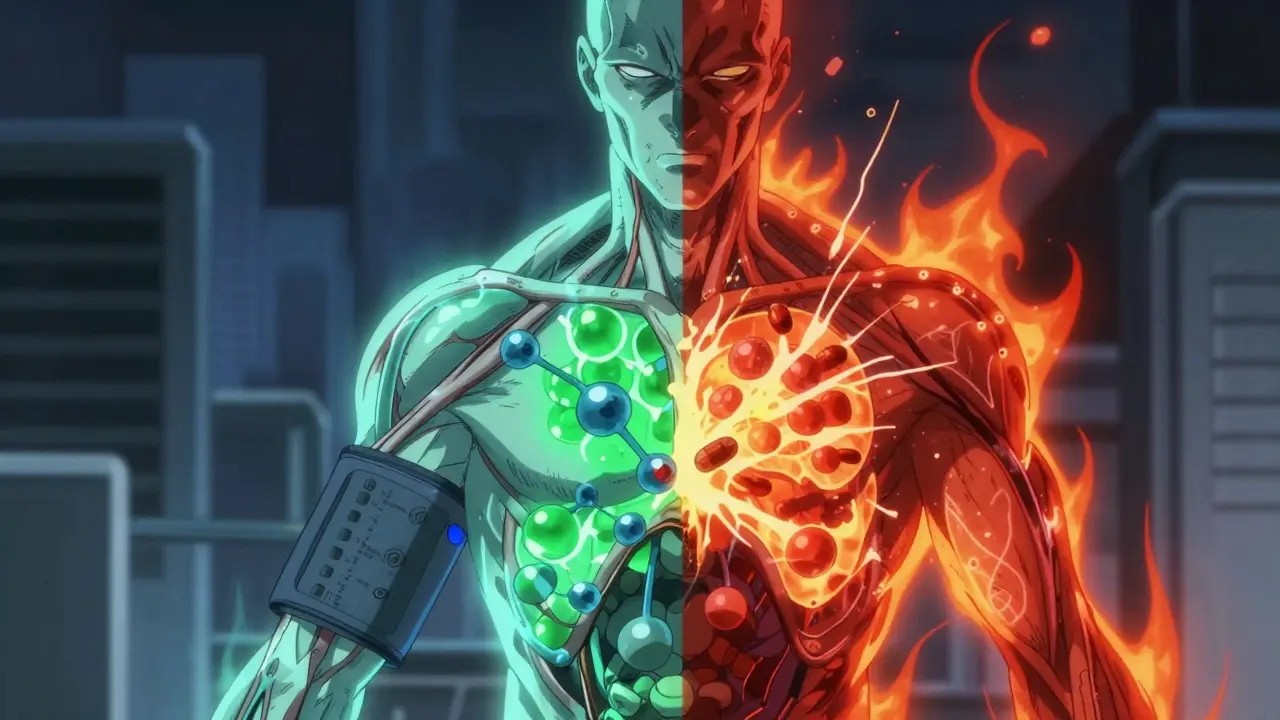
Blood Pressure Interaction Calculator
Blood Pressure Impact Estimate
When you take a green coffee extract supplement for weight loss or energy, you might not think twice about it-especially if you’re already on a stimulant like Adderall or Vyvanse for ADHD. But here’s the problem: green coffee extract and stimulant medications don’t just coexist. They push against each other in your body, and your blood pressure is caught in the middle.
What’s Actually in Green Coffee Extract?
Green coffee extract comes from unroasted coffee beans. Unlike your morning brew, it’s not roasted, so it keeps more of its natural compounds-mainly chlorogenic acids and caffeine. Most supplements contain 45-50% chlorogenic acids, with caffeine levels between 5% and 20%. That means one capsule could have anywhere from 50 to 200 mg of caffeine, depending on the brand. And here’s the twist: even though it has caffeine, research shows green coffee extract usually lowers blood pressure, not raises it.
That’s because chlorogenic acids block enzymes like ACE and 11β-HSD1, which help regulate blood pressure. A 2006 study with 117 men with mild high blood pressure found that taking 93 mg or 185 mg of green coffee extract daily lowered systolic pressure by nearly 5 mmHg and diastolic by about 3-4 mmHg. No major side effects. That’s a clear, measurable effect.
How Stimulant Medications Affect Blood Pressure
Now, let’s talk about ADHD meds. Methylphenidate (Ritalin, Concerta) and amphetamines (Adderall, Vyvanse) are powerful stimulants. Their job is to sharpen focus, but they also tighten blood vessels and speed up your heart. The FDA says these drugs can raise systolic blood pressure by 2 to 13 mmHg and diastolic by 1 to 9 mmHg. That’s not a small bump-it’s enough to push someone from normal to borderline high, or high to dangerously high.
The American Heart Association says everyone on these meds needs regular blood pressure checks. Why? Because even if you feel fine, your numbers might be creeping up. And if you’re already dealing with high blood pressure, heart disease, or a family history of cardiovascular issues, this becomes even more critical.
The Conflict: One Lowers, One Raises
Here’s where things get messy. Green coffee extract tries to lower your blood pressure. Stimulants try to raise it. They’re pulling in opposite directions. That doesn’t mean they cancel each other out. It means your body gets confused.
Imagine your blood pressure as a thermostat. The stimulant turns the heat up. The green coffee extract turns the AC on. Instead of a steady 72°F, your system is bouncing between 68 and 76. That’s instability. And instability in blood pressure isn’t just uncomfortable-it’s risky.
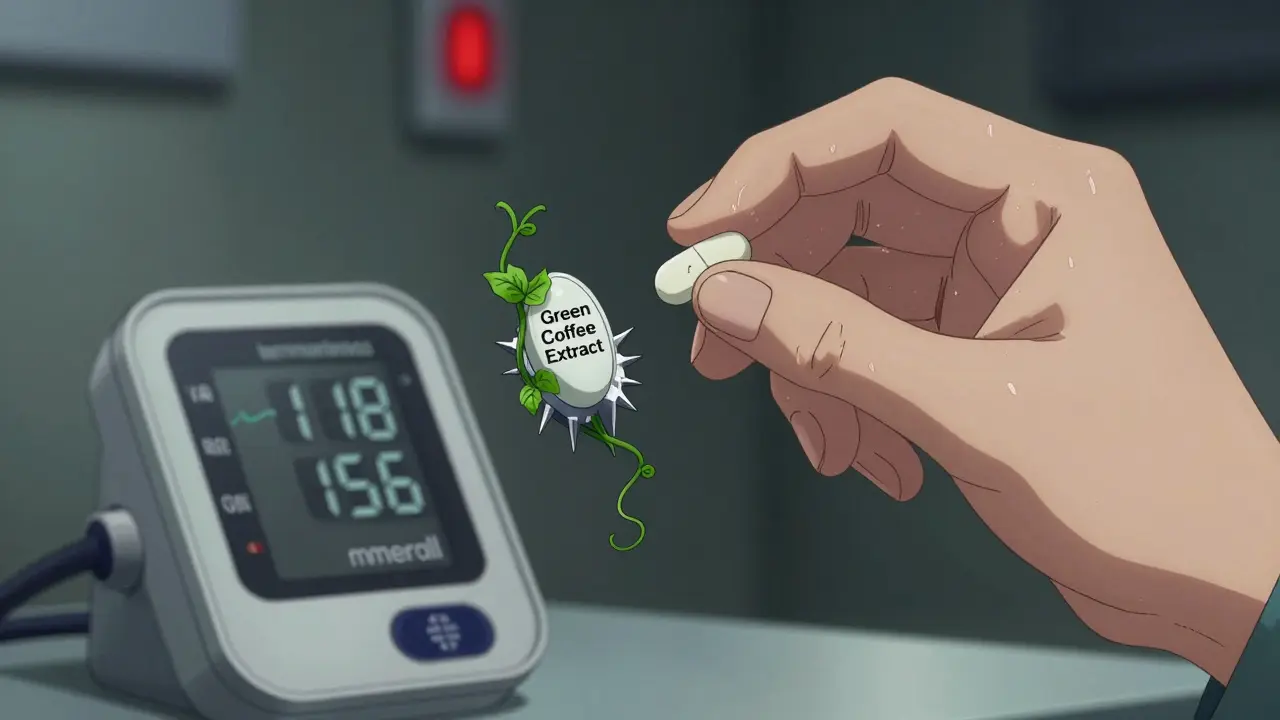
There’s no large-scale study that looks at this exact combo. But we have enough real-world evidence to be worried. A 2021 case report in the Journal of Clinical Hypertension described a 34-year-old man on Adderall XR who started taking a green coffee extract with 180 mg of caffeine. His systolic pressure swung wildly between 118 and 156 mmHg. He had to stop the supplement and adjust his meds to get stable again.
What Real People Are Experiencing
Online forums are full of stories like this. One Reddit user on r/ADHD said their blood pressure readings went from normal to dangerously high after adding green coffee extract to their Vyvanse routine. Their cardiologist told them to quit immediately. Another person on PatientsLikeMe described dizziness and heart palpitations after combining Adderall with a green coffee supplement. Their doctor said the caffeine was likely the trigger.
ConsumerLab’s 2023 safety report flagged 17 blood pressure-related adverse events tied to green coffee extract. Nine of those cases involved people also taking stimulant medications. Healthline’s analysis of 1,200 user reports found that 28% of people on stimulants who used green coffee extract reported blood pressure instability. Only 8% of those on stimulants alone had the same issue.
Not All Supplements Are Created Equal
Here’s another hidden risk: green coffee extract products vary wildly. ConsumerLab tested 15 popular brands and found chlorogenic acid levels ranged from 28.7% to 51.3%. Caffeine content? From 3.2% to 18.7%. That’s a 500% difference in caffeine per capsule. You might think you’re taking a "mild" dose, but without knowing the exact numbers, you’re guessing.
And it’s not just caffeine. Chlorogenic acids themselves can interact with other drugs. They act like mild ACE inhibitors-similar to blood pressure meds like lisinopril. So if you’re on those too? The risk goes up again.

What Doctors and Regulators Are Saying
Experts are sounding the alarm. Dr. James Lane from Duke University says combining prescription stimulants with green coffee extract creates "unpredictable hemodynamic responses" that can mess with treatment and safety. The American Society of Hypertension warns that herbal supplements like this can create complex interactions with both stimulants and antihypertensive drugs.
The American College of Clinical Pharmacy surveyed 1,200 pharmacists in 2024. Sixty-eight percent now routinely warn patients about this interaction-up from just 32% in 2021. The FDA has seen a 217% spike in reports linking green coffee extract to blood pressure problems between 2020 and 2023. Over 40% of those reports involved stimulant medications.
The European Medicines Agency added a specific warning about this combo to its herbal medicines database in February 2024. The FDA included green coffee extract in its 2023 draft guidance on supplement-drug interactions. This isn’t speculation. It’s official concern.
What Should You Do?
If you’re on a stimulant medication and thinking about trying green coffee extract, stop. Don’t start. If you’re already taking it, don’t quit cold turkey without talking to your doctor. But do get your blood pressure checked.
Here’s what experts recommend:
- Don’t combine green coffee extract with stimulant meds unless your doctor specifically says it’s safe-and even then, only under close monitoring.
- If you’re already using both, track your blood pressure twice a day for at least two weeks. Write down the numbers. Look for swings larger than 10 mmHg systolic.
- Ask your pharmacist to check the caffeine and chlorogenic acid content of your supplement. Many don’t list it clearly.
- If you have high blood pressure, heart disease, or a history of arrhythmias, avoid green coffee extract entirely while on stimulants.
The European Society of Cardiology’s 2023 guidelines say: if you must use both, monitor BP twice daily and aim to keep readings under 140/90 mmHg with minimal daily variation. That’s not easy when two substances are fighting each other.
What’s Next?
A large clinical trial (NCT05678901) is currently recruiting 300 people to study exactly how green coffee extract interacts with methylphenidate. Results aren’t expected until mid-2026. Until then, we’re working with what we have: real patient reports, expert warnings, and clear pharmacological logic.
The bottom line? This isn’t about fear. It’s about control. You’re taking a medication to manage a condition. Adding a supplement without knowing how it affects your body is like driving with one foot on the gas and one on the brake. You might get somewhere-but you won’t know if you’re safe doing it.
If you’re using green coffee extract and stimulants, talk to your doctor. Bring your supplement bottle. Ask: "Could this be affecting my blood pressure?" Don’t assume it’s harmless because it’s "natural." Natural doesn’t mean safe. Especially when it’s competing with a prescription drug.
Can green coffee extract lower blood pressure even if I’m on stimulant medication?
Yes, green coffee extract can still lower blood pressure even when taken with stimulants, but the effect may be unpredictable. Stimulants raise blood pressure, while chlorogenic acids in green coffee extract lower it. This creates opposing forces in your body, leading to unstable readings. The net result isn’t guaranteed to be beneficial-it can cause dangerous fluctuations.
Is the caffeine in green coffee extract the main problem?
Caffeine is a big part of the problem, but not the only one. Green coffee extract contains 5-20% caffeine, and many products deliver 50-200 mg per serving. That’s enough to add to the stimulant’s effects. But chlorogenic acids also interfere with enzymes that regulate blood pressure, adding another layer of interaction. So it’s not just caffeine-it’s the full mix of compounds.
Are all green coffee extract supplements the same?
No. Testing by ConsumerLab found chlorogenic acid levels ranged from 28.7% to 51.3%, and caffeine content varied from 3.2% to 18.7%. That means two bottles labeled "green coffee extract" could have five times different caffeine amounts. You can’t assume safety based on brand name or price.
Should I stop green coffee extract if I’m on Adderall or Vyvanse?
If you’re experiencing dizziness, heart palpitations, or unstable blood pressure, yes-stop immediately and talk to your doctor. Even if you feel fine, the risk of hidden fluctuations is real. Most experts recommend avoiding green coffee extract entirely while on stimulant medications unless under direct medical supervision with regular blood pressure checks.
What should I ask my pharmacist about green coffee extract?
Ask for the exact caffeine and chlorogenic acid content per serving. Ask if your supplement has been independently tested for potency and purity. Ask if it’s safe to take with your current medications. Pharmacists are now trained to screen for this interaction-don’t hesitate to bring your bottle in.
Is there a safe dose of green coffee extract if I’m on stimulants?
There is no established safe dose when combined with stimulant medications. The American Heart Association and American College of Cardiology recommend avoiding green coffee extract entirely in this scenario. The risks of unpredictable blood pressure changes outweigh any potential benefits.

Joe Bartlett
December 17, 2025 AT 09:51Sachin Bhorde
December 17, 2025 AT 16:30Josh Potter
December 18, 2025 AT 01:46Martin Spedding
December 19, 2025 AT 22:26Marie Mee
December 20, 2025 AT 02:45Kent Peterson
December 21, 2025 AT 19:14amanda s
December 22, 2025 AT 02:39Jigar shah
December 23, 2025 AT 05:53Naomi Lopez
December 23, 2025 AT 06:04Salome Perez
December 24, 2025 AT 02:15Nishant Desae
December 24, 2025 AT 20:50Meghan O'Shaughnessy
December 26, 2025 AT 17:51Kaylee Esdale
December 28, 2025 AT 07:55Jonathan Morris
December 28, 2025 AT 19:09Linda Caldwell
December 30, 2025 AT 07:39