
Antihistamine Dose Calculator
Find the right antihistamine dose for your hives treatment based on effectiveness and drowsiness risk. This tool helps you determine the safest, most effective dose for your needs.
Personalized Recommendation
Note: Always consult your doctor before adjusting medication doses.
When hives show up out of nowhere-red, itchy welts spreading across your arms, legs, or face-it’s not just annoying. It’s disruptive. You can’t sleep. You can’t focus. And if you’ve tried over-the-counter antihistamines and they didn’t work, or made you feel like a zombie, you’re not alone. Nearly 20% of people worldwide will deal with hives at some point in their life. For about 1 in 100, it becomes chronic-lasting six weeks or longer. The good news? We know a lot more now than we did even five years ago about what actually helps, what doesn’t, and what comes next when the first-line treatments fall short.
How Antihistamines Actually Work
Hives happen because your body releases too much histamine. It’s a chemical your immune system dumps out when it thinks something’s wrong-even if there’s no real threat. That histamine makes your skin swell, turn red, and itch like crazy. Antihistamines block those histamine signals, quieting the reaction. But not all antihistamines are the same.There are two main types: first-generation and second-generation. First-gen ones like diphenhydramine (Benadryl) were developed in the 1940s. They work fast, but they cross into your brain. That’s why half of people who take them feel drowsy. Second-gen antihistamines like cetirizine (Zyrtec), loratadine (Claritin), and fexofenadine (Allegra) were designed to stay out of your brain. They’re just as good at stopping the itch, but with far less sleepiness.
Here’s what the numbers say:
| Medication | Generic Name | Standard Dose | Half-Life | Drowsiness Rate | Onset of Action |
|---|---|---|---|---|---|
| Cetirizine | Zyrtec | 10 mg daily | 8-10 hours | 10-15% | 1 hour |
| Loratadine | Claritin | 10 mg daily | 12 hours | 8-12% | 1.3 hours |
| Fexofenadine | Allegra | 180 mg daily | 14 hours | 6-8% | 2.6 hours |
| Diphenhydramine | Benadryl | 25-50 mg every 4-6 hours | 4-8 hours | 45-50% | 30-60 minutes |
Most doctors agree: start with a second-generation antihistamine. Cetirizine tends to be the most effective at stopping itch, but fexofenadine is the least likely to make you sluggish. If you drive, work with machines, or care for kids, fexofenadine might be your best bet.
Why Your Antihistamine Might Stop Working
You take Zyrtec every day. It works great for a few weeks. Then-poof. The hives come back. This isn’t rare. In fact, studies show that only 43% of people with chronic hives get full relief from standard doses of second-gen antihistamines.There are a few reasons why:
- Dose is too low. Many people take one pill and stop. But guidelines now say you can safely increase the dose up to four times the standard amount. For cetirizine, that’s 40 mg a day. That’s not off-label-it’s backed by international consensus. Around 30% of people who don’t respond to 10 mg get relief at 40 mg.
- Timing matters. Taking antihistamines only when hives appear is less effective than taking them every day, even when you feel fine. A study of 347 patients found daily dosing controlled symptoms 63% better than taking them as needed.
- Your body changes. If you have an autoimmune condition like Hashimoto’s thyroiditis, your odds of antihistamine failure go up by more than three times. The immune system is already on high alert, and histamine isn’t the only player.
One Reddit user wrote: “Zyrtec worked perfectly for 3 months. Then I needed 20 mg. Now even 40 mg doesn’t touch my symptoms.” That’s not unusual. When the standard dose and even the fourfold dose stop working, it’s time to think beyond antihistamines.
Alternatives When Antihistamines Fail
If you’ve tried everything from Claritin to Benadryl and you’re still breaking out, there are real options-some newer, some well-established.1. Omalizumab (Xolair)
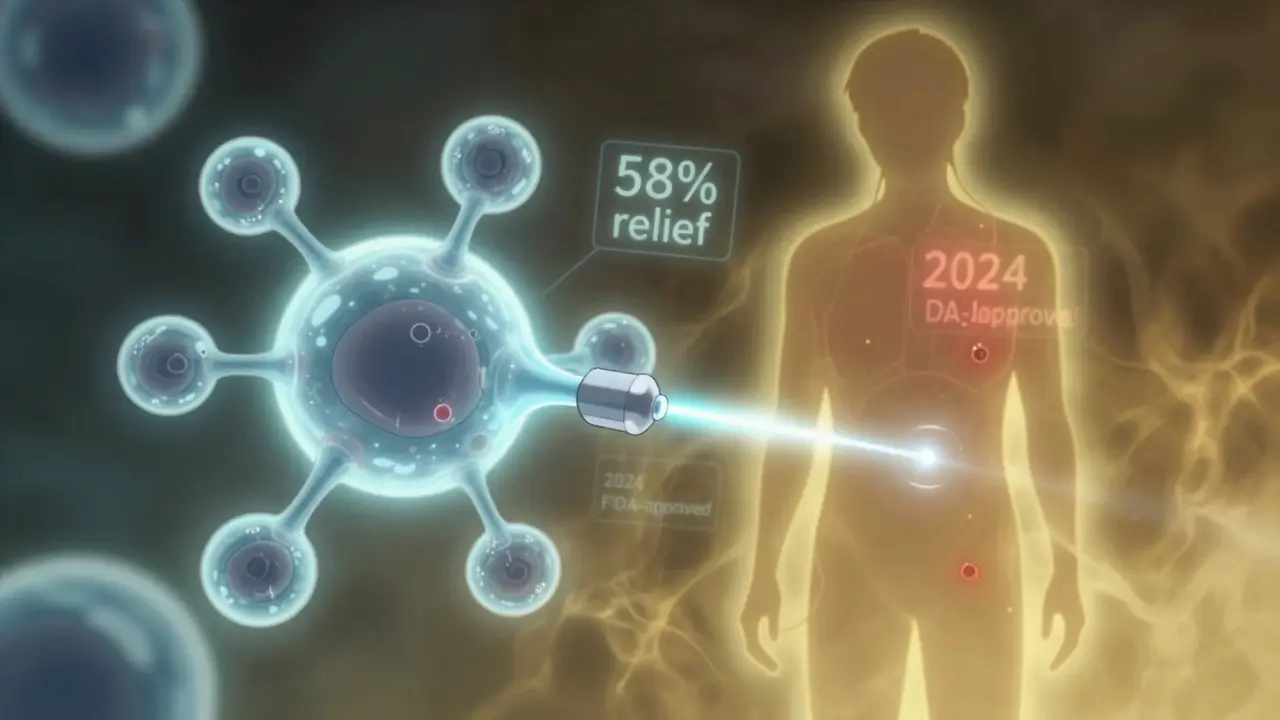
This is an injectable biologic, originally made for asthma. But since 2014, it’s been approved for chronic hives that don’t respond to antihistamines. It works by targeting IgE, the antibody that triggers mast cells to release histamine. In clinical trials, 58% of patients got complete symptom control with monthly shots. It’s not cheap-around $3,200 per dose-but many insurance plans cover it for chronic hives. Side effects are rare, mostly mild injection-site reactions.2. Ligelizumab (Newer, Not Yet Approved)
This is the next-generation biologic. It’s even more powerful than omalizumab. In a 2022 trial, 51% of patients had their hives vanish completely after 12 weeks-compared to 26% on omalizumab. The FDA gave it Breakthrough Therapy designation in March 2023. Phase 3 trials are wrapping up in 2025. If approved, it could become the new gold standard.3. Cyclosporine
This is an older immunosuppressant, used for psoriasis and organ transplants. It’s not pretty-it can affect kidney function, and doctors monitor blood work closely. But for tough cases, it works. Studies show it helps 65% of patients who didn’t respond to antihistamines. It’s a short-term fix, not a lifelong solution. You’d use it for 3-6 months, then try to taper off.4. Combination Therapy
Some doctors prescribe two antihistamines together-like cetirizine in the morning and fexofenadine at night. This isn’t just a hack. A 2021 study showed better itch control with this combo than with either drug alone. It’s not officially approved, but it’s a common clinical practice.
What About Drowsiness? Is There a Non-Sedating Option?
Yes-but “non-sedating” doesn’t mean “zero sedation.” Even second-gen antihistamines can make you tired, especially if you’re sensitive, take them with alcohol, or have liver issues.Fexofenadine (Allegra) is your safest bet if drowsiness is a dealbreaker. In driving simulation tests, only 8% of users showed impairment-compared to 15% with cetirizine. It’s also the least likely to interact with other medications.
But if you need maximum itch control and don’t mind a little sleepiness, cetirizine wins. It’s the most effective. The trade-off? You might need to take it at night, or plan your day around it.
One thing to avoid: mixing antihistamines with alcohol, sedatives, or even some herbal sleep aids. The combo can double your drowsiness risk. And never use first-gen antihistamines like Benadryl for long-term hives. The drowsiness adds up. Your reaction time slows. You’re at higher risk for falls and car accidents.
Tracking Your Symptoms Is Just as Important as Medication
Many people don’t realize that hives aren’t just about allergens. Triggers vary wildly:- Heat (24% of patients)
- Stress (28%)
- NSAIDs like ibuprofen or aspirin (32%)
- Tight clothing, sweating, or even cold exposure
Keeping a daily log helps. Note when hives appear, what you ate, how stressed you felt, whether you were hot or cold. The Urticaria Activity Score is a simple tool used by clinics. You rate your itch and number of welts each day on a scale of 0-7. After a week or two, patterns emerge.
One patient in Sydney noticed her hives flared every time she ate pizza. Turns out, it wasn’t the cheese-it was the preservatives in the pepperoni. Once she cut those out, her symptoms dropped by 80%.
Apps like Hive Wise (4.2/5 on the App Store) help track symptoms, meds, and triggers. They even send reminders to take your pill. That consistency matters more than you think.
What’s Next for Hives Treatment?
The future is getting personal. Researchers are starting to look at genetic markers. One study found that 22% of people have a gene variation that makes them metabolize cetirizine slower-meaning they need higher doses or a different drug altogether.Also, a simple blood test for high-sensitivity C-reactive protein (hs-CRP) is now being used to predict who won’t respond to antihistamines. If your hs-CRP is above 3 mg/L, you’re 78% more likely to need something stronger than pills.
By 2028, biologics like ligelizumab could make up a quarter of the hives treatment market. But antihistamines? They’ll still be the first step. Why? They’re cheap, safe, and work for nearly half of all patients. The goal isn’t to replace them-it’s to know when to step up.
Final Takeaways
- Start with a second-generation antihistamine: cetirizine for best itch control, fexofenadine for least drowsiness.
- Take it daily, not just when hives appear.
- If it stops working, don’t give up-escalate the dose up to four times the standard amount.
- If that still fails, talk to your doctor about omalizumab (Xolair) or combination therapy.
- Track your triggers. Stress, heat, and NSAIDs are bigger culprits than most people realize.
- Avoid Benadryl for long-term use. The drowsiness isn’t worth the risk.
Hives are frustrating, but they’re manageable. You don’t have to live with them. There’s a path forward-even if the first pill didn’t work.
Can I take two different antihistamines at the same time?
Yes, under medical supervision. Combining cetirizine and fexofenadine is a common strategy for people who don’t respond to one drug alone. This isn’t an OTC recommendation-you need a doctor to guide the dosing. Never mix antihistamines without knowing the risks, especially if you’re taking other medications.
Is it safe to take high-dose antihistamines long-term?
For most people, yes. Dosing up to four times the standard amount (e.g., 40 mg cetirizine daily) is considered safe for months or even years. The FDA and international guidelines support this. The main risk is rare heart rhythm changes (QT prolongation), which occur in about 0.2% of patients at high doses. Your doctor may check your ECG if you’re on long-term high doses, especially if you have heart conditions or take other medications.
Why does my hives get worse at night?
Hives often worsen at night due to natural changes in your body’s histamine levels and cortisol rhythm. Cortisol, which helps suppress inflammation, dips at night. Also, heat from bedding, stress from the day, and even scratching in your sleep can trigger flare-ups. Taking your antihistamine at night can help, especially if you’re using one that causes drowsiness.
Can stress really cause hives?
Absolutely. Stress doesn’t cause hives directly, but it can trigger or worsen them by activating your immune system and increasing histamine release. Studies show stress is a trigger in nearly 30% of chronic hives patients. Managing stress with sleep, exercise, or mindfulness can reduce flare frequency-even if you’re still on medication.
Should I avoid NSAIDs if I have hives?
Yes, if you notice a pattern. Medications like ibuprofen, naproxen, and aspirin can trigger hives in up to 32% of chronic patients. They don’t cause hives in everyone, but if your hives flare after taking them, avoid them. Use acetaminophen (Tylenol) instead for pain or fever. Always check with your doctor before switching pain relievers.




Ojus Save
February 10, 2026 AT 14:45Skilken Awe
February 11, 2026 AT 22:17andres az
February 13, 2026 AT 01:46Carla McKinney
February 13, 2026 AT 14:15Stephon Devereux
February 14, 2026 AT 15:11Joanne Tan
February 16, 2026 AT 15:11Neha Motiwala
February 18, 2026 AT 10:06Steve DESTIVELLE
February 19, 2026 AT 00:40athmaja biju
February 19, 2026 AT 02:45Robert Petersen
February 19, 2026 AT 07:01alex clo
February 20, 2026 AT 06:38