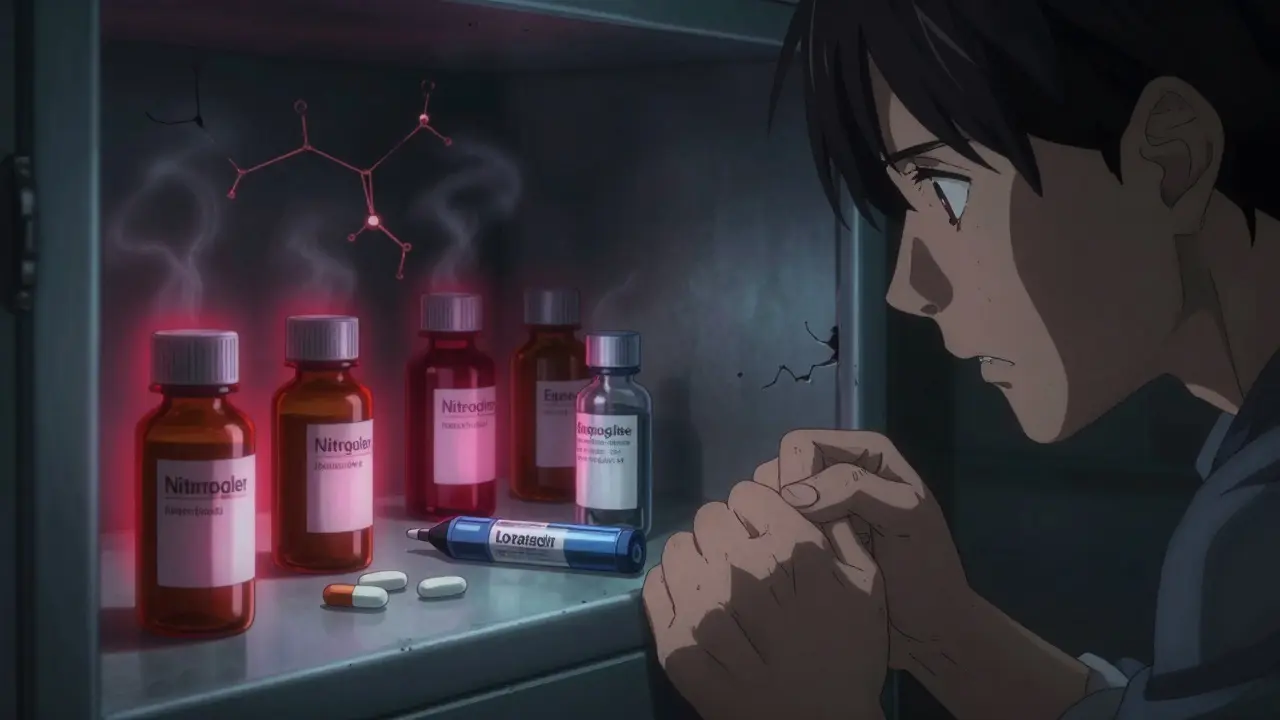
Most people assume that if a pill is past its expiration date, it’s just less effective. But that’s not always true. For some medications, going past the date isn’t just a waste of money-it could be life-threatening. You might have a bottle of antibiotics from last year, an old EpiPen in your glove compartment, or nitroglycerin tablets in your medicine cabinet. You think, "It’s probably fine," and you’re not alone. But when it comes to certain drugs, the difference between "still good" and "dangerous" isn’t a gray area-it’s a hard line.
Not All Expired Medications Are the Same
The expiration date on your medicine isn’t arbitrary. It’s the last day the manufacturer guarantees the drug will work as intended and remain safe under proper storage conditions. The FDA has required this since 1979, based on stability testing. But here’s the twist: most medications don’t suddenly turn toxic on the expiration date. In fact, the FDA’s own Shelf Life Extension Program found that 90% of over 100 tested drugs remained effective 5 to 15 years past their expiration date-when stored correctly. But that’s not the whole story. A small group of drugs breaks the pattern. These aren’t just weak-they can become harmful. The difference isn’t in the date on the bottle. It’s in the chemical makeup of the drug itself.The Dangerous Few: Drugs That Turn Toxic
Some medications degrade into substances that damage your body. The most infamous example is tetracycline. In 1963, three people developed kidney damage after taking expired tetracycline. The drug broke down into epitetracycline and anhydro-4-epitetracycline-compounds that attack the kidneys. It was a rare case, but it’s the only documented instance of toxicity from expired antibiotics in modern history. Other drugs follow similar patterns:- Nitroglycerin: Used for chest pain, this drug breaks down into unstable nitrogen oxides. After expiration, it can lose half its potency in just three months. If you take expired nitroglycerin during a heart attack, it won’t open your arteries. You could die waiting for it to work.
- Insulin: After expiration, insulin forms clumps called fibrils. These clumps reduce how much your body absorbs. Studies show potency drops 20-30% per year. For diabetics, that means unpredictable blood sugar spikes or crashes.
- Liquid antibiotics (like amoxicillin-clavulanate): Once opened, these start to break down in water. Bacteria can grow in them, and the degraded chemicals can trigger allergic reactions or severe diarrhea. A 2023 case report described a child who developed acute diarrhea after taking liquid antibiotics just three days past expiration.
- Epinephrine auto-injectors (EpiPens): These are time-sensitive lifesavers. A 2017 study found that one year after expiration, EpiPens lost 85% of their potency. In an allergic emergency, that’s not a risk-it’s a death sentence.
- Aspirin: It breaks down into acetic acid and salicylic acid. After two years past expiration, the risk of stomach irritation increases by 50%. If you have a history of ulcers, this isn’t worth the gamble.
Storage Matters More Than You Think
Your medicine’s lifespan depends less on the date and more on where you keep it. The FDA says "cool, dry place" means 15-25°C (59-77°F) with 35-45% humidity. But how many of us actually store meds that way? Bathrooms? No. The average bathroom hits 32°C (90°F) and 80% humidity. That’s a recipe for degradation. Sunlight, heat, and moisture speed up chemical breakdown. A bottle of nitroglycerin in a plastic pillbox on your sink will die faster than one kept in its original amber glass bottle in a drawer. Insulin? Keep it refrigerated. Once opened, it lasts longer in the fridge than on the counter. Eye drops? Throw them out 28 days after opening-even if the bottle says "use by 2026." The preservatives wear out. Bacteria grow. You don’t want eye infections from old drops.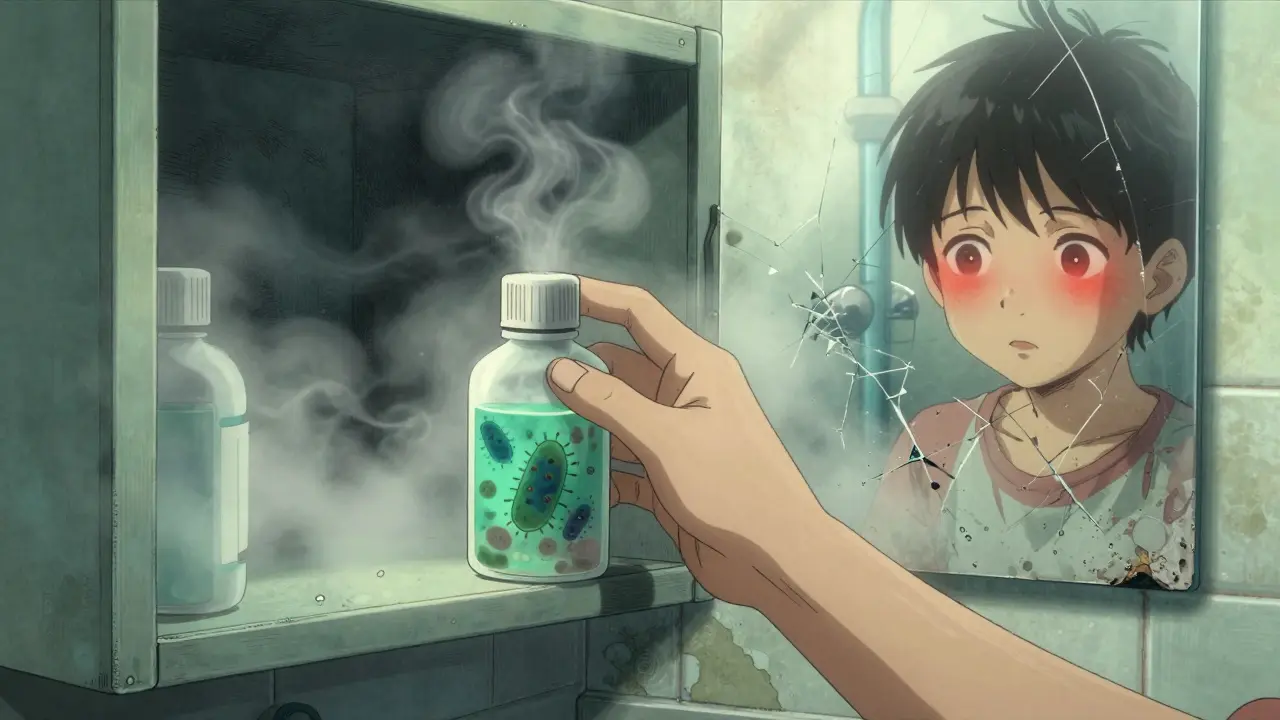
What About Antibiotics, Painkillers, and Antihistamines?
Here’s the good news: most solid pills-like ibuprofen, amoxicillin tablets, or loratadine-don’t turn toxic. They just lose strength. A 2021 study showed that aspirin, acetaminophen, and antihistamines still had 70-80% potency five years past expiration, if kept dry and cool. But potency loss is still dangerous. If you take expired allergy pills and your swelling doesn’t go down, you could end up in the ER. If your blood pressure meds don’t work because they’ve degraded, you risk stroke or heart damage. It’s not the drug turning poison-it’s the treatment failing when you need it most.What Experts Really Say
There’s a split between regulators and researchers. The FDA, CDC, and DEA all say: don’t use expired meds. Their main concern? Accidental poisonings in kids. In 2020, over 36,000 children visited emergency rooms because they found meds in the house. That’s why they push a strict "no" policy. But clinical experts are more nuanced. Dr. Neha Vyas of Cleveland Clinic warns against using expired insulin, antibiotics, or blood thinners. Kimberly Hatton from the American Pharmacists Association says most expired pills are harmless-just weak. The NIH reviewed 200 studies in 2024 and found no evidence of toxicity in 98% of medications expired within five years, as long as they were stored properly. The real danger? Treatment failure. As Dr. Robert S. Hoffman from New York Poison Control said in JAMA: "The real tragedy isn’t poisoned patients from expired drugs-it’s the untreated heart attack because expired nitroglycerin didn’t work when needed most."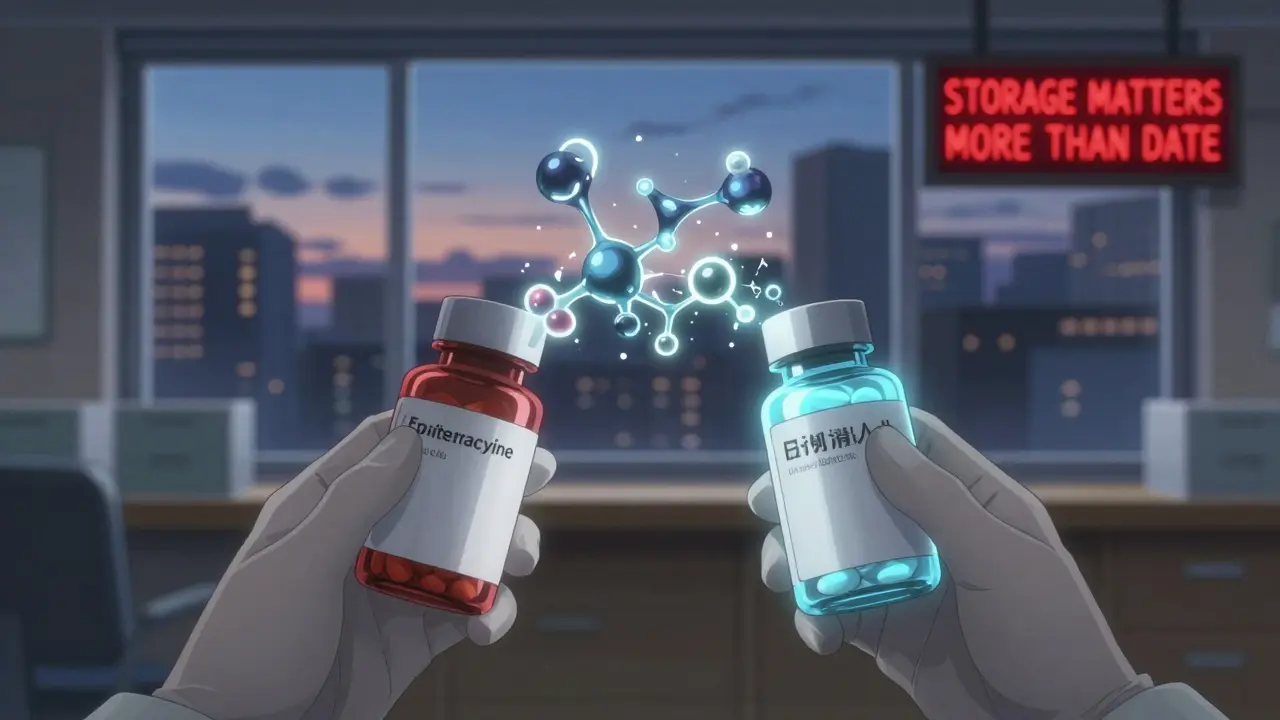
What Should You Do?
You don’t need to throw out every pill the moment it expires. But you do need to be smart:- Never use expired nitroglycerin, insulin, EpiPens, or liquid antibiotics. These are non-negotiable.
- Check storage conditions. Keep meds in a cool, dry drawer-not the bathroom, not the car, not the sunlit shelf.
- Don’t rely on smell or color. A pill might look fine but be chemically broken down. Only the lab can tell.
- For chronic conditions, refill early. Don’t wait until your blood pressure meds run out. Have a backup.
- Dispose of expired meds properly. Use pharmacy take-back programs. The DEA collected nearly a million pounds of unwanted meds in 2023. Don’t flush them or toss them in the trash.
Why Do Expiration Dates Exist If Most Drugs Last Longer?
Because manufacturers test stability for only a few years. They don’t pay for 15-year studies. The date is a legal safeguard, not a scientific deadline. The U.S. spends $8.2 billion a year replacing expired drugs-most of it unnecessary. The FDA is now testing a pilot program to extend expiration dates based on real-world stability data. By 2027, smart packaging might track each pill’s actual condition, not just a printed date. Until then, treat expiration dates like traffic lights. Green? Most pills are fine. Yellow? Be cautious with painkillers and allergy meds. Red? Nitroglycerin, insulin, EpiPens-stop. Don’t risk it.When in Doubt, Don’t Take It
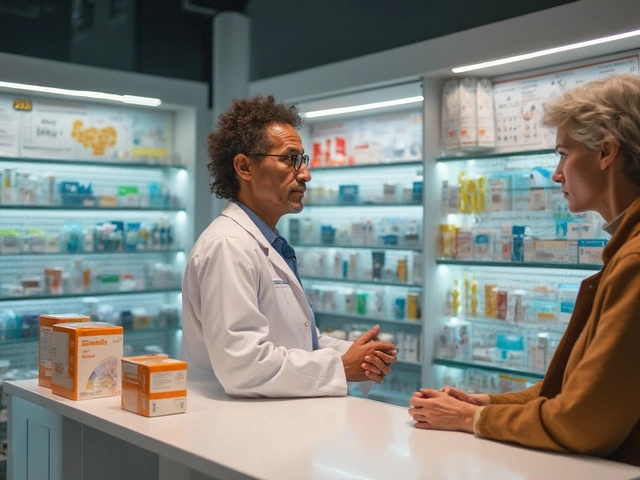
If you’re unsure whether a medication is still safe, don’t guess. Talk to your pharmacist. They can tell you if the drug is in the high-risk group. They can also help you replace it affordably. Many pharmacies offer low-cost generic alternatives. Your health isn’t worth the gamble. Expired meds might save you money-but they could cost you your life.Can expired medications make you sick?
Most expired medications won’t make you sick-they just won’t work as well. But a few types, like expired tetracycline, nitroglycerin, insulin, and liquid antibiotics, can break down into toxic or harmful compounds. These can cause kidney damage, allergic reactions, or treatment failure that leads to serious injury or death.
Is it safe to take expired painkillers like ibuprofen or acetaminophen?
Generally, yes-if they’ve been stored properly in a cool, dry place. Studies show these medications often retain 70-80% of their potency five or more years past expiration. However, if they’re discolored, cracked, or smell odd, throw them out. And never use them for serious pain without consulting a doctor.
Why do pharmacies put expiration dates on medications if they last longer?
Expiration dates are based on manufacturer testing under ideal conditions, usually for 1-5 years. They’re not meant to reflect when the drug becomes dangerous, but when the company guarantees full effectiveness. Extending dates would require costly long-term studies, so most manufacturers stick to conservative labels. Regulatory agencies use these dates for safety consistency.
What should I do with expired medications?
Never flush them or throw them in the trash. Use a pharmacy take-back program. Many Walgreens, CVS, and local police stations host free drop-off events. In 2023, the DEA collected nearly a million pounds of unused meds this way. This prevents accidental poisonings and environmental contamination.
How can I tell if a medication has gone bad?
Look for changes in color, texture, or smell. Tablets that crumble, capsules that stick together, or liquids that cloud or change color are signs of degradation. But many dangerous changes happen at a molecular level-you can’t see them. When in doubt, consult your pharmacist. Don’t rely on your senses alone.




Nupur Vimal
December 16, 2025 AT 18:43My grandma kept her nitroglycerin in the bathroom for 10 years and never had a problem. People these days are too scared of everything. If it looks okay and doesn’t smell like vinegar, it’s fine. Stop scaring folks with FDA hype.
Cassie Henriques
December 17, 2025 AT 06:35Actually, the degradation kinetics of tetracycline derivatives involve epimerization at C4 and dehydration at C5a-C6, yielding epitetracycline and anhydro-4-epitetracycline - both nephrotoxic via proximal tubular dysfunction. The 1963 case series was underreported because renal toxicity was misattributed to underlying infections. Modern HPLC assays show degradation thresholds as low as 5% breakdown in suboptimal storage. Not all meds are equal, and pharmacokinetic instability ≠ inertness.
Michelle M
December 17, 2025 AT 16:09It’s funny how we treat medicine like it’s a can of soup. We check expiration dates like they’re magic deadlines, but we don’t think about how we store it. I keep my insulin in the fridge, my aspirin in a sealed jar in my bedroom drawer, and I toss anything that’s been in the car. It’s not about fear - it’s about respect. Your body doesn’t care about marketing dates. It cares about what’s actually in the pill.
And honestly? If you’re still using a 7-year-old EpiPen because you’re ‘saving money,’ you’re not being smart - you’re gambling with your kid’s life. No amount of savings is worth that.
Also, thank you for mentioning the DEA take-back program. So many people flush meds and wonder why our rivers have antidepressants in them. It’s not just about safety - it’s about stewardship.
Maybe expiration dates are arbitrary, but our care shouldn’t be.
Benjamin Glover
December 18, 2025 AT 06:41Typical American overreaction. In the UK, we’ve been using expired antibiotics for decades. If it’s not moldy, take it. Your body will thank you more than your pharmacist’s profit margin.
Raj Kumar
December 19, 2025 AT 13:39bro i used my dad's expired ibuprofen last week for my headache and it worked fine lol. i keep all my pills in a cool box under my bed. no bathroom, no sun. i think the real issue is people storing meds like trash. also, my uncle in delhi uses 3-year-old insulin and he's fine. maybe it's about storage more than the date?
Christina Bischof
December 20, 2025 AT 13:40I used to be the person who kept everything. Then my mom had a bad reaction to an old antihistamine - not because it was toxic, but because it didn’t work. She ended up in the ER for anaphylaxis that could’ve been stopped with a fresh dose. I don’t judge people who use old meds. But I don’t risk it anymore. If it’s something that could save my life, I want it to work. Period.
Mike Nordby
December 21, 2025 AT 09:56The FDA’s Shelf Life Extension Program is a critical but underpublicized initiative. The data indicates that 90% of pharmaceuticals retain efficacy beyond labeled expiration dates under controlled storage conditions. However, the variance in real-world storage environments - particularly in humid, high-temperature climates - introduces unacceptable risk for life-critical medications. The distinction between pharmacological stability and clinical safety must be emphasized. Potency degradation is not merely an economic concern; it is a public health imperative.
John Samuel
December 22, 2025 AT 05:55Imagine your EpiPen is your superhero cape… but it’s been sitting in a hot glovebox for two years. 🦸♂️💥 It’s not just weak - it’s a paper sword in a dragon fight. I used to roll my eyes at expiration dates. Now I treat meds like my kid’s car seat - if it’s past the date, I don’t risk it. And I teach my nieces to do the same. 💉❤️
Sai Nguyen
December 22, 2025 AT 10:34India doesn't have this problem. We use old medicine because we can't afford new. People die? So what. This is America's problem - too much money, too much fear.
Lisa Davies
December 24, 2025 AT 03:18My pharmacist gave me a free replacement for my expired insulin last month. She said, ‘We don’t make money off your fear - we make it off your trust.’ I cried. No one talks about how pharmacists are the real heroes here. They’re the ones who stop you from taking something dangerous - without judgment. Thank you, pharmacy teams. You’re the quiet guardians.
RONALD Randolph
December 24, 2025 AT 21:23There is absolutely no excuse for not replacing expired medications in the United States of America. The infrastructure exists. The programs exist. The generics are cheap. If you are still using a 2020 EpiPen, you are not just irresponsible - you are a danger to yourself and others. This is not a debate. It is a moral failure.