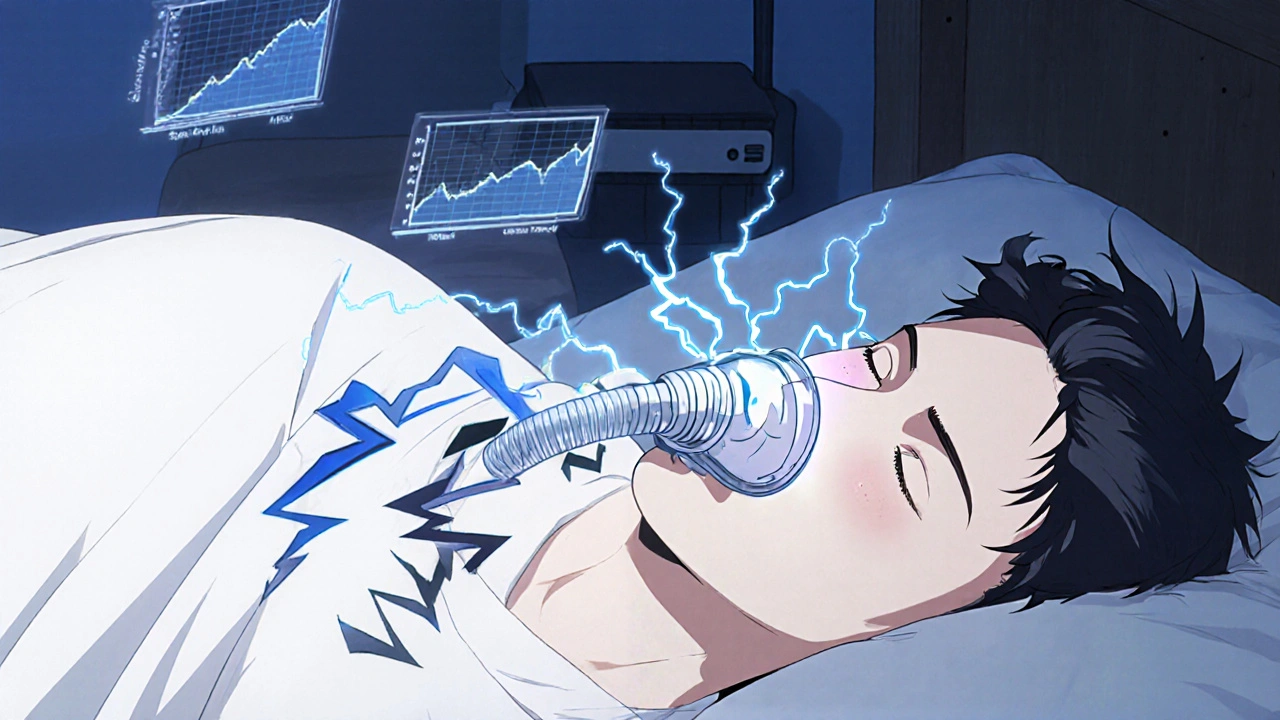
Sleep Apnea Treatment: What Works, What Doesn't, and What You Need to Know
When you have sleep apnea treatment, a set of medical and lifestyle approaches used to restore normal breathing during sleep. It's not just about snoring—it's about keeping your airway open so your brain gets the oxygen it needs all night long. Many people think it’s just a loud noise that annoys their partner. But untreated sleep apnea raises your risk of heart attacks, strokes, and even sudden death while sleeping. The most common form, obstructive sleep apnea, a condition where throat muscles relax and block airflow during sleep, affects over 22 million Americans. And it’s often missed because symptoms like daytime fatigue, brain fog, or morning headaches get blamed on stress or aging.
One of the most trusted tools for sleep apnea treatment is CPAP therapy, a device that delivers steady air pressure through a mask to keep your airway open. It’s not glamorous, and some people struggle with the mask or noise—but for most, it’s the most effective fix. But not everyone can use it. Some find it uncomfortable. Others have nasal issues, or simply can’t tolerate the pressure. That’s where alternatives come in: oral appliances that reposition the jaw, weight loss that reduces neck fat, or even surgery to remove excess tissue. And then there’s the hidden danger: sleep apnea and opioids, a dangerous combination where pain meds suppress the brain’s breathing signals, worsening central sleep apnea. If you’re on opioids and feel excessively tired during the day, this could be why.
What you eat, how much you weigh, and even how you sleep matter more than you think. Losing just 10% of your body weight can cut sleep apnea severity in half. Sleeping on your side instead of your back helps. Avoiding alcohol before bed keeps throat muscles from relaxing too much. And if you’re using supplements or herbal remedies, check for interactions—some can make breathing worse. The posts below cover real cases: how people switched from CPAP to alternatives, what happens when opioids mix with sleep apnea, how to spot fake sleep devices, and what to do if your treatment stops working. You won’t find fluff here—just straight talk on what actually helps people breathe better at night.