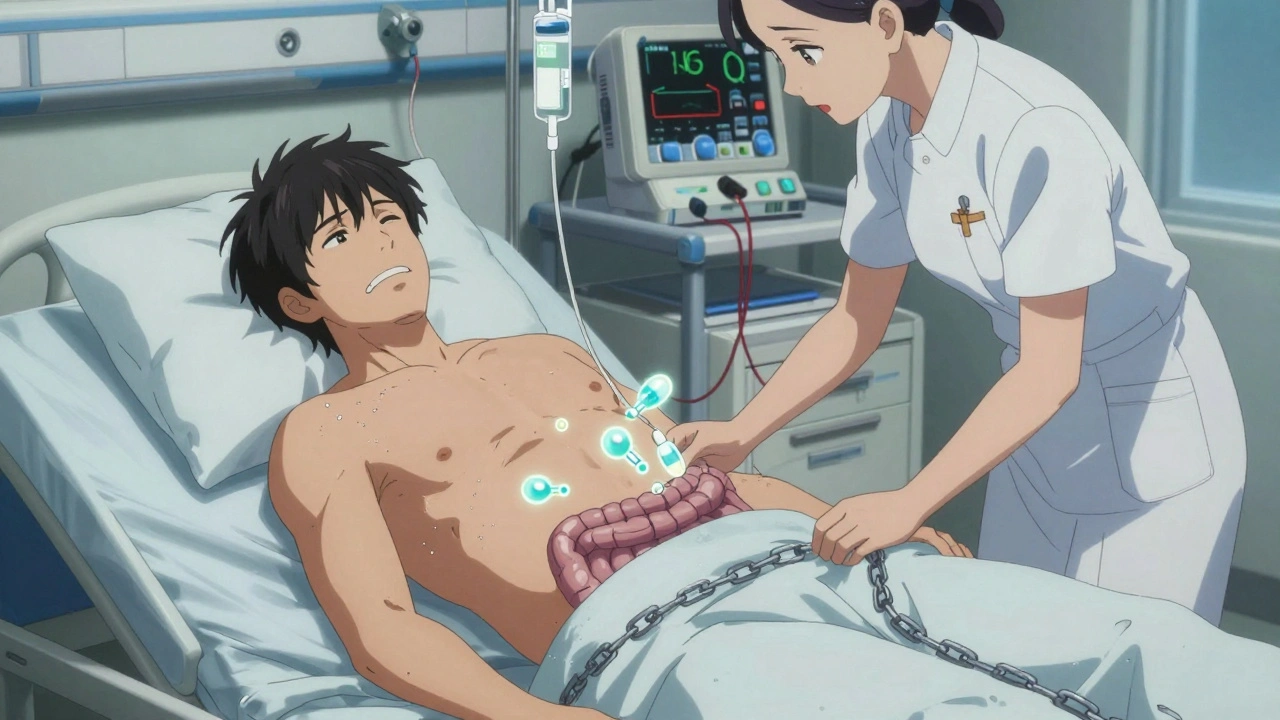
Postoperative Ileus: Causes, Risks, and How to Recover Faster
When your gut stops working after surgery, it’s not a glitch—it’s a common reaction called postoperative ileus, a temporary lack of intestinal movement following surgery. Also known as functional bowel obstruction, it’s not a blockage from scar tissue or a tumor—it’s your digestive system hitting pause because of stress, anesthesia, or pain meds. This isn’t rare. Up to half of all patients who have abdominal surgery experience it. You’ll feel bloated, maybe nauseous, and won’t pass gas or have a bowel movement. It’s frustrating, scary, and delays your discharge from the hospital.
What causes it? anesthesia, medications used to put you to sleep or control pain mess with the nerves that tell your intestines to move. opioid painkillers, commonly prescribed after surgery are a big part of the problem—they slow everything down. Even the stress of surgery itself triggers inflammation that shuts down gut motility. And if you’re lying still for days, eating lightly, or dehydrated, it gets worse. It’s not your fault. It’s biology.
Recovery isn’t about waiting it out. There are proven ways to speed it up. Getting up and walking within 24 hours helps more than any pill. Chewing gum? Surprisingly, it tricks your brain into thinking you’re eating, which kickstarts digestion. Avoiding opioids when possible cuts your risk. Drinking water, even small sips, keeps things moving. And if you’re on a clear liquid diet, don’t stay there too long—your gut needs real food to wake up. Hospitals are starting to use enhanced recovery protocols because they work: patients go home sooner, with fewer complications.
You might think this is just a side effect you have to live with. But it’s not. Postoperative ileus is preventable, manageable, and often under-treated. The posts below show you exactly what works—whether it’s avoiding certain meds, using gum therapy, understanding when to call your doctor, or recognizing the difference between normal recovery and something dangerous. You’ll find real stories, practical tips, and science-backed strategies from people who’ve been through it. No fluff. No jargon. Just what helps you get back to normal faster.