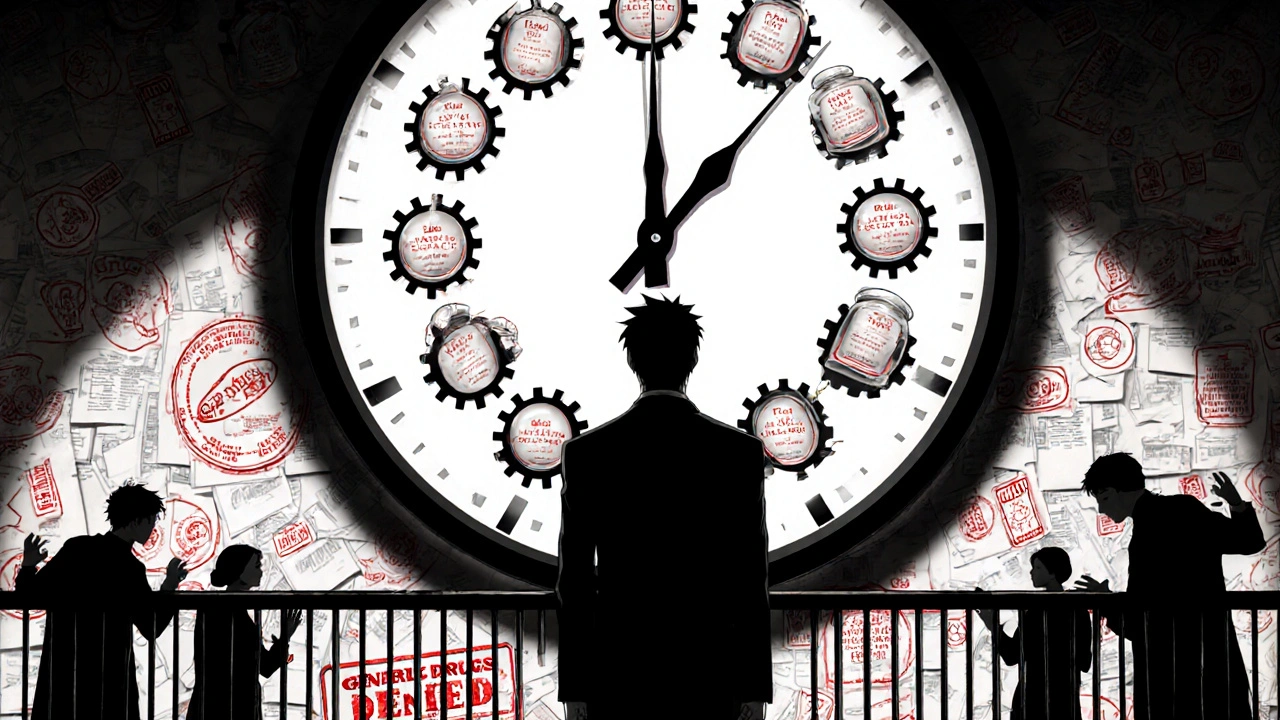
Pharmaceutical Patents: How They Control Drug Access and Prices
When you hear pharmaceutical patents, legal protections that give drug companies exclusive rights to sell a medicine for a set time. Also known as drug monopolies, these patents are the reason some life-saving pills cost thousands instead of dollars. Without them, companies wouldn’t invest billions in research—but with them, millions go without treatment because generics can’t enter the market.
Generic medicines, lower-cost versions of brand-name drugs that become available after patents expire are the main counterweight to this system. But even when patents should end, companies stretch them with minor tweaks—new coatings, dosages, or combinations—called "evergreening." Meanwhile, the TRIPS agreement, a global treaty that enforces patent rules through the WTO stops low-income countries from making or importing cheaper versions, even during health crises. This isn’t just policy—it’s a life-or-death gridlock.
Patents don’t just affect prices—they delay care. A cancer drug might be patented for 20 years, but with extensions and legal battles, patients wait over a decade for affordable options. In the U.S., pharmaceutical patents let companies charge 10 to 20 times more than the cost to produce the drug. In India or Brazil, where patent rules are more flexible, generics drop prices by 90%. That gap isn’t accidental—it’s designed.
Behind every patent battle are real people: a diabetic skipping doses because the insulin brand costs $300, a heart patient switching to a risky substitute because the statin they need is still under patent, or a parent in Nigeria unable to get the antiretroviral their child needs. The system isn’t broken—it’s working exactly as intended for the companies that wrote the rules.
But change is happening. The patent expiration, the moment a drug’s legal monopoly ends and generics can legally launch is now a high-stakes race. Generic manufacturers file lawsuits, wait for FDA tentative approval, and time their entries to hit the market the day the patent falls. Some patents are challenged and overturned. Others are buried under legal fees no small company can afford.
What you’ll find below isn’t just theory. These articles show you how patent rules play out in real life: how TRIPS blocks access, how companies game the system, how generics finally break through, and what you can do to get cheaper meds even when patents are still active. You’ll see how muscle pain from statins ties into patent delays, how missed doses become dangerous when you can’t afford your pill, and why your blood pressure med might cost less in Canada than in the U.S.—all because of patent timing.