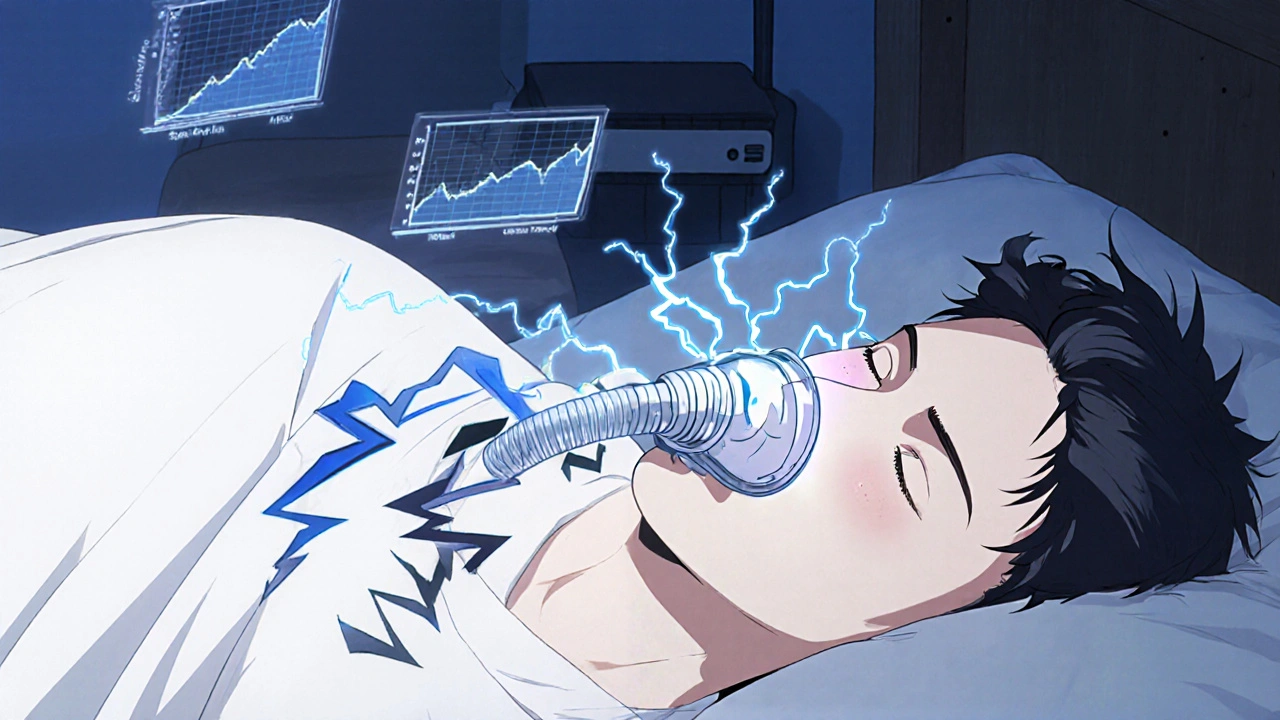
Obstructive Sleep Apnea: Causes, Risks, and Medications That Affect It
When you have obstructive sleep apnea, a condition where throat muscles relax too much during sleep and block the airway. Also known as OSA, it’s not just snoring—it’s when your body stops getting enough oxygen, often dozens of times a night, without you even realizing it. This isn’t rare. One in five adults has mild OSA, and one in fifteen has the moderate to severe kind. Left untreated, it doesn’t just leave you tired—it raises your risk for high blood pressure, heart attacks, strokes, and even sudden death during sleep.
What makes it worse? Some medications. opioids, painkillers like oxycodone or morphine that slow down the brain’s breathing signals. Also known as narcotics, they don’t just cause drowsiness—they can trigger central sleep apnea, a different kind of breathing pause where the brain forgets to tell your lungs to breathe. This combo—obstructive and central apnea—is especially dangerous. If you’re on opioids and feel exhausted during the day, or your partner says you stop breathing at night, it’s not just "getting old." It’s a medical red flag.
Other drugs can make OSA worse too. Benzodiazepines, muscle relaxants, and even some antidepressants relax the throat muscles more than you expect. Even over-the-counter sleep aids can turn a mild case into a serious one. And here’s the thing: many people with OSA don’t know they have it. They blame their fatigue on stress, aging, or poor sleep habits. But if you’re constantly tired despite sleeping 8 hours, if you wake up gasping, or if your morning headaches won’t go away, OSA might be the real culprit.
The good news? OSA is treatable. CPAP machines, oral devices, weight loss, and even positional therapy can help. But if you’re on medication that could be making it worse, you need to talk to your doctor. Don’t stop your meds—but do ask if they’re contributing to your breathing problems. There are often safer alternatives.
Below, you’ll find real, practical posts that dig into how opioids affect sleep, how to spot dangerous side effects, and what other drugs might be silently worsening your breathing at night. No fluff. Just what you need to know to protect your health—and your sleep.