Medication Log: Track Your Drugs, Avoid Dangers, and Stay in Control
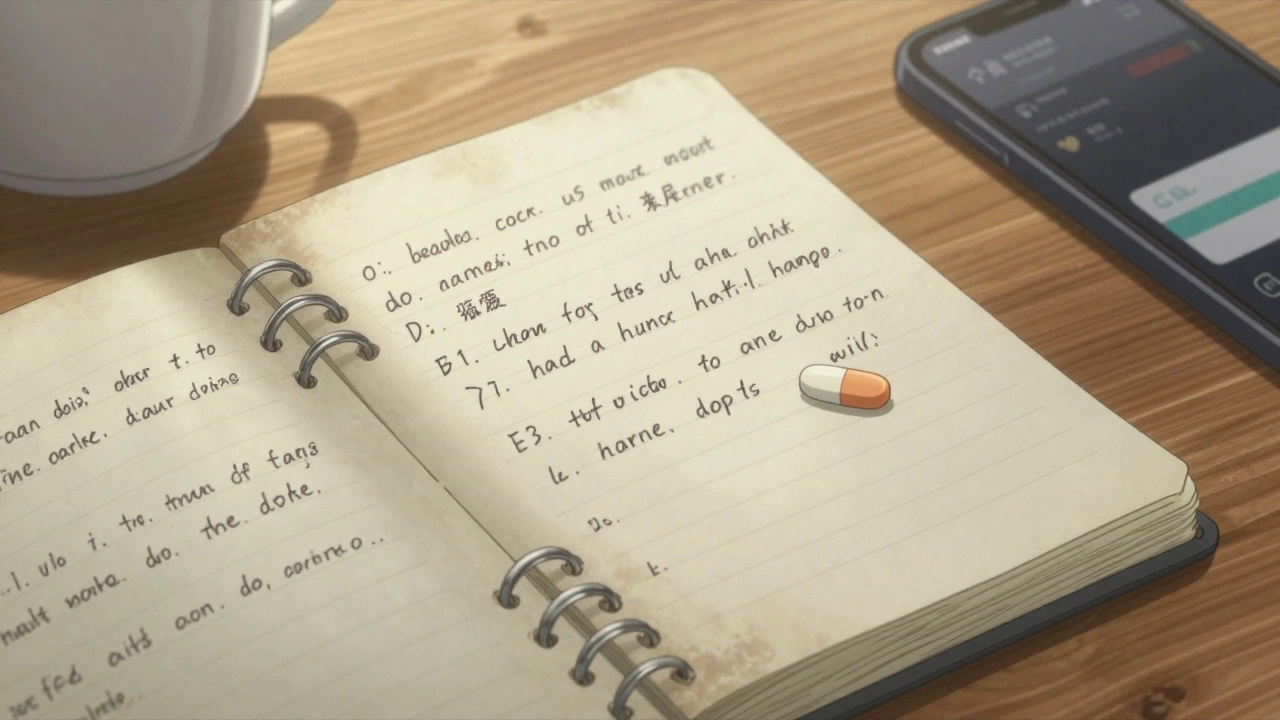
When you’re taking multiple medications, a medication log, a simple record of what drugs you take, when, and how you feel. Also known as a drug diary, it’s not just paperwork—it’s your personal safety net. Think of it like a car’s maintenance log: if you don’t track oil changes, you risk engine failure. Skip tracking your meds, and you risk dangerous interactions, missed doses, or side effects that go unnoticed until it’s too late.
A medication log, a simple record of what drugs you take, when, and how you feel. Also known as a drug diary, it’s not just paperwork—it’s your personal safety net. Think of it like a car’s maintenance log: if you don’t track oil changes, you risk engine failure. Skip tracking your meds, and you risk dangerous interactions, missed doses, or side effects that go unnoticed until it’s too late.
People often forget that drug interactions, when two or more medications affect each other in harmful ways are one of the top causes of hospital visits. A common antibiotic like clarithromycin can spike statin levels and cause muscle damage. Caffeine can block thyroid meds. Even something as simple as a supplement like St. John’s wort can cancel out birth control. A medication log stops guesswork. Write down every pill, every dose, every time you feel off—then show it to your doctor. No more "I think I took it yesterday" or "I didn’t know that could interact."
And it’s not just about avoiding harm—it’s about staying on track. medication adherence, how consistently you take your drugs as prescribed is the biggest factor in whether your treatment works. Missed doses of blood thinners? That’s a stroke risk. Skip insulin? Blood sugar spikes. Forget seizure meds? Seizures can happen. A log turns memory into data. You don’t need an app. A notebook, a spreadsheet, or even a notes app on your phone works. Just write it down: drug name, dose, time, how you felt. After a week, patterns emerge. Did you feel dizzy after lunch? Was your headache worse after skipping your morning pill? That’s information your doctor can’t get from a 10-minute visit.
And if you’ve ever panicked over a missed dose, when you forget to take a medication at the right time—whether it’s your blood pressure pill or your antidepressant—you know how confusing the advice can be. Some say take it right away. Others say skip it. Some warn against doubling up. A good medication log doesn’t just record what you took—it helps you answer that question later. You’ll know your meds, your schedule, and your body’s signals. That’s how you avoid dangerous mistakes.
What you’ll find below isn’t theory. It’s real, practical advice from people who’ve been there: how to track your meds without getting overwhelmed, which drugs are safest to combine, what to do when you miss a dose, and how to spot hidden dangers like counterfeit pills or dangerous interactions. These aren’t generic tips. They’re proven, tested, and tied to real risks—like statin muscle damage, bleeding from blood thinners, or steroid spikes in diabetes. You’re not just reading about logs. You’re learning how to use one to protect your health.