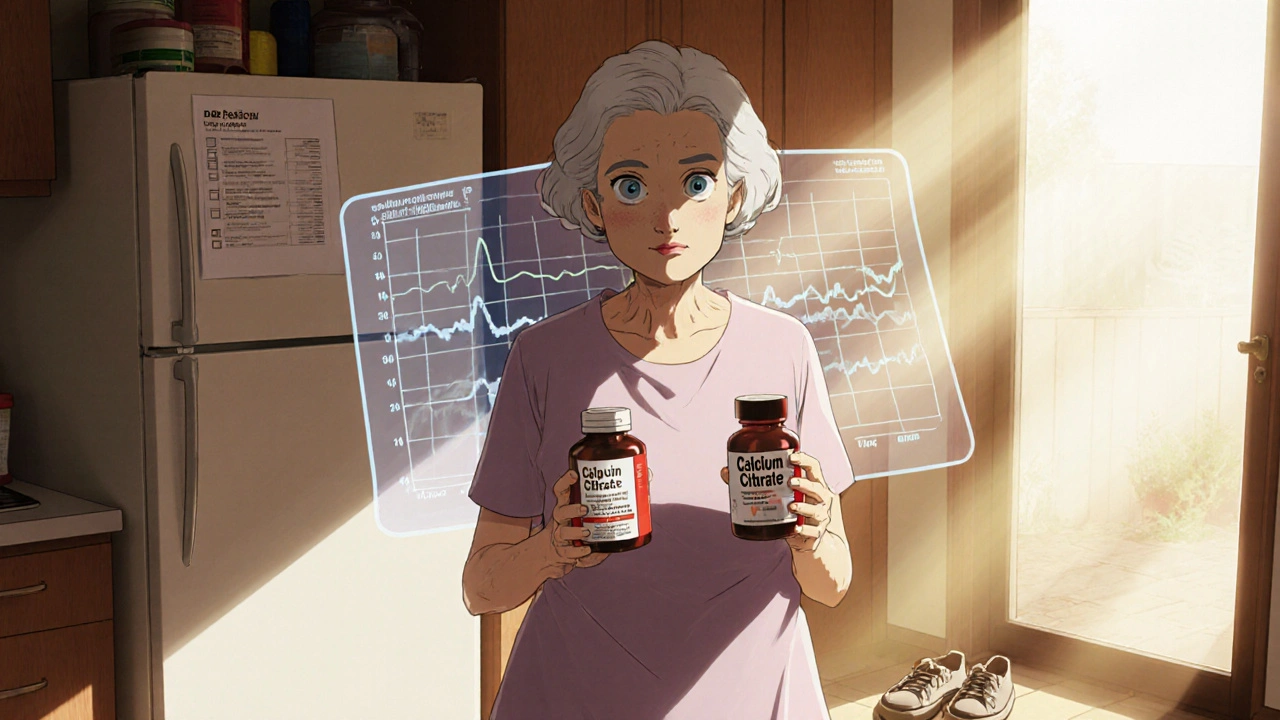
Fracture Risk: What Increases It and How to Reduce It
When we talk about fracture risk, the likelihood of breaking a bone due to weakness, trauma, or underlying conditions. Also known as bone fragility, it’s not just something that happens to older people—it’s a silent process that builds over years, often without symptoms until it’s too late. Many assume fractures only come from falls or accidents, but the truth is, some people break bones from simply standing up or coughing too hard. That’s not bad luck—it’s a sign their bones have lost strength over time.
Osteoporosis, a condition where bones become porous and brittle due to loss of density is the biggest driver of fracture risk in adults over 50. But it’s not the only one. Low calcium deficiency, not getting enough calcium through diet or supplements, leading to weakened bone structure plays a major role. So does long-term use of certain medications like steroids, proton pump inhibitors, or even some antidepressants. Even something as simple as not getting enough vitamin D from sunlight or food can silently increase your chances of a hip or spine fracture.
Fracture risk isn’t just about bones—it’s connected to your muscles, balance, and overall health. People with poor muscle strength, especially in the legs, are more likely to fall. Those with chronic conditions like diabetes, rheumatoid arthritis, or kidney disease face higher risks too. And if you’ve already had one fracture, your chance of another jumps dramatically. It’s not a one-time event—it’s a warning sign.
What’s surprising is how many people don’t realize they’re at risk until they break something. Routine bone scans aren’t common unless you’re already showing symptoms. But the good news? You don’t need to wait for a fracture to act. Simple changes—like adding weight-bearing exercise, checking your vitamin D levels, adjusting medications with your doctor, and removing tripping hazards at home—can make a real difference. The posts below cover exactly how these factors connect: from how statins affect bone density, to why missing calcium supplements can silently weaken your skeleton, to how certain drugs for acid reflux or thyroid issues quietly increase your fracture risk. You’ll find practical advice on what to test for, what to avoid, and what actually works to protect your bones before it’s too late.