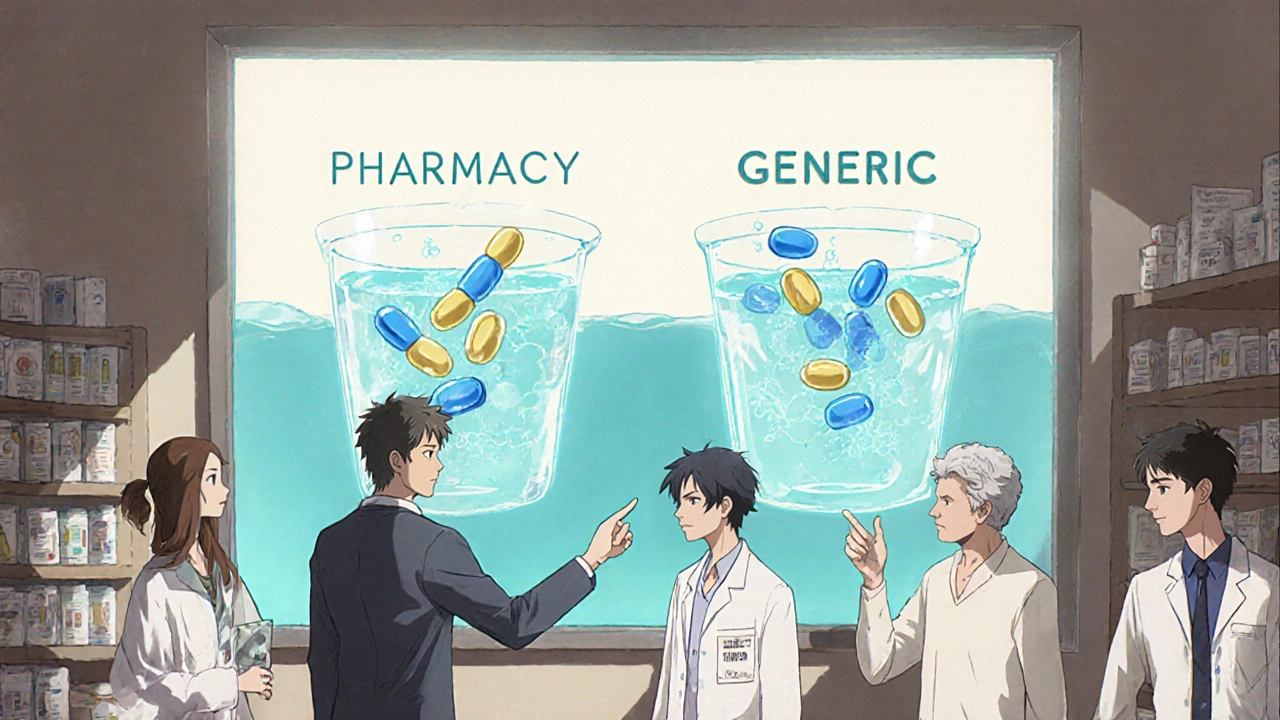
FDA Generic Education: Understand How Generic Drugs Are Approved and Why They Save Money
When you hear FDA generic education, the official guidance and facts about how the U.S. Food and Drug Administration approves generic medications. Also known as generic drug approval process, it’s the system that lets you buy the same medicine for a fraction of the price—without sacrificing safety or effectiveness. Most people don’t realize that every generic drug approved by the FDA must contain the exact same active ingredient, strength, dosage form, and route of administration as the brand-name version. It’s not a copy. It’s the same drug, tested and proven to work just as well.
The FDA doesn’t just accept claims—it demands proof. Generic manufacturers must show their product is bioequivalent, meaning it releases the medicine into your bloodstream at the same rate and amount as the brand. That’s why a generic lisinopril works the same as Zestril, and a generic atorvastatin does the same job as Lipitor. The FDA also inspects manufacturing sites, often the same ones that make the brand-name versions. If a plant can’t meet FDA standards for the brand, it won’t get approved for generics either.
But here’s what most people miss: drug pricing, the cost difference between brand-name and generic medications driven by patent laws and market competition. Also known as pharmaceutical cost disparity, it’s not about quality—it’s about monopoly. Brand companies spend millions on marketing and patent extensions to delay generics. Once those patents expire, multiple generic makers enter the market. Competition drives prices down—sometimes by 80% to 90%. That’s why generics make up 90% of U.S. prescriptions but only 12% of total drug spending. Every time you choose a generic, you’re not just saving money—you’re helping the whole system work better.
Some worry about switching from brand to generic. But the FDA tracks reports of adverse events for both types equally. If a generic caused more side effects, we’d know. We don’t. What we do see is that people who can’t afford their meds often skip doses or stop taking them—until they switch to a generic. That’s when their health actually improves.
Then there’s the FDA approval, the formal process by which the U.S. Food and Drug Administration authorizes a generic drug for sale after reviewing data on safety, strength, and manufacturing quality. Also known as ANDA process, it’s the backbone of affordable access. It’s not easy. Generic companies must submit detailed data on chemistry, manufacturing, and testing. They can’t just say it’s the same—they have to prove it. And the FDA doesn’t rush it. A single approval can take years of review, especially when patents are being challenged in court.
What you’ll find in the posts below isn’t theory. It’s real-world insight: how evergreening tricks the system, how TRIPS treaties affect global access, how to verify your generic pills aren’t fake, and how to spot dangerous interactions between generics and other meds. You’ll see the numbers behind the savings, the science behind the equivalence, and the tricks companies use to keep prices high. This isn’t about being anti-brand. It’s about knowing the truth so you can make smarter, safer, and more affordable choices for your health.