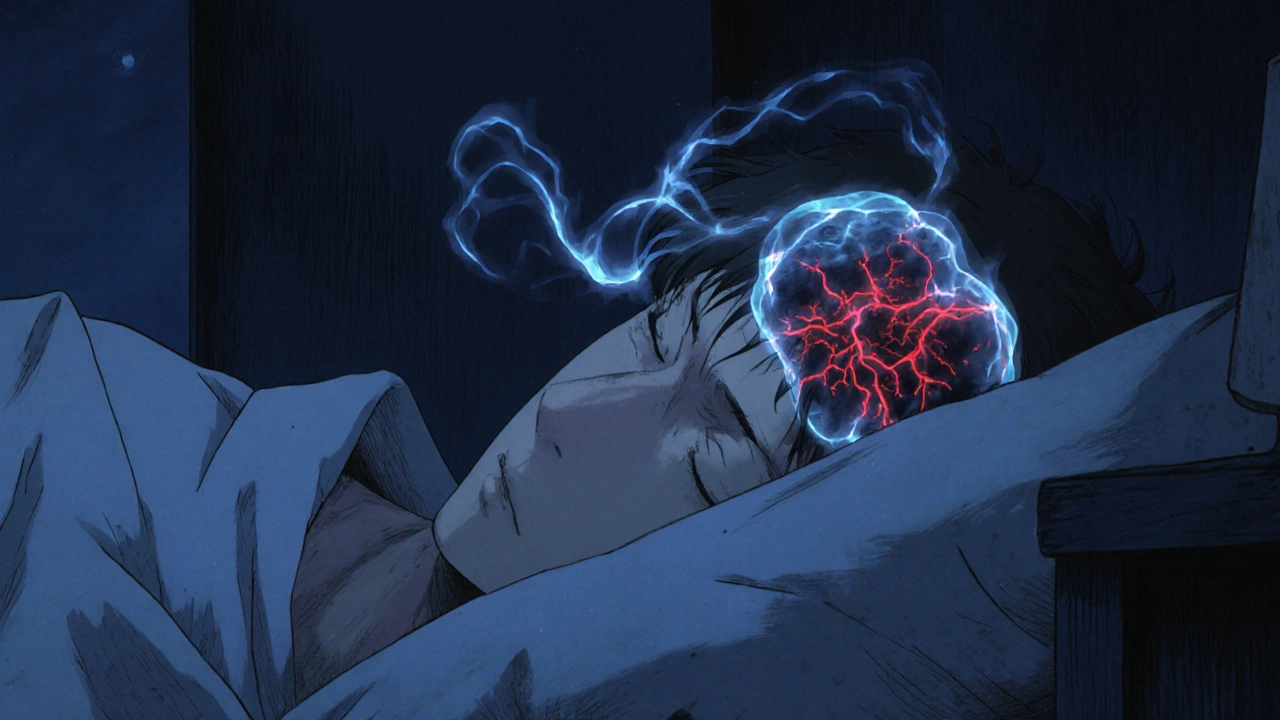
Central Sleep Apnea: Causes, Risks, and What You Can Do
When your brain stops sending the right signals to breathe during sleep, you're dealing with central sleep apnea, a sleep disorder where breathing pauses because the brain fails to trigger the muscles that control breathing. It's not the same as obstructive sleep apnea, where your airway gets blocked—this is a communication failure between your brain and your lungs. People with heart failure, stroke, or those on long-term opioid pain meds are at higher risk. It’s rare compared to the more common obstructive type, but just as dangerous if ignored.
Obstructive sleep apnea, a condition where throat muscles relax and block airflow during sleep is often easier to spot—loud snoring, gasping for air, daytime fatigue. But central sleep apnea, a neurological breathing disorder doesn’t always come with snoring. You might wake up short of breath, feel like you can’t catch your breath even when awake, or have unexplained insomnia. It’s often missed because it looks like stress or poor sleep habits. If you have heart disease or take opioids regularly and feel tired all day despite sleeping enough, this could be why.
Doctors diagnose it with a sleep study, where they track your breathing patterns, oxygen levels, and brain signals overnight. Treatment isn’t one-size-fits-all. Some people need a CPAP machine with special settings that detect when breathing stops and gently push air to restart it. Others benefit from adaptive servo-ventilation (ASV), a smarter device that learns your breathing rhythm and keeps it steady. For those with heart failure, treating the underlying condition often helps. If you’re on opioids, reducing the dose under medical supervision can make a big difference.
What’s clear from the research and patient stories is this: central sleep apnea doesn’t go away on its own. Left untreated, it strains your heart, raises blood pressure, and increases the risk of arrhythmias or even sudden death. It’s not just about sleep quality—it’s about survival. The good news? When caught early and managed right, most people see big improvements in energy, mood, and overall health.
Below, you’ll find real-world guides from people who’ve lived with this condition—how they figured it out, what treatments helped, what didn’t, and how they learned to sleep again without fear. Whether you’re newly diagnosed, caring for someone who is, or just trying to understand why you’re exhausted despite sleeping all night, these posts give you the practical, no-fluff info you need.