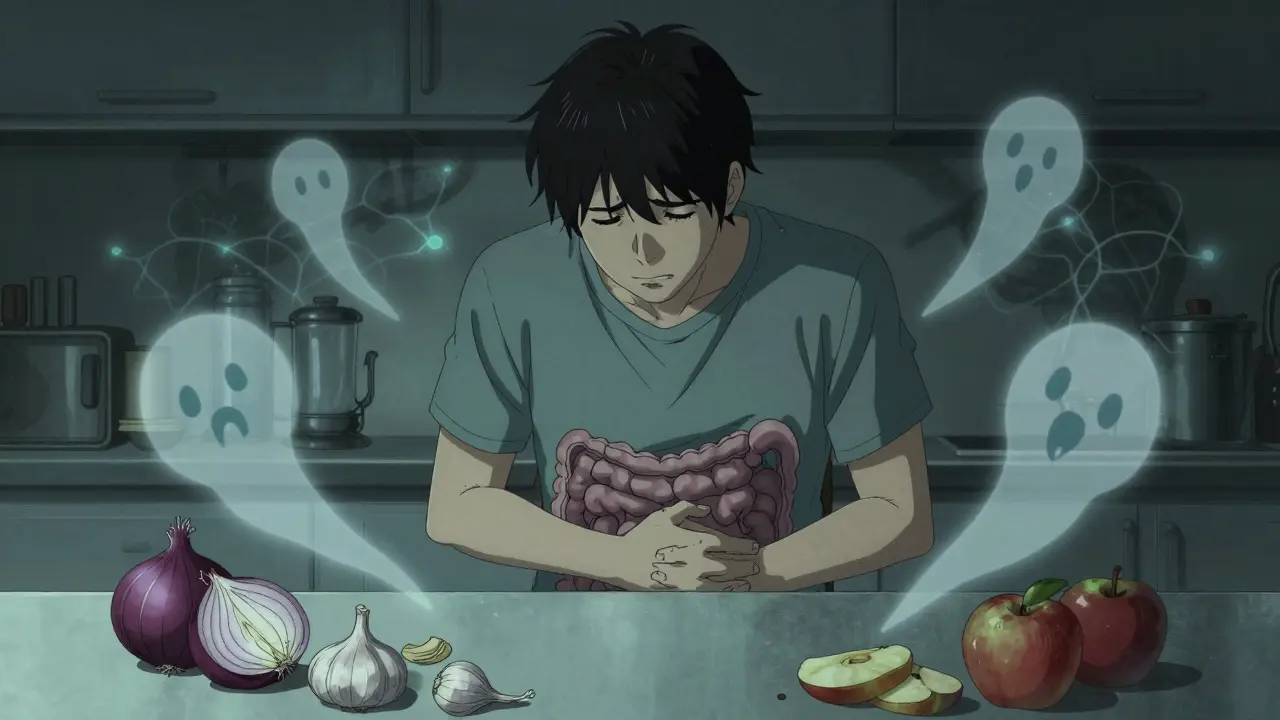
Irritable Bowel Syndrome isn’t something you can see in a scan or prove with a blood test. But if you’ve lived with it, you know it’s real. Abdominal pain that comes and goes, bloating that makes you feel like you’re six months pregnant, diarrhea that strikes out of nowhere, or constipation that just won’t let go-these aren’t just "bad digestion." They’re signs of IBS, a chronic condition affecting 1 in 7 people worldwide. And while it doesn’t damage your intestines, it can wreck your daily life. The good news? You don’t have to just endure it. There are clear steps to understand, manage, and even reduce your symptoms.
What Does IBS Actually Feel Like?
- Abdominal pain or cramping that gets worse after eating and improves after a bowel movement
- Bloating and a swollen, tight feeling in your belly
- Diarrhea-watery stools, sudden urgency, sometimes multiple times a day
- Constipation-straining, hard stools, feeling like you didn’t fully empty
- Mucus in your stool
- Feeling like you still need to go, even after you’ve just had a bowel movement
- Excessive gas or frequent belching
There are three main types:
- IBS-D (diarrhea-predominant): About 40% of cases. You’re more likely to have loose stools and urgency.
- IBS-C (constipation-predominant): Around 35%. Hard, lumpy stools and infrequent bowel movements are the norm.
- IBS-M (mixed): Roughly 25%. You alternate between diarrhea and constipation-sometimes in the same day.
And it’s not just your gut. About 7 in 10 people with IBS also report symptoms outside the digestive tract: acid reflux, nausea, chest pain that feels like a heart issue, or even a lump-in-the-throat sensation. It’s all connected-your gut and brain are in constant communication.
How Do Doctors Diagnose IBS?
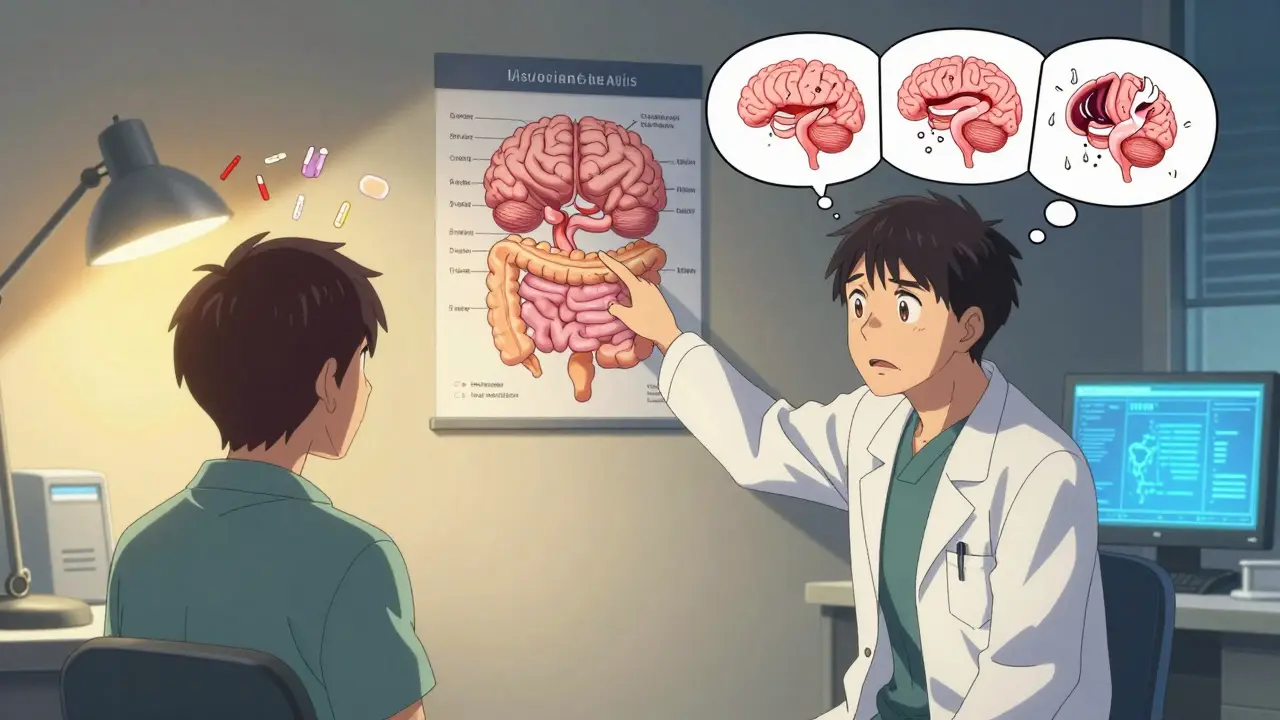
No single test confirms IBS. That’s why it takes so long for many people to get a diagnosis-on average, over six years. Doctors don’t diagnose IBS by finding something wrong. They diagnose it by ruling out everything else.
First, they’ll ask about your symptoms, your family history, and how long you’ve been having issues. Then they’ll look for "red flags" that suggest something more serious:
- Onset after age 50
- Unexplained weight loss
- Rectal bleeding
- Anemia (low iron)
- Family history of colon cancer or Crohn’s disease
- Diarrhea that wakes you up at night
If any of these are present, you’ll likely need tests: a full blood count, celiac disease screening, stool tests for inflammation, or even a colonoscopy. But if your symptoms match the Rome IV criteria and there are no red flags, you probably have IBS. No scan needed.
What Makes IBS Symptoms Worse?
IBS isn’t caused by one thing. It’s triggered by a mix of factors. And for most people, it’s not the food itself-it’s how your gut reacts to it.
Food triggers: About 70% of people with IBS find that certain foods make their symptoms flare. The biggest culprits? High-FODMAP foods-things like onions, garlic, beans, apples, milk, honey, and artificial sweeteners. These ferment in your gut and create gas, bloating, and pain. Caffeine, alcohol, spicy foods, and fatty meals are also common triggers.
Stress: Emotional stress doesn’t cause IBS, but it turns up the volume. Studies show 60-80% of people report worse symptoms during stressful periods-exams, job changes, family conflict. Your gut has its own nervous system. When you’re anxious, it reacts.
Hormones: For women, IBS symptoms often spike around menstruation. About two-thirds of female patients report this pattern. Estrogen and progesterone levels directly affect gut motility and sensitivity.
Antibiotics: One in four people develop IBS-like symptoms after taking antibiotics. Why? They wipe out good bacteria in your gut, throwing off the balance. Sometimes, it never fully recovers.
What Medications Actually Work?
There’s no one-size-fits-all pill for IBS. Treatment depends on your subtype and which symptoms bother you most.
For IBS-D (diarrhea):
- Loperamide (Imodium): Over-the-counter. Helps slow diarrhea in about 60% of users. Doesn’t touch pain or bloating.
- Rifaximin (Xifaxan): A non-absorbed antibiotic. Reduces bloating and diarrhea in 40-50% of people. Often used for short courses.
- Eluxadoline (Viberzi): Prescription-only. Works on gut nerves to reduce pain and diarrhea. Works for about half of IBS-D patients. Side effects include constipation and pancreatitis risk-so not for everyone.
For IBS-C (constipation):
- Linaclotide (Linzess): Increases fluid in the intestines. About 30-40% of people get at least three full bowel movements a week. Common side effect: diarrhea.
- Plecanatide (Trulance): Similar to linaclotide. Slightly fewer diarrhea side effects.
- Lubiprostone (Amitiza): Stimulates chloride channels to move stool. Works for 25-30% of users. Takes a few days to kick in.
For pain and overall symptoms:
- Antispasmodics (hyoscine, dicyclomine): These relax gut muscles. Used for decades. Help about 55% of people with cramping and pain.
- Low-dose antidepressants (amitriptyline, nortriptyline): Not for depression. At low doses (10-30 mg nightly), they calm nerve signals between gut and brain. Studies show 40-50% improvement in overall symptoms.
Don’t expect miracles. These meds don’t cure IBS. They help you manage it. And they often take 2-8 weeks to show real results.
What About Probiotics and Diet?
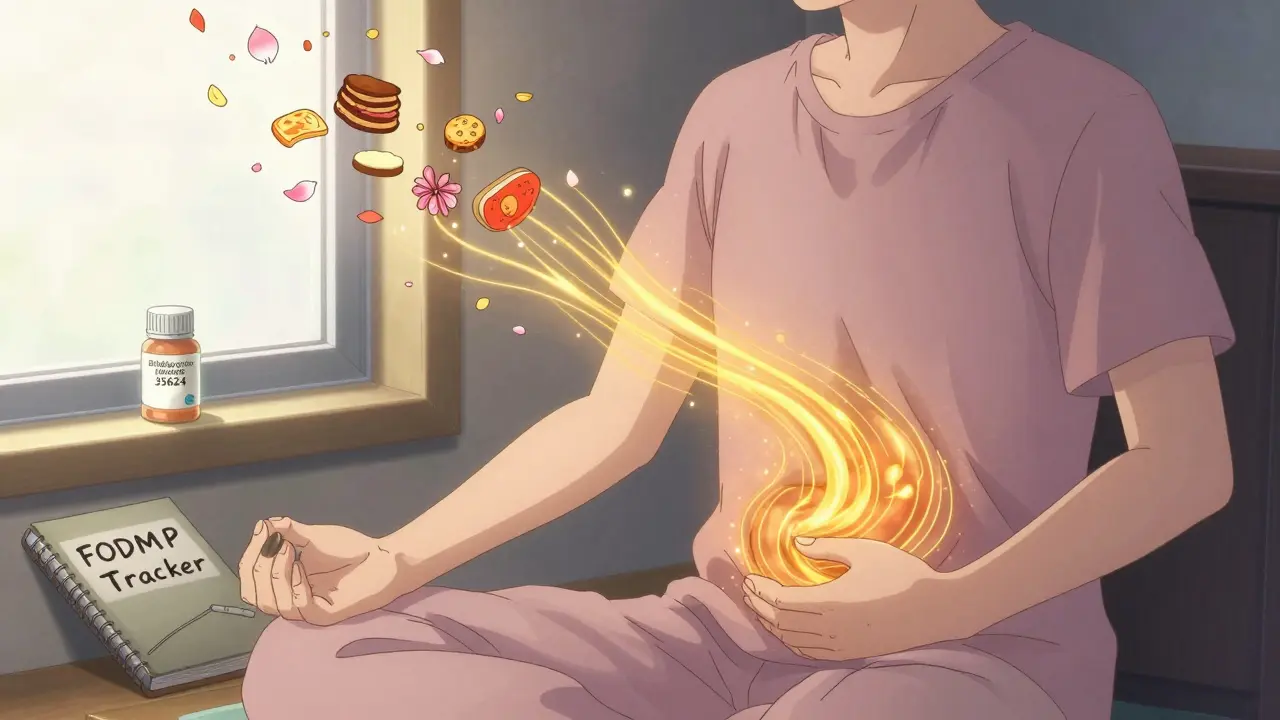
Probiotics aren’t magic. Most store-bought ones don’t help. But one specific strain-Bifidobacterium infantis 35624-has been shown in trials to improve bloating, pain, and bowel habits in about 35% of people. Look for it by name on the label.
The low-FODMAP diet is the most researched dietary approach. It’s not a forever diet. It’s a three-step process:
- Elimination: Cut out all high-FODMAP foods for 2-6 weeks. Many people feel better fast.
- Reintroduction: Slowly add foods back in, one at a time. This tells you exactly what triggers you.
- Personalization: Build a diet that avoids only your personal triggers. Most people can eventually eat more than they thought.
Done right-with a dietitian’s help-it works for 50-75% of people. But doing it alone? That’s where most people fail. The diet is complex. And cutting out too much can lead to nutrient gaps.
Therapy Can Be Just as Powerful as Pills
Here’s something most people don’t know: talking to a therapist can be as effective as taking medication.
Cognitive behavioral therapy (CBT) helps you change how you think about your symptoms. It reduces anxiety, which in turn reduces gut flare-ups.
Gut-directed hypnotherapy uses guided relaxation to calm the gut-brain connection. In clinical trials, 40-60% of patients saw major improvement-similar to drug results.
These aren’t "alternative" treatments. They’re evidence-based. And they’re often covered by insurance.
What’s New in IBS Research?
The future of IBS care is personalization. Researchers are now looking at your gut bacteria like a fingerprint. Early data shows IBS-D and IBS-C have different microbial signatures.
Fecal microbiota transplantation (FMT)-transferring healthy gut bacteria from a donor-is being tested. One 2022 study found 35% of IBS patients went into remission after FMT, compared to 15% on placebo.
A new drug called ibodutant, targeting gut nerve receptors, received breakthrough status from the FDA in 2023. Phase 2 trials showed 45% improvement versus 22% with placebo. It’s not available yet, but it’s a sign that better treatments are coming.
Living With IBS: What Actually Helps?
People with IBS aren’t just looking for a cure. They want to live without fear. To eat without panic. To travel without planning three bathrooms ahead.
Real success comes from combining a few things:
- Identifying your personal food triggers (not everyone’s the same)
- Managing stress through breathing, movement, or therapy
- Using the right medication for your subtype
- Sticking with it-even when progress feels slow
One 2022 survey of over 1,200 IBS patients found that 62% saw big improvement with dietary changes. And 55% said their quality of life got "much better" after finding the right treatment plan.
You don’t have to suffer silently. IBS is manageable. It’s not your fault. And you’re not alone.
Can IBS turn into Crohn’s disease or colon cancer?
No. IBS is a functional disorder-it doesn’t cause inflammation, damage, or changes to the bowel lining. It doesn’t increase your risk of colon cancer or inflammatory bowel disease like Crohn’s or ulcerative colitis. But if you develop new symptoms like weight loss, bleeding, or anemia, you need to get checked. Those aren’t IBS signs-they’re red flags.
How long does it take for IBS medication to work?
It varies. Loperamide works within hours. Linaclotide and lubiprostone usually show results in 1-2 weeks. Antispasmodics can help with cramps in a few days. Low-dose antidepressants take longer-4 to 8 weeks at full dose. Don’t give up before then. Some people need to adjust doses or try a few options before finding what works.
Is the low-FODMAP diet hard to follow?
Yes, at first. It’s restrictive. Many people feel overwhelmed. But it’s not meant to be permanent. The goal is to identify your triggers, not eliminate entire food groups forever. Working with a dietitian makes it 3x more likely to succeed. Most people find they can reintroduce 60-70% of foods after testing them one by one.
Why do I feel worse during my period?
Hormones like estrogen and progesterone affect how your gut moves and how sensitive your nerves are. When these drop before your period, your gut becomes more reactive. Many women with IBS report worse bloating, cramps, and diarrhea right before or during menstruation. Tracking symptoms alongside your cycle can help you prepare-like avoiding trigger foods or using heat therapy.
Should I take probiotics for IBS?
Only if you choose the right one. Most probiotics don’t help IBS. But Bifidobacterium infantis 35624 (sold as Align or in some generic brands) has been proven in multiple studies to reduce pain, bloating, and bowel irregularity. Look for this exact strain on the label. Other strains? The evidence is weak or mixed.



Phil Hillson
January 18, 2026 AT 21:59no magic diet or pills fix laziness
Christi Steinbeck
January 20, 2026 AT 09:34Then I tried gut-directed hypnotherapy and my life changed
I can now eat pizza on weekends without panic
It’s not placebo-it’s neuroscience
Josh Kenna
January 21, 2026 AT 19:56after 3 weeks i started eating like normal again
turns out i only react to onions and artificial sweeteners
so i dont have to give up pizza or ice cream
thank you to whoever wrote this post
Valerie DeLoach
January 22, 2026 AT 09:43What we once dismissed as "nervous stomach" is now understood as a neuro-immuno-endocrine phenomenon.
Therapy isn’t a last resort-it’s foundational.
And the fact that 40-60% respond to hypnotherapy, matching pharmaceutical outcomes, should shift how clinicians approach functional GI disorders.
This isn’t alternative medicine-it’s integrative medicine, finally catching up to the patient experience.
Jacob Hill
January 24, 2026 AT 08:43And then you Google it and it’s all "it’s stress" and you’re like, "I know it’s stress, but my colon doesn’t care about my deadlines."
Also, I took Xifaxan and it worked for two months, then stopped, then started again, and now I’m back to square one. Frustrating.
sujit paul
January 25, 2026 AT 13:54They test for celiac, they test for parasites, but they never test for the 5G-induced gut permeability that’s destroying the microbiome.
They want you to take pills, but the truth is, your body is detoxing from corporate poison.
And they call you crazy for asking questions.
Jackson Doughart
January 26, 2026 AT 01:45What no one talks about is the loneliness.
You cancel plans. You avoid travel. You sit in parking lots before restaurants, calculating exits.
Medication helps, but the real healing came when I stopped seeing my gut as an enemy.
It’s not broken. It’s signaling.
And listening-not fighting-made all the difference.
Jake Rudin
January 26, 2026 AT 03:58We treat symptoms as if they’re isolated, when they’re manifestations of a systemic dysregulation.
The gut isn’t a separate organ-it’s an extension of the nervous system, shaped by trauma, emotion, and chronic stress.
Pharmaceuticals are stopgaps.
The real work is in integration, not isolation.
Malikah Rajap
January 26, 2026 AT 09:53Like, I searched for 6 months, called 12 clinics, and everyone said "oh, we don’t do that"...
Finally found one in Portland via a Facebook group...
It’s not easy, but it’s worth it...
Can someone make a directory? Please? I’ll pay for it.
Tracy Howard
January 27, 2026 AT 14:33In Canada, we treat IBS with real medicine-like exercise, fresh air, and avoiding processed sugar.
And we don’t need $800 pills or hypnosis to feel better.
Our healthcare system doesn’t let corporations turn gut health into a profit scheme.
Just saying.
Aman Kumar
January 29, 2026 AT 10:14Modern society has severed the human connection to rhythm, to nature, to ancestral eating patterns.
When you consume industrialized food, you ingest not just toxins, but the trauma of capitalism itself.
Probiotics? They’re Band-Aids on a severed artery.
The solution is not in pills, but in returning to the earth, to fermented foods, to silence, to stillness.
And yes, I’ve been healed through fasting and moon cycles.
Lydia H.
January 29, 2026 AT 18:20But I finally stopped treating it like a disease to defeat.
It’s more like a roommate who’s just really sensitive.
Some days you give them space.
Some days you make them tea.
And sometimes, you just let them be.
It’s not about control.
It’s about coexistence.
Lewis Yeaple
January 30, 2026 AT 00:55However, the absence of structural pathology does not negate the presence of significant functional impairment.
It is therefore imperative that clinicians refrain from dismissing patient-reported symptoms as psychosomatic or trivial.
Moreover, the efficacy of pharmacologic interventions must be contextualized within the framework of individualized therapeutic trajectories, as the heterogeneity of symptom expression renders universal protocols inadequate.
Further, the integration of psychological modalities into standard care remains underutilized, despite robust evidence supporting their cost-effectiveness and durability of outcomes.