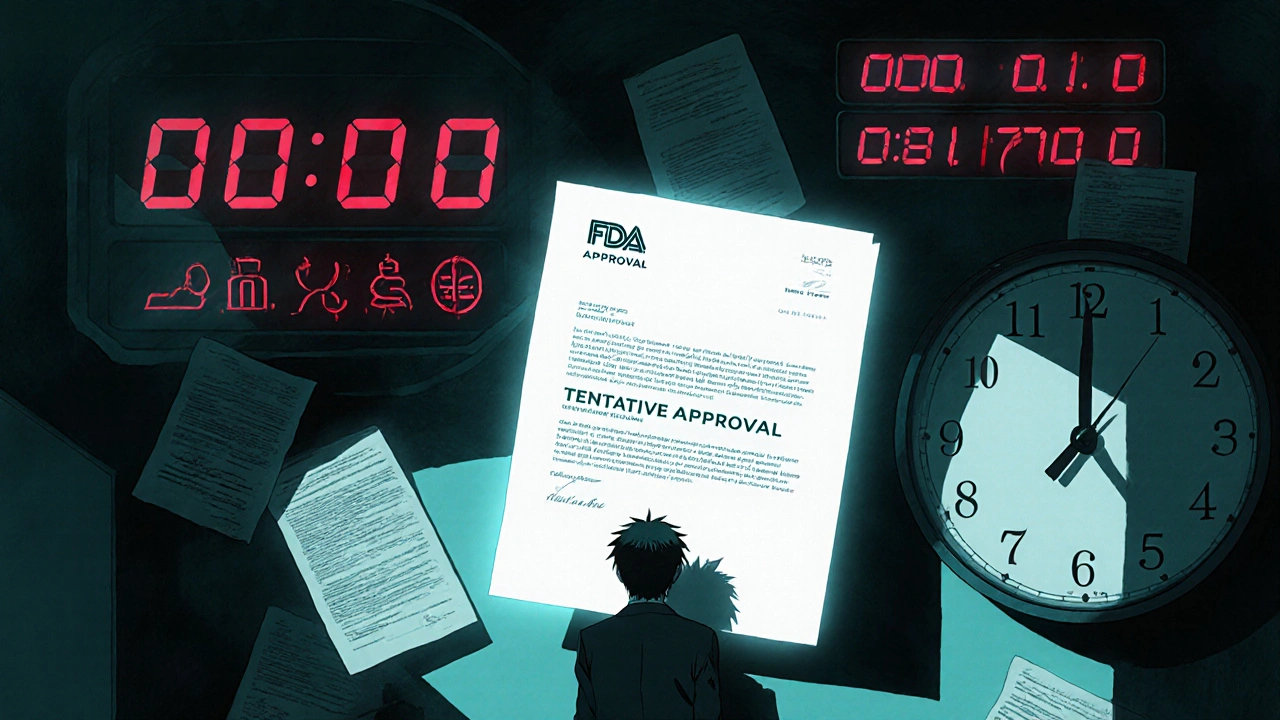
Tentative Approval: What It Means for Generic Drugs and Your Health
When a generic drug gets tentative approval, a status granted by the FDA when a generic drug meets all scientific and manufacturing standards but can't yet be sold due to existing patents or exclusivity rights. Also known as preliminary approval, it’s the final checkpoint before a drug hits the market—except there’s a hold button. This isn’t a rejection. It’s a wait. The drug works. It’s safe. It’s tested. But someone else owns the patent, and the law says no one else can sell it until that patent expires. For patients, this means cheaper versions of life-saving meds are coming—but not yet.
Tentative approval is a quiet game-changer in how we get affordable drugs. It’s why you’ll see a generic version of a brand-name pill suddenly appear on pharmacy shelves the day after a patent runs out. The company didn’t rush it. They had the drug ready for years, sitting in FDA-approved limbo. This system keeps innovation alive while preparing the market for competition. Without tentative approval, generics would lag behind by months or even years. With it, patients get price drops almost overnight. You’ll find this happening with blood pressure meds like lisinopril, antidepressants like sertraline, and even cancer drugs like capecitabine—all of which have had tentative approval before hitting the market.
It’s not just about cost. Tentative approval also means better quality control. The FDA doesn’t grant it lightly. Manufacturers must prove their generic matches the brand in strength, purity, how it’s made, and how your body absorbs it. That’s why you can trust a generic with tentative approval—it’s not a copy. It’s a legally verified twin. And when patents expire, those approved generics flood the market fast. That’s why you can now buy cheap generic metformin, Zyrtec, or Neurontin online from verified pharmacies. They weren’t just lucky. They had tentative approval waiting in the wings.
But here’s what most people miss: tentative approval doesn’t mean the drug is available. It means it’s ready. And that’s why tracking it matters. If you’re waiting for a cheaper version of a drug you take, knowing it has tentative approval tells you the wait is almost over. Check the FDA’s Orange Book or pharmacy alerts. If it’s listed there, your savings are coming soon. This isn’t theory. It’s how real people save hundreds a year on prescriptions.
Behind every generic drug you buy, there’s a story of science, law, and timing. Tentative approval is the quiet hinge in that story. It’s the moment when a drug crosses the finish line—but can’t cross the street until the signal changes. And when it does? That’s when your wallet—and your health—benefit the most.
Below, you’ll find real guides on how to safely buy generic versions of these drugs, how to spot fake ones, and what to do when your prescription suddenly changes. All of it ties back to this one step: tentative approval. It’s the reason you have choices. And now you know how it works.