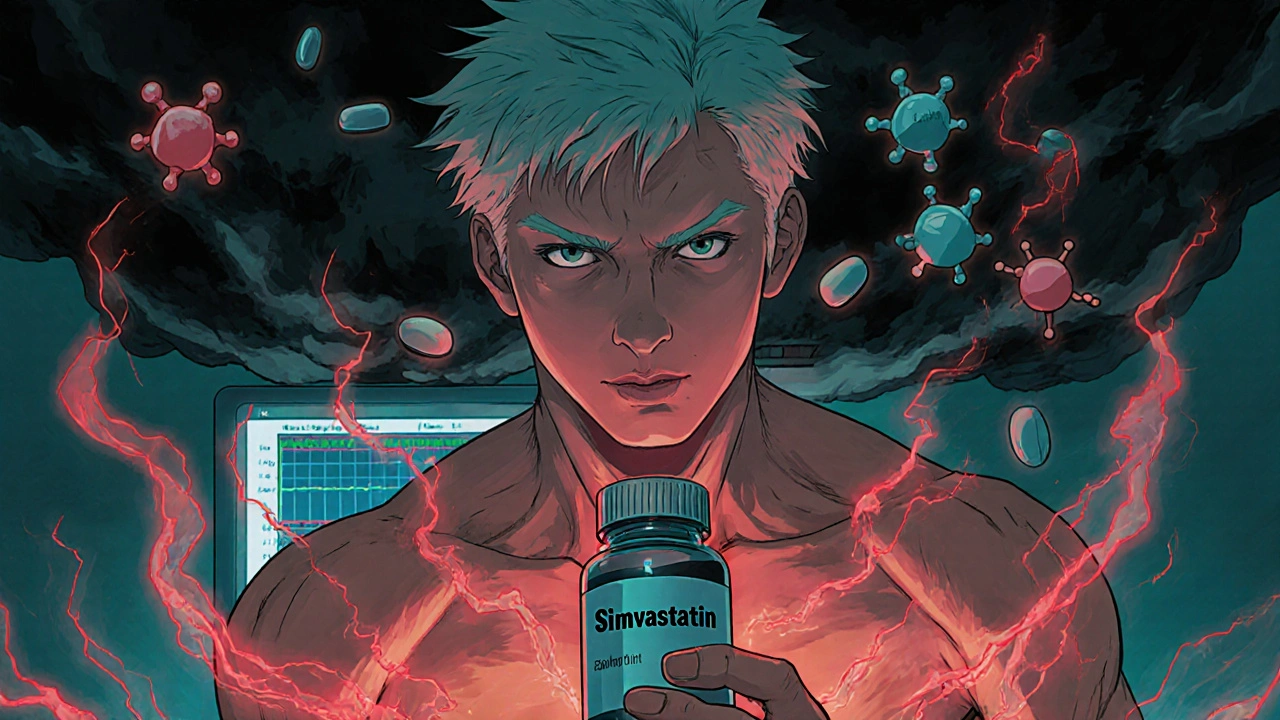
Statin Interactions: What You Need to Know About Dangerous Drug Combos
When you take a statin, a class of cholesterol-lowering drugs used to reduce heart attack and stroke risk. Also known as HMG-CoA reductase inhibitors, they work by blocking a liver enzyme that makes cholesterol. But statins don’t work in a vacuum. Many common medications, supplements, and even foods can interfere with how your body processes them — sometimes with dangerous results.
The biggest danger comes from CYP3A4 drug interactions, a liver enzyme system that breaks down over half of all prescription drugs, including several statins. Drugs like clarithromycin, itraconazole, and grapefruit juice can block this enzyme, causing statin levels to spike in your blood. That’s how you get rhabdomyolysis — a rare but life-threatening condition where muscle tissue breaks down and floods your kidneys. Not all statins are equal here. Atorvastatin and simvastatin are the most vulnerable. Rosuvastatin and pravastatin? Much safer when mixed with other meds.
It’s not just antibiotics. Some supplements you think are harmless can be just as risky. St. John’s wort, for example, speeds up how fast your body clears statins, making them less effective. On the flip side, coenzyme Q10 might help with muscle pain, but there’s no solid proof it prevents damage. And don’t forget about over-the-counter painkillers — high doses of NSAIDs like ibuprofen can strain your kidneys when combined with statins, especially if you’re older or have existing kidney issues.
People often blame statins for muscle aches, fatigue, or brain fog — but research shows up to 90% of these symptoms vanish when people take a placebo instead. That’s the nocebo effect, when fear of side effects causes you to feel them, even if the drug isn’t the cause. Still, that doesn’t mean all interactions are psychological. If you’re on a statin and start a new antibiotic, antifungal, or even a new supplement, your body is doing something new with that drug. And that’s when you need to pay attention.
Knowing which statin you’re on, what else you’re taking, and how your body reacts is the only way to stay safe. You don’t need to memorize every possible combo — but you do need to know your own meds. Keep a list. Talk to your pharmacist. Use the brown bag method: bring all your pills to your doctor once a year. It’s not about being paranoid. It’s about being smart.
Below, you’ll find real, practical guides on exactly which drugs clash with statins, how to tell if your symptoms are real or just fear, and what to do if you’re already mixing risky combinations. No fluff. No guesses. Just what works — and what could hurt you.