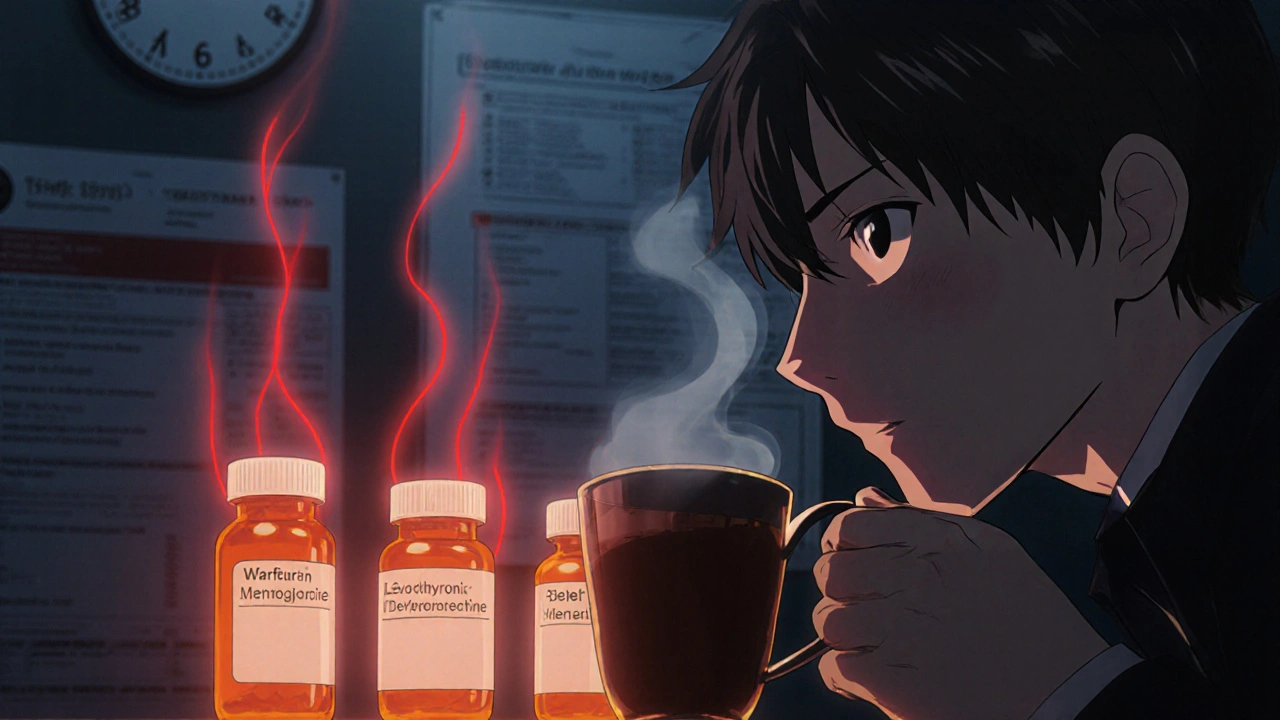
Caffeine and Warfarin: What You Need to Know About the Interaction
When you take warfarin, a blood thinner used to prevent dangerous clots. Also known as Coumadin, it works by slowing down your body’s ability to form clots. But what you drink — especially coffee — can change how well it works. Caffeine, a stimulant found in coffee, tea, energy drinks, and some medications doesn’t directly thin your blood, but it can interfere with how your liver breaks down warfarin. This means your warfarin levels might rise, increasing your risk of bleeding — even if you’ve been on the same dose for years.
This isn’t just theory. Studies show that sudden changes in caffeine intake — like switching from one cup of coffee a day to five — can cause your INR (a measure of how long your blood takes to clot) to spike. People on warfarin who suddenly quit coffee or start drinking energy drinks often end up in the ER with bruising, nosebleeds, or worse. It’s not the caffeine itself causing the bleed. It’s the drug interaction, a predictable clash between two substances that changes how your body handles them. Your liver uses the same enzyme, CYP1A2, to process both caffeine and warfarin. When caffeine floods your system, it crowds out warfarin, making it stick around longer. When caffeine drops, warfarin clears too fast, and clots can form.
That’s why consistency matters more than elimination. You don’t have to give up coffee. But if you drink two cups every morning, keep doing that. Don’t switch to green tea on Monday, then energy shots on Wednesday. Don’t go cold turkey after a weekend of bingeing on soda. Your doctor checks your INR to catch these shifts, but they can’t read your mind. If you start taking a new supplement, quit smoking, or change your caffeine habits, tell them. The same goes for medications like ciprofloxacin or fluconazole — they also mess with that liver enzyme. Even something as simple as switching from brewed coffee to espresso can shift your levels.
What you’ll find below are real patient stories and clinical insights about how caffeine, warfarin, and other common drugs collide. You’ll see how people managed their coffee intake while staying safe on blood thinners. You’ll learn which supplements to avoid — like St. John’s wort or green tea extract — that make things worse. And you’ll get clear, no-nonsense advice on what to do if you miss a dose, feel dizzy, or notice unusual bruising. This isn’t about fear. It’s about control. You’re not powerless. You just need to know what to watch for — and how to talk to your doctor about it.