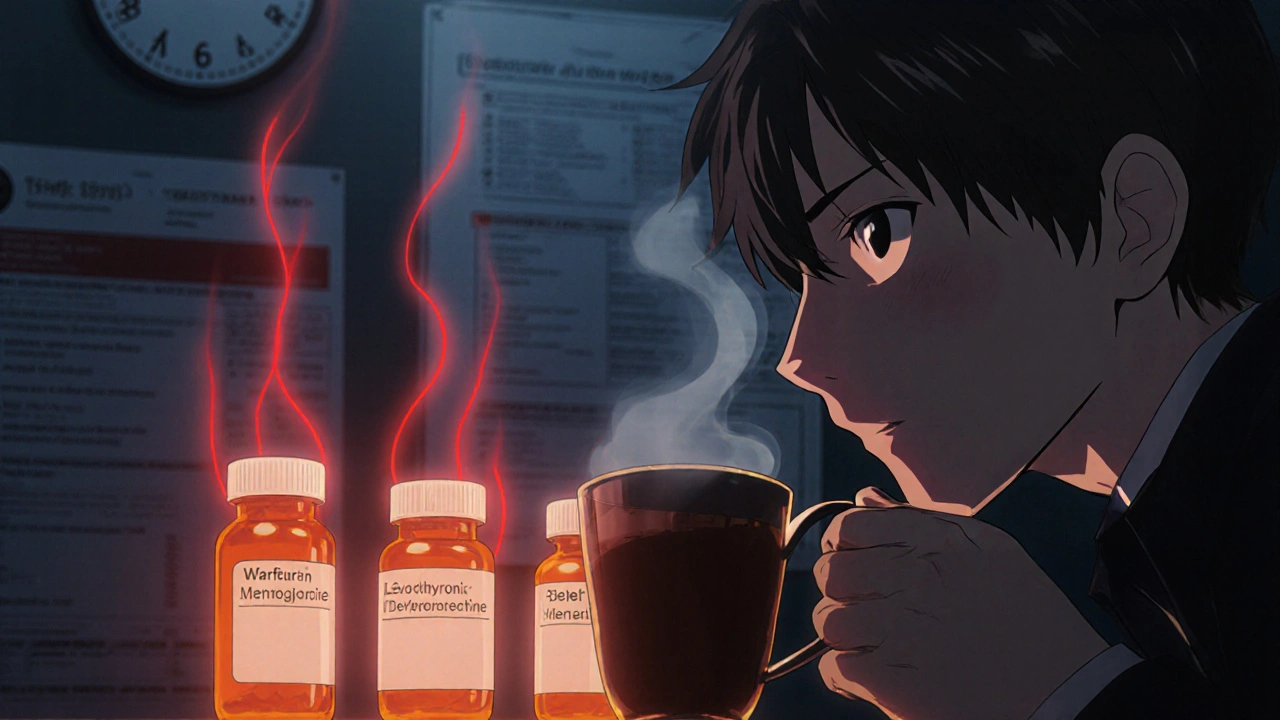
Caffeine Drug Interactions: What You Need to Know Before Your Next Cup
When you drink coffee, tea, or an energy drink, you're not just consuming a stimulant—you're introducing a chemical that can interact with the medications you take. caffeine, a central nervous system stimulant found in many beverages and supplements. Also known as 1,3,7-trimethylxanthine, it affects how your liver breaks down drugs, changes how your body absorbs them, and can make side effects worse or better. This isn’t theoretical. People on antibiotics like ciprofloxacin, antidepressants like fluvoxamine, or even heart meds like warfarin have ended up in the ER because they didn’t realize their morning cup was turning a safe dose into a dangerous one.
drug interactions, when two or more substances change how each other works in your body. Also known as medication interactions, they don’t always show up as obvious symptoms. Sometimes it’s just trouble sleeping, a racing heart, or feeling jittery when you never used to. Other times, it’s something silent—like your blood thinner becoming too strong and raising your risk of bleeding, or your asthma inhaler not working because caffeine blocked its absorption. The liver enzyme CYP1A2 is the main player here. It’s responsible for clearing both caffeine and over 80 common drugs. When caffeine slows it down, those drugs build up. When a drug blocks caffeine’s breakdown, you feel its effects longer and stronger.
You don’t need to quit caffeine. But you do need to know which drugs it plays poorly with. Antibiotics like ciprofloxacin and levofloxacin? Big red flag. Antidepressants like fluvoxamine and clomipramine? They can double caffeine levels. The asthma drug theophylline? Caffeine makes its side effects worse. Even over-the-counter painkillers like acetaminophen can behave differently when mixed with caffeine. And if you’re on thyroid meds, birth control, or stimulants for ADHD, your body might process them slower—or faster—because of that cup of coffee.
What’s worse? Many people don’t even realize they’re at risk. They take their pills with their morning coffee because it’s routine. Or they start drinking more energy drinks after a new prescription, thinking it’ll help with fatigue. That’s how problems start. The good news? It’s often easy to avoid. Talk to your pharmacist. Check your medication guide. Use the brown bag method—bring all your pills and supplements to your next appointment. You’d be surprised how many interactions get missed because no one asked the right question.
Below, you’ll find real, practical guides from people who’ve been there. Some explain how caffeine made their statins cause muscle pain. Others show why mixing caffeine with antibiotics led to hospital visits. There are clear charts on which drugs are safest to take with caffeine, and which ones you should avoid completely. No fluff. No guesswork. Just what works—and what doesn’t—when your cup of coffee meets your prescription.