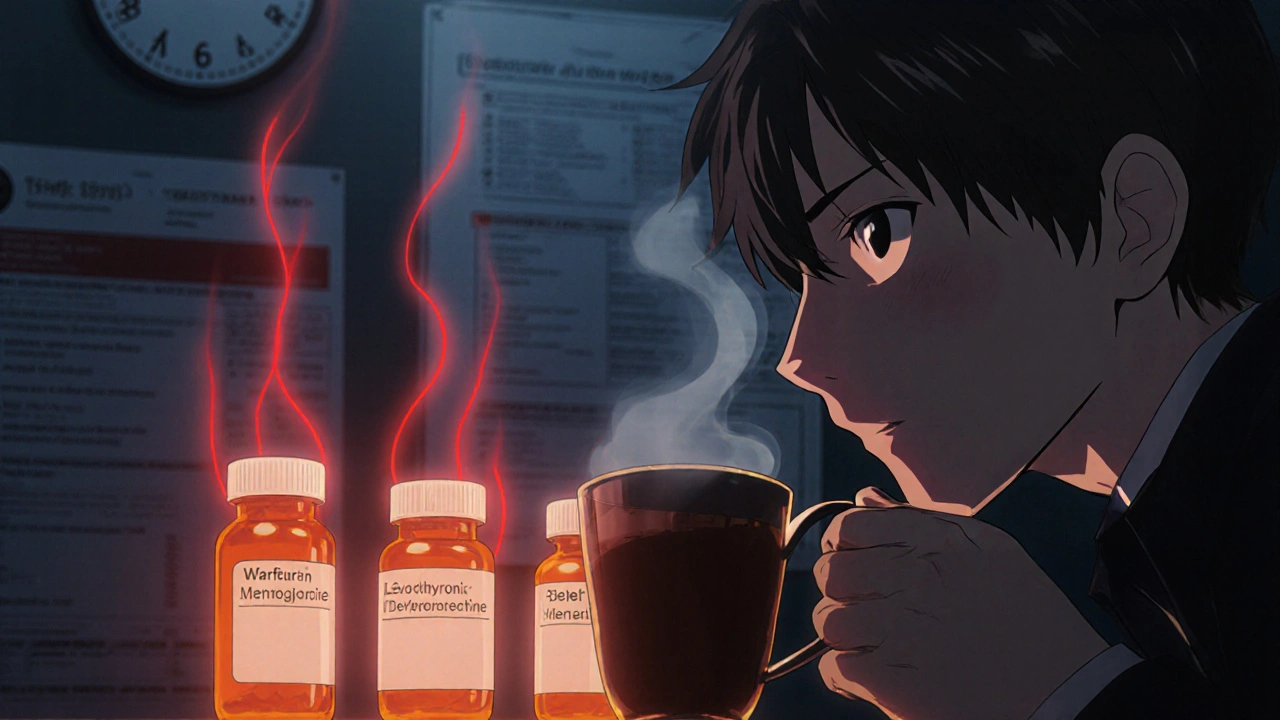
Caffeine and Medications: What You Need to Know About Interactions and Risks
When you drink coffee, tea, or energy drinks, you're not just consuming a stimulant—you're introducing a compound that can directly interfere with how your body processes caffeine, a central nervous system stimulant found in many beverages and medications. Also known as 1,3,7-trimethylxanthine, it affects liver enzymes that break down over 50 common drugs, including antibiotics, antidepressants, and heart medications. That means your morning cup might be making your blood thinner less effective, or causing your anxiety medication to build up to toxic levels.
Drug interactions, when two substances change each other’s effects in the body with caffeine are more common than most people realize. For example, if you’re on antibiotics, like ciprofloxacin or norfloxacin, caffeine stays in your system longer, leading to jitters, rapid heartbeat, or even seizures. If you take antidepressants, especially MAOIs or SSRIs, caffeine can boost serotonin too high, triggering agitation or confusion. Even blood pressure medications, like beta-blockers, can lose their edge when caffeine keeps your heart racing.
It’s not just about pills. Some supplements—like guarana, yerba mate, or even green tea extracts—pack just as much caffeine as a cup of coffee. And if you’re on statins, like simvastatin or atorvastatin, caffeine doesn’t directly interact, but it can worsen muscle pain, making you think the drug is the problem when it’s the combo. The same goes for thyroid meds, like levothyroxine: caffeine can block absorption if taken too close together.
You don’t need to quit caffeine cold turkey. But if you’re on any medication and notice new anxiety, insomnia, heart palpitations, or dizziness after drinking coffee, it’s not just "your nerves." It could be a hidden interaction. The fix? Space out your caffeine and meds by at least two hours. Talk to your pharmacist—most will check for these clashes for free. And if you’re on multiple drugs, keep a brown bag of everything you take to every appointment. You’d be surprised how many doctors miss this.
Below, you’ll find real-world guides on how caffeine plays out with common prescriptions, what symptoms to track, and how to adjust without losing your energy or your health. No fluff. Just what works.